

Buyers asking where to buy custom picture frames are rarely looking for an empty rectangle. They need a sellable or project-ready frame that fits a known image, presents it correctly, survives the intended route and can be reordered without the finish, opening, backing or hardware changing. A supplier list cannot answer those questions until the frame itself is defined.
This guide helps importers, retailers, gallery-wall brands, hospitality buyers and private-label teams turn a broad frame request into a controlled sourcing decision. It covers supplier route, assortment design, measurement language, moulding and glazing, market information, MOQ, quotation comparison, sample approval, quality control, packaging, pilot release and repeat orders. It does not replace conservation advice for valuable works, installation engineering or destination-market legal review.
The practical question is therefore not simply “where can I buy picture frames in bulk?” It is “which supply route can deliver this defined frame system, with evidence and controls proportionate to how it will be sold, installed and replenished?” Start with that system, then compare factories.
1. Choose the supplier route by the frame you need delivered
Separate stock wholesale, made-to-size and OEM manufacturing
A stock wholesaler, local contract framer and OEM frame manufacturer can all appear in the same search journey, but they solve different problems. Stock wholesale is useful when speed, small opening quantities and familiar sizes matter more than unique profiles or direct control of production. Made-to-size framing is useful when individual artwork dimensions, matting and assembly services dominate. OEM manufacturing becomes relevant when a buyer needs a repeated assortment, private-label presentation, controlled profile or finish, coordinated hardware and export packing at a production scale.
Write the route decision before contacting suppliers. State whether the order is for empty frames, frame kits, assembled frames with glazing and backing, framed prints, gallery-wall sets or project-installed pieces. Then ask who controls moulding production, finishing, cutting, joining, glazing, mat cutting, artwork insertion, hardware, retail packing and export cartons. A supplier may subcontract some operations; that is not automatically a problem if ownership, change control and inspection are clear. The required output is a responsibility matrix naming the owner and record for every operation. Stop when the sales contact cannot explain which factory performs a critical step or whose approved sample governs it.
| Route | Best fit | Main limitation to test | Required evidence |
|---|---|---|---|
| Stock wholesaler | Standard sizes, fast trials, lower opening quantity | Lot continuity, customization and drawing access | Exact SKU identity, stock horizon and reorder policy |
| Made-to-size framer | Artwork-led orders and local assembly | Scale, export packing and repeat-order capacity | Measurement method, sample assembly and service scope |
| OEM manufacturer | Private label, repeated ranges and controlled finishes | Process minimums, development time and buyer-side specification | Drawing, BOM, sample route, QC and pack plan |
| Print-and-frame partner | One owner for image, print, frame and fulfilment | Image rights, color workflow and component traceability | End-to-end revision and fulfilment responsibility |
Name the deliverable before describing the style
“Walnut picture frame” is a visual direction, not an order definition. A useful brief names the artwork type and size, visible opening, frame fit size, outside size, moulding material and profile, finish reference, glazing, mat, spacer, mounting method, backing, closure, hardware, orientation, retail presentation, unit pack and transport route. If the artwork is supplied separately, state who inserts it and who is responsible for dust, centering, surface protection and final closure. If the order is a gallery set, identify the set composition and layout reference.
The distinction changes cost and risk. An empty frame may need removable backing and consumer hardware. A framed print needs print tolerance, image placement, clean assembly and image-rights control. A hospitality frame may prioritize consistent appearance, anti-tamper closure and coordinated installation information. A preservation-oriented frame for valued works may require materials and methods that a decorative retail frame does not. Mark unresolved fields as decisions with an owner and due date instead of allowing the supplier to fill them silently. The action output is one connected product brief with a revision code, used for quotation, sample, artwork, inspection and purchase order. Do not approve a beautiful sample if its construction cannot be described in the same file.

Set preservation, installation and use boundaries early
A decorative frame brief should not casually promise “archival,” “museum,” “UV protection” or safe installation. The Library of Congress explains that stable matting and backing, separation from glazing and appropriate frame depth matter when protecting works on paper. That guidance is a preservation reference, not proof that a commercial frame is suitable for every artwork. If conservation performance matters, involve a qualified conservator and identify the exact board, glazing, hinging and assembly method rather than using a broad marketing adjective.
Installation is a separate boundary. Hardware supplied with a frame does not establish that the wall, fixing method or installer is suitable for the load and setting. State whether the supplier provides attached hardware, loose hardware, a template or no wall fixings; record frame weight and orientation; and assign final wall assessment to the responsible installer or project professional. Also define foreseeable consumer use: tabletop, wall, portrait, landscape, child-accessible room, hospitality space or humid environment. The output is a boundary note attached to the brief and online content. It identifies what the frame package includes, what evidence supports any claim and what remains the buyer’s or installer’s responsibility.

2. Build an assortment that can be sold, inspected and replenished
Give every frame a commercial or project role
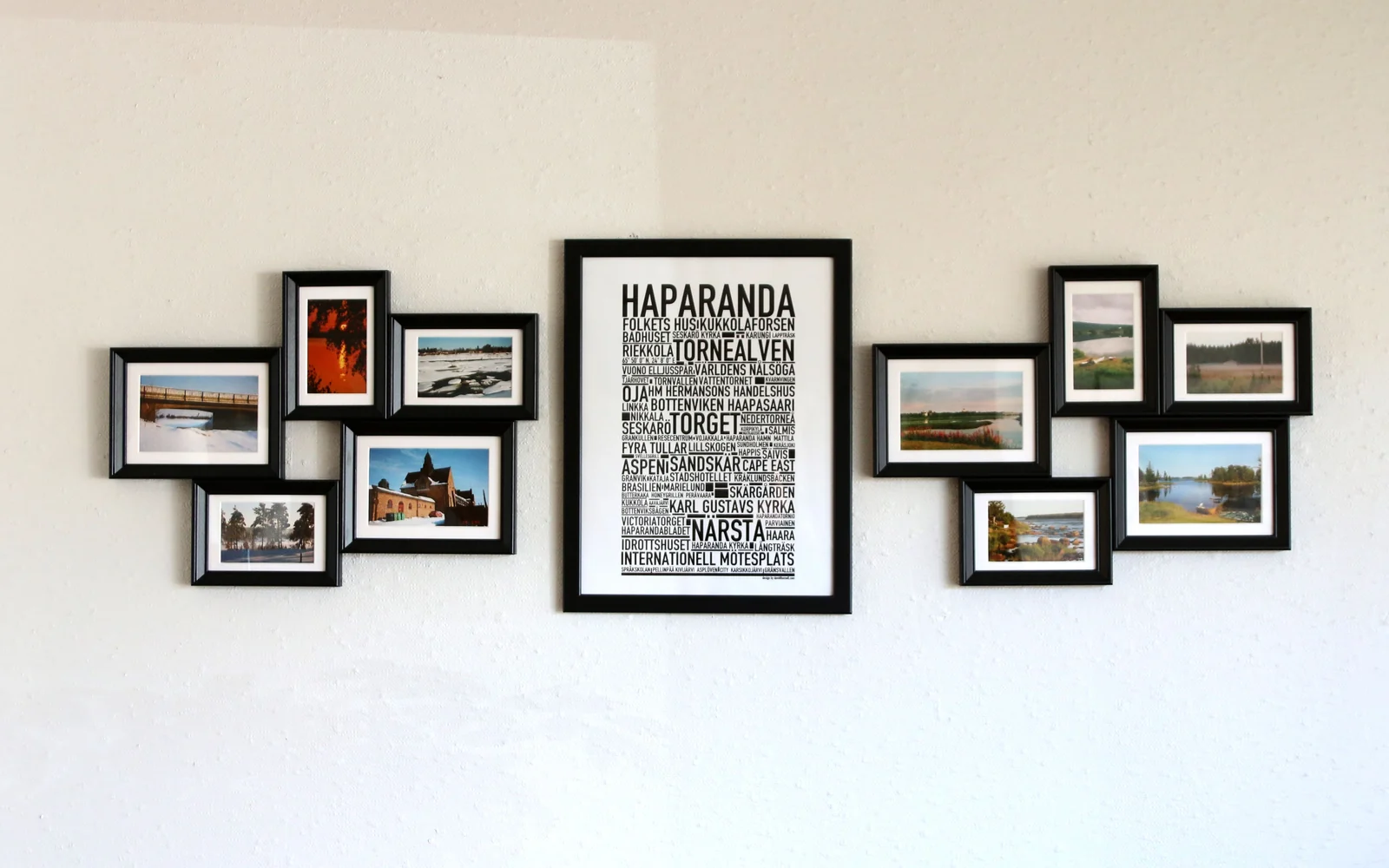
A coherent assortment begins with jobs, not finishes. A core tabletop frame supports common photo sizes, an easel back and repeatable neutral finishes. A core wall frame supports common print sizes, portrait and landscape use and reliable replenishment. A statement frame earns a wider profile, deeper construction or larger format because it creates a different visual role. A gallery-wall set is bought as a coordinated composition, so size relationships, layout instructions and set packing matter as much as each individual frame.
Write the buyer channel, price tier, expected annual quantity, replenishment cadence, display method and reason for every proposed SKU. If two frames serve the same customer and size while introducing separate finish batches or cartons, one may be redundant. Project buyers should replace retail velocity with location count, room type, replacement allowance and installation sequence. The required output is a range architecture sheet that links every frame to a role and forecast. Use it to decide which profiles and components deserve development. Avoid choosing ten attractive samples and calling them a collection; without role logic, each sample can become a separate manufacturing and inventory commitment.

Count size, orientation, finish, hardware and pack as one SKU matrix
A six-size frame offered in four finishes is already 24 visible combinations. Separate portrait and landscape hardware may double internal versions even when the consumer rotates the same product. Add wall-only and tabletop backs, single frames and sets, two mat colors or market-specific labels, and the production matrix expands quickly. Some differences require a sellable SKU; others require an internal version code because they change assembly, inspection or packing. Both need control.
Build the matrix from identity fields: artwork size, frame fit size, outside size, orientation, profile, finish, glazing, mat, backing, hardware, unit pack, set composition and market artwork. Mark which components are shared and which process binds the minimum. For retail identification, GS1 explains that product variants such as size and color generally need unique GTINs. The action output is a SKU register connecting each sellable variant to one drawing, BOM, barcode, pack and image set. Do not let a finish nickname such as “natural oak” serve as the only reorder identity; attach a controlled physical or color reference and approved range. Record the barcode owner and the person authorized to create, merge or retire a sellable variant.

Reduce the matrix before negotiating price
Labelled hypothetical example 1. A retailer proposes five opening sizes, four finishes, two display methods and two pack formats: 5 x 4 x 2 x 2 = 80 possible versions. Review shows that large formats will be wall-only, two finishes can share the same substrate and only the gift set needs a printed box. The launch is reduced to 18 sellable SKUs with clearer roles and shared components. This arithmetic illustrates the method; it is not a recommended assortment size.
Reduction should preserve customer choice while removing manufacturing duplication. Standardize hidden components when they perform the same job. Use one backing architecture across nearby sizes where load and depth allow. Keep finishes on a controlled profile family. Delay a unique print, direct decoration or custom extrusion until forecast volume can carry its setup. Ask the supplier to show minimums at profile, finish, size, hardware and packaging level, then phase the range around the most binding process. The output is a launch matrix with “core,” “pilot,” “future” and “removed” status, plus a reason for every non-core version. Price negotiation comes after this work because a lower unit price on 80 weakly differentiated variants can create more cash, quality and reorder exposure than a higher price on 18 controlled SKUs.
| Decision | Keep separate when | Share when | Output |
|---|---|---|---|
| Profile | Visual role or load/depth requirement is materially different | The same profile supports multiple sizes and finishes | Profile family code |
| Finish | Customer proposition and batch commitment are justified | A common finish can serve several roles | Approved finish reference and range |
| Hardware | Weight, orientation or access changes the method | One tested configuration covers the defined products | Hardware BOM and orientation map |
| Pack | Gift, parcel or project route requires a different system | One carton design safely covers a size family | Pack family and packing instruction |
3. Use one measurement language from artwork to export carton
Separate artwork size, visible opening, frame fit and outside size
“8 x 10 frame” can mean the artwork size, mat opening, internal fit or retail name. A buyer should record at least four rectangles: artwork size, visible opening, frame fit size and outside size. Add moulding face width, rabbet width, rabbet depth, glazing and backing thickness, total package depth and packed dimensions. State units, orientation and measurement points. For irregular objects or canvas, add maximum thickness, edge condition and any required clearance.
The frame fit size should describe the component stack accepted by the rabbet, while the visible opening describes what the customer sees. Outside size controls shelf, wall layout, master carton and freight. Artwork size determines overlap or clearance. These fields are related but not interchangeable. The action output is a dimensioned drawing with tolerances and an inspection sheet using the same labels. Suppliers should measure an approved sample and explain any production tolerance or squareness method. Stop if a quotation compares suppliers using only nominal retail size; two “8 x 10” frames can have different openings, profiles, outside dimensions, depths and packing exposure. Keep both metric and imperial values controlled when the sales market and factory use different unit systems.


Calculate the mat window, then approve the visual result
A mat opening normally needs to retain the artwork while avoiding unintended loss of important image content. Begin with the measured artwork, propose an overlap or clearance appropriate to the work and mounting method, and calculate a trial opening. Then review image position, border balance, squareness, mat color, visible edges and the relationship between opening, mat and moulding. For valued works, follow professional conservation advice; the Library of Congress storage-mat guide is a useful orientation to stable materials and hinging concepts, not a universal production instruction.
Labelled hypothetical example 2. An 8 x 10 inch print is tested with 0.25 inch overlap on each edge, producing a 7.5 x 9.5 inch visible opening inside an 11 x 14 inch mat. The buyer then checks whether critical image content is hidden and whether the borders look intentional. The numbers illustrate the calculation only; actual overlap depends on the artwork, method, tolerance and approval. The output is a mat drawing naming outside size, opening, board identity, color, thickness, bevel direction and approved orientation. Do not approve a mat solely from a supplier’s standard-size label or a screenshot.

Use the rabbet to prove that every layer fits
The rabbet is where glazing, spacer or mat, artwork or mount, backing and closure meet the moulding. A shallow rabbet may not accept the intended stack. Excess clearance can allow movement or expose unfinished edges. A wide lip can hide more artwork than expected. Record rabbet width and depth, then build a stack calculation from actual component thicknesses plus a practical assembly allowance. If the product must open for consumer insertion, confirm how backing and closures behave after repeated use.
The sample should prove fit under the real configuration, not an empty frame. Insert the intended glazing, mat, artwork surrogate, backing and hardware. Check whether clips, tabs, turn buttons or points close without bowing; whether the glazing is held securely; whether the backing sits flat; and whether any component touches the artwork contrary to the approved method. The output is a cross-section drawing or stack table linked to the BOM. Change control matters: a thicker acrylic sheet, different board or new closure can consume the available depth and invalidate an already approved frame. When a stack component changes, review fit, weight, hardware and pack rather than changing the purchase description silently.
Convert finished-frame dimensions into carton and storage exposure
Outside size and packed size drive shelf space, warehouse locations, parcel thresholds, master-carton cube and pallet efficiency. Record unit-pack length, width and depth, gross weight, units per carton, carton dimensions, carton gross weight and pallet pattern where applicable. Large moulding profiles and protective corners can increase packed dimensions more than buyers expect. Glass creates weight and breakage exposure; acrylic changes scratch-control and protective-film requirements. Gallery sets need a defined nesting or separation plan so the smallest frame does not move inside the largest cavity.
Labelled hypothetical example 3. Two suppliers quote the same outside frame size. Supplier A uses a 38 mm unit-pack depth and Supplier B uses 62 mm because of a stronger corner system. At 24 units, the second option uses more warehouse and freight cube but may reduce damage on a harsh parcel route. The example does not select a winner; it shows why unit price is incomplete. The action output is a packed-dimension and damage-cost comparison using the intended route. Ask logistics colleagues to review carton weight and handling before final release. Do not remove protection merely to reach a freight target without rerunning the pack validation and documenting the changed risk.
4. Specify moulding, glazing, backing and hardware as one construction

Describe the moulding by substrate, profile, finish and joint
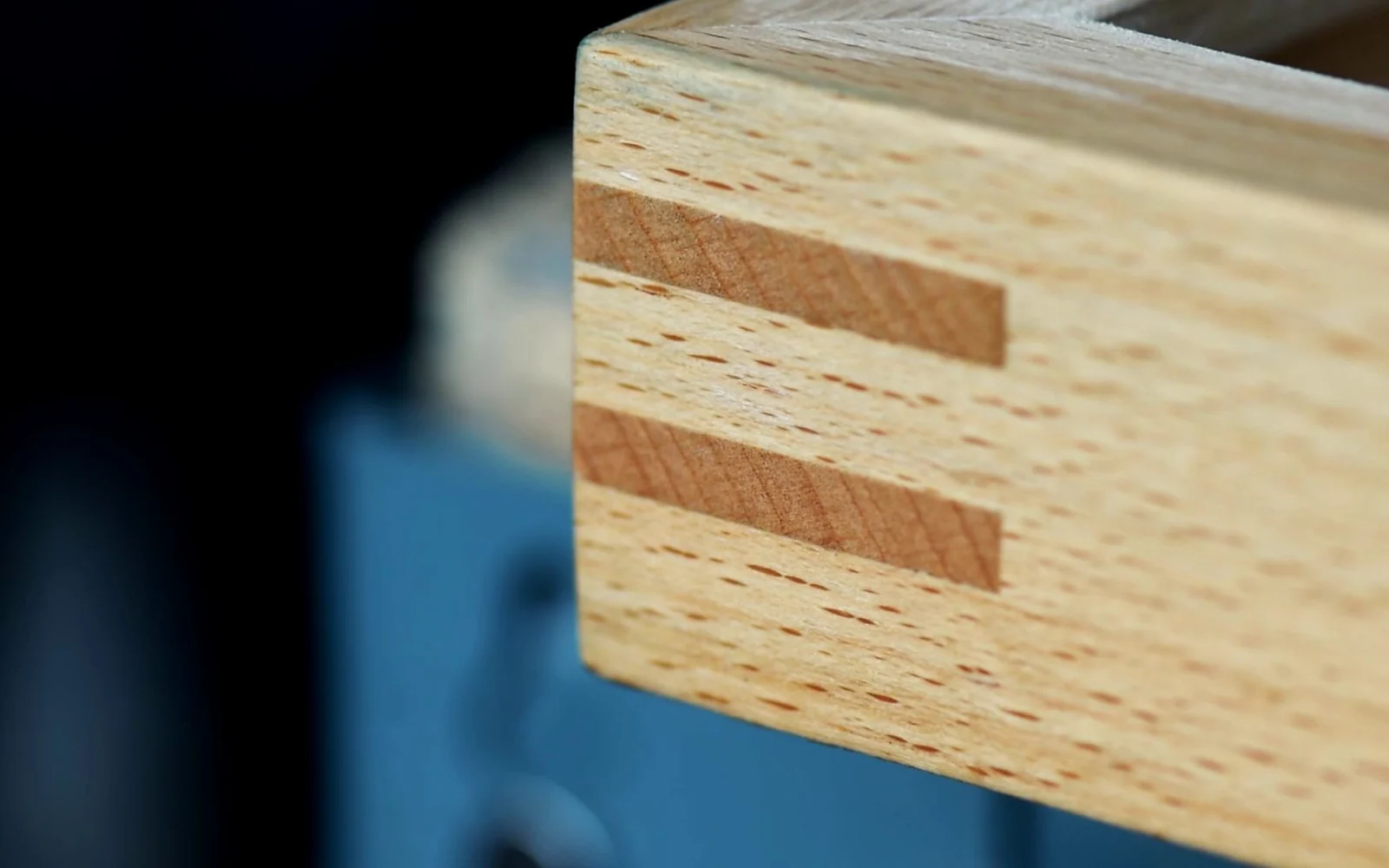
“Wood frame” may describe solid wood, finger-jointed wood, veneered or wrapped composite wood, or a wood-look polymer. “Metal frame” may describe an aluminum extrusion with different wall, finish and corner-joining systems. The useful specification names the substrate and profile, face width, depth, rabbet, visible edge treatment, finish process, approved color and gloss range, corner-joint method and any permitted repair or filler. For natural materials, approve the expected grain, color and knot range rather than treating variation as an undefined defect.
Inspect the profile before the completed frame because wrapping, coating and corner assembly can hide important differences. Review a profile chevron, finished corner and complete frame. Check miter closure, step, twist, squareness, joint reinforcement, visible adhesive, finish continuity and touch-up. Larger frames may require a different profile or joint strategy than small tabletop products. The output is a moulding specification plus reference samples for raw profile, approved finish range and joined corner. Avoid using one perfect corner photograph as the complete standard; it cannot define acceptable variation across long lengths, natural grain or production batches. Add a dated finish-limit board when acceptable light and dark boundaries matter commercially.
Match glazing, mat, backing and spacer to the intended use
Glass and acrylic are not interchangeable line items. Glass can offer familiar appearance and scratch resistance but adds weight and breakage exposure. Acrylic reduces breakage risk and weight but needs surface-film, scratch and static-control decisions. If a supplier offers UV-filtering or anti-reflective performance, request the named product, measurable property, test basis and limitations instead of accepting a generic “UV glass” label. Glazing should remain separated from vulnerable works when the approved method requires it.
Mat and backing boards need identifiable material, color, thickness, surface and supplier reference. For preservation-oriented work, stable materials and appropriate assembly require a separate, qualified decision. Decorative retail products may prioritize appearance, cost and removable access, but they still need a defined board and closure. Spacers, mounts and adhesives must be named where used. The output is a component BOM with revision and approved substitutes. Any substitute should show equal fit and required performance before use. Do not allow “same quality” to replace substrate or grade identity, because a visually similar backing can change stiffness, odor, formaldehyde scope, print adhesion or long-term behavior. Retain supplier lot references when those variables affect the approved claim or finish.
Define hardware by orientation, load, access and installation boundary
A frame may use an easel back, sawtooth hanger, D-rings and wire, keyhole plates, security hardware or a project-specific rail system. Choose hardware from the finished frame’s weight, dimensions, orientation, backing construction, user access and intended location. Record part identity, quantity, position, fastener, installation torque or method where relevant, and whether the item is attached or supplied loose. Check that portrait and landscape use are both supported only when the physical build actually permits both.
Hardware inspection should include position, alignment, fastener engagement, interference with backing access, sharp edges and basic handling under the defined frame configuration. For project installation, confirm who selects the wall fixing and assesses the substrate; the frame supplier cannot infer wall condition from the product alone. For consumer packs, instructions and warnings should match the included hardware and intended use without implying universal wall suitability. The output is a hardware drawing and installation-boundary statement. Stop if a supplier offers the same loose hanger across all sizes without a load rationale or if the hardware revision is absent from the sample and BOM. Photograph the approved attachment from front, back and side.
5. Connect product identity, claims and market information to evidence
Build the sellable SKU and online offer from the same master record
A market-facing frame needs more than a factory code. The master record should connect SKU and GTIN, product name, dimensions, color or finish, material description, included components, orientation, unit count, warnings, manufacturer or responsible-party information, country-of-origin decision, images and pack artwork. The online offer, retail label, carton mark and purchase order should point to the same version. When a finish, size or set composition changes materially, review whether product identity, imagery and barcode must change.
For EU sales, the General Product Safety Regulation places traceability, product identification and economic-operator duties around the marketed product. Article 19 also specifies information for distance sales, including product identification, manufacturer details and, where applicable, the EU responsible person and warnings. A private-label seller may assume manufacturer obligations when marketing under its own name or trademark. The practical action is a market-information matrix reviewed by the responsible compliance owner before artwork and online publication. This guide does not decide legal status for a particular business. Do not let the factory design label content from habit without a named market owner approving each field. Archive the approved online fields with the product artwork.

Verify composite-wood records and FSC claims at finished-product level
Frames using MDF, particleboard or hardwood plywood may fall within the US EPA’s TSCA Title VI composite-wood framework. The EPA’s consumer FAQ specifically lists picture frames among common products that may contain regulated composite wood, while the regulated-stakeholder FAQ explains duties and limited labeling nuances. Buyers should identify the actual substrate, panel producer or supplier statement, certification status, finished-goods documentation and importer responsibility as applicable. A generic “MDF certificate” that cannot be matched to the supplied board is weak evidence.
Forest claims need equally careful scope. FSC chain of custody tracks certified material and claims through the supply chain. Buying wood from an FSC-certified company does not automatically make every finished frame eligible for an FSC label or sales claim. Request the certificate code, product scope, claim on transaction documents and authorization path for the finished SKU. The output is a material-and-claim ledger identifying substrate, supplier, document, validity, product scope, market and approved wording. Remove unsupported claims from quotation and artwork instead of treating them as provisional marketing. Recheck validity and transaction wording before each production release, especially after a material or supplier change.
Qualify environmental, origin and performance language
Broad phrases such as “eco-friendly,” “sustainable,” “archival,” “shatterproof” or “UV protected” can overstate what the evidence shows. The US FTC Green Guides summary cautions against unqualified general environmental-benefit claims and explains that recycled-content claims need a clear basis. Apply the same discipline to performance: name the material or feature, measurable property, test method, tested construction and limitation. “Acrylic glazing with protective film” is an identity statement; “unbreakable protection” is a much broader promise.
Country-of-origin marking also depends on the actual facts and processing. A historical CBP picture-frame ruling illustrates that origin analysis can turn on the production steps, but one ruling is not a universal answer for another supply chain. The importer should document the real material and processing route and obtain market-specific advice where needed. The action output is a claim ledger with columns for wording, SKU, market, evidence, evidence owner, limitation and approval. Stop when a supplier offers only a logo file or certificate screenshot without the matching product scope, holder and current validity. Keep rejected wording in the ledger so it cannot reappear during later artwork revisions.
| Statement | Ask for | Decision owner | Release rule |
|---|---|---|---|
| Composite-wood compliant | Actual substrate identity, applicable certification and finished-goods record | Importer or market compliance owner | Match document scope to supplied SKU and route |
| FSC frame | Valid chain-of-custody scope and transaction claim | Certificate/claim owner | Use only approved wording and marks |
| Eco-friendly or recycled | Specific attribute, percentage or substantiation basis | Brand and legal reviewer | Qualify wording; remove broad unsupported claim |
| UV, archival or shatterproof | Named material, test/property, tested build and limitations | Product owner and specialist where needed | Publish only the supported scope |
6. Make MOQ, quotation and landed exposure comparable
Find the process that binds each minimum
Picture-frame MOQ may be driven by moulding extrusion or purchase length, veneer or wrap printing, finish color batch, cutting and miter setup, glazing sheet yield, mat-board purchase, backing production, hardware purchase, assembly line setup, printed unit box or export carton. One order can therefore contain several minimums. A supplier may quote 500 frames per model while the finish factory requires a larger color batch, leaving the buyer to carry unused moulding or accept a surcharge.
Ask for minimums by process and identify what can be shared. Can multiple sizes share one moulding and finish run? Can portrait and landscape use the same backing? Can the same hardware and blank box serve several SKUs? Can late-stage labels replace separate printed cartons? The action output is an MOQ map showing binding process, minimum, setup charge, shared components, leftover material ownership and reorder implication. Use it to choose among five responses: share components, simplify the range, phase a custom feature, increase volume when demand justifies it, or remove the variant. Do not pressure the supplier to “lower MOQ” until the actual binding process is visible; the result may be a hidden surcharge, uncontrolled material substitution or split production.
Normalize every quote to one finished configuration
A comparable quotation names the same frame fit size, outside size, profile, substrate, finish, glazing, mat, backing, hardware, assembly, unit pack, carton quantity, inspection scope, trade term, currency, sample route, lead time and validity. It also separates one-time tooling or setup from recurring unit cost and identifies whether artwork insertion, labeling, barcode application, spare parts, palletization and test work are included. Without that normalization, the lowest price often represents a different product or handover.
Build a quote-comparison sheet from the approved brief, not from each supplier’s preferred format. Mark every field as included, excluded, allowance or unresolved. Ask suppliers to price the core matrix and show incremental cost for optional finishes, acrylic, upgraded board, gift pack or project hardware. Record material yields and packing assumptions when they explain price. The output is a normalized quote with a gap log and one “landed exposure” line for tooling, samples, inspection, packaging development, freight cube and expected damage allowance. Stop before commercial selection if a price cannot be tied to a named drawing and BOM revision. Record the quotation exchange rate and comparison date.
| Field group | Minimum comparison fields | Common hidden gap | Decision output |
|---|---|---|---|
| Frame | Fit, outside, profile, substrate, finish and joint | Different profile depth or finish process | Drawing/BOM match |
| Components | Glazing, mat, backing, closure and hardware | Unspecified board or loose hardware | Included component list |
| Presentation | Artwork, labels, barcode, unit box and set pack | Artwork or assembly excluded | Retail-ready scope |
| Commercial | MOQ, setup, sample, lead time, term and validity | Batch minimum or tooling omitted | Total commitment view |
| Logistics | Pack size, carton count, gross weight and pallet | Unit price ignores cube or damage route | Landed-exposure view |
Use total commitment and expected loss, not unit price alone
Total commitment includes sellable units, unavoidable setup, leftover custom material, sample and tooling cost, inspection, carton development, freight cube, warehousing and the cash locked in slow variants. Expected loss includes likely damage, finish mismatch, label error, missing hardware, replacement shipments, installation delay and dead stock created by a discontinued profile. These values may be estimates, but making them visible improves the decision more than adding another decimal place to the unit quote.
Model at least a base case and a disruption case. In the disruption case, test a delayed finish batch, damaged glass, one failed size, replacement lead time or a discontinued moulding. Ask which supplier route leaves the buyer with usable common components and reliable records. The action output is a commercial decision memo explaining why the selected route balances control, cash and service. Avoid converting every risk into a supplier warranty; some risks should instead be reduced through a smaller pilot, shared parts, acrylic glazing, stronger pack, clearer inspection or replacement stock. A disciplined buyer purchases a controlled outcome, not merely the lowest ex-factory number. State which assumptions must be revalidated before reorder.

7. Approve the sample, inspection plan and final transport pack
Turn sample comments into one approved revision
Separate appearance samples, construction samples, artwork proofs and packed samples. A finish chevron may approve color and profile but cannot approve squareness, backing access or packaging. A complete frame can approve construction but not a printed carton that has not been produced. A final packed sample should contain the actual glazing, backing, hardware, labels and protective system. Every sample needs a code, date, supplier, specification revision, purpose, decision and unresolved items.
Comments should be measurable and linked to the next revision: “reduce visible corner gap to the agreed acceptance limit,” “move hanger 8 mm to match drawing,” or “increase protective clearance at the glass corner.” Avoid “make it better” or approval by chat emoji. Photograph the sample from controlled views, but keep the physical reference where color, gloss, texture or fit cannot be captured reliably. The action output is an approved-sample record connected to the drawing, BOM, artwork and pack specification. Do not release bulk production while multiple samples are called “approved” for different reasons without one final configuration identifying which features govern. Log the approver and approval date beside every accepted record.
Inspect customer-visible and handling-critical characteristics
The inspection plan should cover identity, quantity, dimensions, squareness, miter closure, joint condition, finish range, surface defects, glazing cleanliness and damage, mat opening, artwork placement where applicable, backing closure, hardware position, barcode, label, set composition, unit pack and carton information. Define the measurement method, sample size, acceptance rule and defect classification before production. Use actual reference photos and drawings for characteristics that words cannot define sufficiently.
ISO 2859-1:2026 provides a sampling-by-attributes framework indexed by acceptance quality limit. It does not prescribe one universal AQL or eliminate buyer judgment. Choose sampling and defect rules from product risk, history, market and agreement; critical safety or identity issues may require different treatment from minor visual variation. Sampling also does not guarantee that every uninspected unit is conforming. The output is an inspection specification with defect examples, sampling plan, result fields and escalation path. Stop when the supplier’s “standard QC” cannot show which drawing, sample, artwork and pack revision inspectors will use. Record inspected carton numbers, sample selection and disposition so a failed result can be traced and contained. Retain the inspector’s signed report.

Validate the final pack against the real distribution route
Frame packaging must protect glazing, finished moulding, corners, backing, hardware and set contents. A common system may include surface film, interleaves, corner protectors, edge clearance, inner box, dividers, controlled carton orientation and pallet protection. Glass and acrylic need different controls: glass emphasizes breakage containment and edge protection, while acrylic emphasizes scratch prevention and protective-film removal. Large frames, parcel fulfilment and mixed gallery sets each require a route-specific pack.
Use the final product, final unit pack and final master carton for validation. ASTM D4169-23e1 provides a distribution-cycle approach for shipping units, while ISTA lists procedures selected by distribution situation. These are frameworks, not a universal pass recipe. The responsible packaging professional should select the program, assurance level, conditioning and acceptance criteria for the actual route. The output is a pack specification, test or trial record, before-and-after photos and release decision. Do not validate a plain sample carton, then switch to thinner board, another pack count or a different pallet pattern without review. Include product-level acceptance after testing; an intact carton alone is not proof that corners, glazing and finish passed. Record every authorized deviation.
8. Qualify the supplier, run a pilot and preserve the reorder baseline
Audit evidence control and change discipline, not presentation alone
A useful supplier review checks product-family experience, drawing and BOM control, sample records, raw-material identity, approved-supplier management, finish-batch control, gauge calibration, in-process checks, final inspection, nonconformance handling, packaging development, subcontractor control and repeat-order change notification. Ask the team to trace one finished frame backward from carton label to component and sample records. The exercise shows whether the factory can connect documents, not merely produce a polished showroom.
Match evidence to the order. A factory may have broad certifications yet lack control of the specific wrapping, glazing, hardware or pack route. Ask for recent, redacted examples of inspection records, change notices, material statements and corrective action for similar products. Review capacity by process, especially finishing and assembly bottlenecks. The output is a supplier scorecard separating technical control, commercial fit, communication and evidence quality. Do not combine them into one impression score; a responsive salesperson cannot substitute for an uncontrolled finish process, and a technically capable factory may still be commercially unsuitable for the buyer’s opening matrix. Name the evidence gaps that must close before sampling or purchase-order release. Rescore after corrective action.
Use a pilot to test the complete commercial system
A pilot should include the intended profile, finish, size range, glazing, backing, hardware, artwork or inserts, labels, unit packs and final carton route. Keep the matrix small enough to learn, but large enough to expose production and packing handoffs. Define pilot success before the order: dimension and finish results, joint and hardware acceptance, pack performance, label and barcode accuracy, carton receiving, damage rate, assembly time and replacement response.
Receive the pilot as a customer or project site would. Record carton condition, unit damage, dust, scratches, broken glazing, shifted mats, missing hardware, barcode scan, set accuracy and the time needed to unpack or install. Separate supplier-caused defects from carrier or receiving events, but preserve the evidence for pack review. The output is a pilot report with defect Pareto, photographs, disposition, corrective action and launch decision. Stop if the pilot passes only because the supplier hand-carried special samples or used packaging different from planned production. The purpose is to test the repeatable system, not to admire exceptional pieces. Track replacement speed and documentation quality as part of the commercial result. Keep retained samples by SKU.
Release the purchase order and repeat order from one baseline
The purchase-order release file should include the approved drawing, BOM, finish reference, component list, artwork, GTIN/SKU map, sample record, inspection plan, pack specification, carton mark, evidence ledger, quantity by SKU, spare or replacement allocation, schedule and authorized change process. State that substitutions and process changes require written review when they affect identity, fit, appearance, evidence or packing. Link every file to a revision and identify which document controls if two records conflict.
After receipt, update the baseline with actual inspection findings, damage, customer feedback, installation notes and corrective action. The next order should begin from that received evidence, not from the phrase “same as last time.” Confirm whether substrate, finish source, glazing, hardware, board, pack material or production location changed. Retain approved samples and digital records for the agreed period. The action output is a repeat-order packet and change log that a new buyer or supplier contact can understand. Set a clear owner for accepting or rejecting every proposed change. For broader collection development, connect the frame program to LANBORUI’s wall and hanging decor collection, customization process and quality-control approach.

Final RFQ checklist for custom picture frames
- Define the deliverable: empty frame, kit, assembled frame, framed art, gallery set or project piece.
- Name the market and channel: retail, e-commerce, hospitality, gallery, promotion or project installation.
- Lock the measurement language: artwork, visible opening, frame fit, outside size, profile and depth.
- Describe the construction: substrate, profile, finish, joint, glazing, mat, backing, closure and hardware.
- Map the SKU matrix: size, orientation, finish, display method, set, GTIN and pack.
- State use boundaries: preservation, glazing claims, installation and responsible-party scope.
- Request process minimums: moulding, finish, cutting, component, assembly and printed packaging.
- Normalize the quote: same drawing, BOM, unit pack, carton, trade term and evidence scope.
- Approve one revision: finish reference, complete sample, artwork proof and packed sample.
- Define inspection: characteristics, defect examples, sampling, acceptance and escalation.
- Validate the route: final product, final pack, intended handling and documented acceptance.
- Preserve the reorder baseline: received results, change log, responsible owners and approved records.
A strong frame RFQ does not need every answer on day one, but it must make unknowns visible. Send the product role, size matrix, reference images, destination market, quantity range, finish direction, glazing and pack route first. LANBORUI can then identify the remaining drawing, sample, evidence and packaging decisions before a focused quotation is prepared. See the factory and export capability, browse decorative homeware, or contact the wholesale team with your frame brief.
Source and scope note
This article uses current official references to define decision boundaries: Library of Congress preservation guidance, EPA composite-wood information, FSC chain-of-custody rules, GS1 variant identity, ISO sampling, ASTM and ISTA distribution frameworks, EU GPSR product information and FTC environmental-claim guidance. Standards and regulations can change, and applicability depends on product, material, market, seller role and distribution route. Confirm current editions and obligations with the responsible technical, packaging, compliance or legal professional before release.