
The best place to buy wedding decor in bulk is the supply route that matches how the decor will be owned, installed, removed and reused. A venue or planner may rent large structures, buy repeatable stock pieces, customize existing products, or commission a controlled system. Compare suppliers only after you have mapped the venue zones, counted use points, defined the visual hierarchy, and assigned responsibility for fire, structure, access, packing and installation. A low unit price is not a useful answer if the order arrives as unrelated cartons that the crew cannot identify or safely install.
This guide is for wedding planners, venue groups, hospitality buyers, importers and decor brands preparing a repeatable programme rather than a one-off consumer shopping list. It covers the sourcing route, bill of quantities, tulle sizing, product interfaces, samples, MOQ, installed cost, zone packing, inspection and reorder controls. It does not approve a structure, electrical installation, open flame, fabric treatment or local compliance route. Those decisions remain with the venue, competent specialists and responsible economic operators. The working outputs are a supplier brief, zone schedule, BOQ, physical-master record, normalized quotation, installation pack list and release file.
1. Choose the sourcing route from ownership, control and installation needs
Separate rental, stock wholesale, decorated stock and custom manufacturing
Start by deciding what the buyer must own and what can be supplied as a service. Rental is often efficient for locally available arches, furniture, large vessels and lighting when the venue date, delivery, setup and collection can be contracted. Stock wholesale suits repeatable vases, candle holders, table-number stands, artificial greenery and neutral accessories that will be used across several events. Decorated stock adds a controlled colour, print, label or floral insert to an existing product. Custom manufacturing becomes appropriate when dimensions, interfaces, finishes or branded presentation must be exclusive and the development time and minimums can be supported.
Request evidence for the chosen route. A rental quote needs item identity, condition standard, delivery window, replacement value, setup scope and return count. A wholesale quote needs construction, finish, unit, pack and replenishment data. A decorated-stock quote needs the base SKU plus the decoration process and master. A custom quote needs drawings, tooling, sample stages and change control. Do not compare a delivered rental structure with an ex-factory component price as if they were equivalent. Record each item as rent, buy, decorate or develop, name the owner after the event, and state who installs, inspects, removes, cleans and stores it. This decision becomes the first column of the wedding decor BOQ.

Define a sellable set and an installable set as different hierarchies
A retail or wholesale set is organized around the commercial unit sold to a customer. An installation set is organized around what a crew needs at one table, aisle segment, entry point or structure. The two may share components but should not share an ambiguous code. For example, a table-centrepiece retail set might contain one vase and two candle holders, while the installable table kit also needs a numbered zone label, protective mat, battery candles, cleaning cloth and return checklist. Likewise, an arch product may be sold as three frame sections but installed with venue-approved bases, fasteners, weights and textile attachments supplied by different parties.
Create a hierarchy from component to product, decor set, zone kit, shipping case and event. Give each level a code, count and owner. Specify which consumables are included, which hardware is venue-specific, and which pieces must return after the event. A supplier carton marked only “wedding decor” does not tell a crew whether it belongs at Table 12 or the ceremony entrance. Conversely, printing a table number directly on a reusable vessel can destroy its next-event value. Use removable zone labels outside the commercial SKU and keep permanent product identity on the product or inner pack where appropriate. The action output is a set-composition sheet that reconciles ordered pieces, assembled sets, installation kits and recovered stock.

Schedule backwards from venue access, not only from the wedding date
The required date is not the ceremony start. Work backwards from the last safe handover point: venue access, unloading, structure assembly, electrical or fire review where applicable, table dressing, photography, final walk-through and guest arrival. Before that come local delivery, receiving inspection, rework allowance, international transport, production, packaging validation, pilot installation, decorated samples and base-product approval. Add decision dates for artwork, colour, quantity and venue drawings. Late approvals must have a stated consequence instead of silently consuming every buffer.
Ask each supplier for dates tied to evidence: drawing release, raw-material commitment, sample dispatch, sample approval, production start, pack completion, inspection readiness and shipment handover. “Lead time 30 days” is incomplete unless the starting event, calendar basis, approval assumptions and excluded transit are stated. Venue access can be shorter than production; a beautiful system that needs six hours to assemble may be unusable in a two-hour load-in window. Run one timed mock-up with the expected crew and tools. Record setup minutes, bottlenecks, cure or cool time, packaging removal and strike time. The approved schedule should identify the owner of every gate and the last date on which a change can be accepted without revising cost, method or delivery risk.
| Route | Best fit | Evidence to request | Main hidden cost | Stop condition |
|---|---|---|---|---|
| Local rental | Large or infrequently used installed assets | Inventory identity, condition, delivery, setup and return scope | Venue access, labor, damage and collection | Item or setup responsibility is undefined |
| Stock wholesale | Repeatable vessels, holders, signs and accessories | Specification, pack, availability and reorder code | Storage, cleaning and breakage | Product cannot fit the zone or pack plan |
| Decorated stock | Existing product with controlled finish or print | Base SKU, process, master and minimum by version | Colour and artwork fragmentation | No production-equivalent decorated sample |
| Custom manufacturing | Exclusive geometry, interface or repeat programme | Drawing, tooling, stages, ownership and change log | Development, validation and inflexible MOQ | Venue or installation interface remains unknown |
2. Convert the venue and guest journey into a controlled decor brief
Map arrival, ceremony, reception, photo and exit zones before choosing SKUs
Walk the guest journey on a plan and, where possible, at the venue. Mark arrival, welcome, ceremony entrance, aisle, altar, transition route, cocktail area, seating plan, guest tables, head table, stage, bar, cake, photo location, gifts and exit. For each zone, record viewing distance, duration, guest interaction, traffic, weather exposure, available support, setup window and desired visual role. A tall centrepiece viewed across a dining table is a different product problem from an entry arrangement seen from ten metres away.
Translate every zone into a schedule with a location code, photograph or drawing, quantity basis, product system, finish family, installer and approval owner. Include negative space and operational clearance as planned elements; filling every surface creates clutter and can obstruct service. Use the hospitality and event buyer solution to connect guest-facing selection with receiving and handover questions. The output is not a mood board. It is a zone brief that tells a supplier whether one reference image represents colour, scale, composition or only atmosphere. If a venue plan changes, update affected zone quantities and interfaces before purchasing, rather than asking the crew to improvise around a missing table or relocated aisle.

Build a visual hierarchy with an anchor, repeats, connectors and accents
Use a limited role system to prevent the assortment from becoming a catalogue of unrelated ideas. Anchor pieces create the main memory: an arch, stage background, suspended feature or statement floral arrangement. Repeats create rhythm through guest tables, aisle markers or coordinated signs. Connectors carry colour and material between zones through vessels, textiles, candle holders or greenery. Accents add a controlled metallic, glass, light or personalized detail. Utility components such as bases, clips, mats and cases remain visually quiet but operationally essential.
For each candidate SKU, ask which role it performs, where it repeats, what it must match and whether it can be reused. Restrict palette by physical master, not by adjectives such as champagne, sage or ivory. Record substrate and finish because the same nominal colour changes across metal, glass, textile and printed board. Use hero items sparingly and allow neutral repeat pieces to carry volume. If two SKUs perform the same role, retain the one that improves fit, availability, pack efficiency or reuse. The decorative vase collection can serve as a starting point, but the final choice still depends on table geometry, floral insert, cleaning and transport. Release a role-and-repeat map alongside the product list.

Translate venue limits into drawings, evidence and named approvals
Venue constraints are specifications, not last-minute notes. Record load-in route, doors, lifts, floor protection, ceiling restrictions, attachment rules, available power, weather, noise, working-at-height controls, open-flame policy, textile requirements, accessible circulation and emergency routes. The US 2010 ADA Standards provide accessibility requirements for covered facilities, while the actual venue and jurisdiction determine the applicable route and review. Do not insert one generic aisle number into a global supplier brief and call the site approved.
For temporary structures, the UK HSE guidance on temporary demountable structures and venue and site design illustrates why ground, loads, anchoring, competent design and liaison matter. Use these as decision prompts, not worldwide certification. Name who supplies the structure, who designs or verifies it, who approves attachment and ballast, and who inspects after assembly. Record unresolved constraints in a dated approval register and prevent purchasing from advancing while a critical interface remains open. If a supplier cannot provide dimensions, mass, connection details or installation limits, the venue cannot review the real item. Stop release until the product drawing, installation method, responsibility matrix and venue response refer to the same revision.

| Zone field | Measure or record | Product effect | Evidence | Decision owner |
|---|---|---|---|---|
| Geometry | Plan, height, footprint, viewing and service space | Scale, stability, quantity and sight line | Venue drawing and marked photographs | Planner and venue |
| Environment | Indoor/outdoor, wind, heat, moisture and floor | Material, base, finish and protection | Site information and specialist method | Venue and installer |
| Operations | Access, crew, tools, power, setup and strike time | Assembly, kit, sequence and pack | Timed mock-up and method statement | Production manager |
| Guest interaction | Reach, touch, circulation, children and service | Placement, stability, heat and component review | Risk assessment and final walk-through | Responsible event team |
3. Calculate quantities from use points, dimensions and recovery needs
Build the bill of quantities by tables, runs, zones and complete sets
Count where the decor is used before counting products. Begin with confirmed guest tables by type, head table length, ceremony rows, aisle runs, entrances, bars, signs, photo locations and stage sections. For each use point, define the complete set: visible product, insert, attachment, support, consumable, protective surface and identification. Then multiply by use points and distinguish pieces that repeat at every point from pieces shared across a zone. Keep optional layouts as scenarios until the venue plan is frozen.
Labelled hypothetical example 1: a reception has 24 round guest tables, one head table and two service tables. Each guest table uses one vase, three holders and one table-number stand. The head table uses six vases and twelve holders; service tables use no guest decor. The installed requirement is therefore 30 vases, 84 holders and 24 stands before approved spares. If vessels pack six per carton and holders pack twelve, the commercial order can be reconciled to five vase cartons and seven holder cartons without changing the installed ratio. This is a planning illustration, not a universal spare or pack rule. Record the formula, plan revision and pack multiple so a change to 26 guest tables updates every linked quantity rather than only the vase line.

Convert the BOQ into purchased pieces, spares, packs and cartons
After the installed count, add only named allowances. Installation hardware may need a controlled spare quantity because clips can be dropped or ties cut. Fragile vessels may need separately coded replacements. Photography samples, approval retains and warehouse replacements are not the same stock and should not be hidden in a blanket percentage. Rental-return items require a return count rather than an ownership allowance. Expand every set into component SKUs, round to production and pack multiples, rebuild complete sets, and show excess pieces by reason.
Use separate columns for installed, installation spare, commercial spare, sample/retain, ordered, packed and expected recovery quantities. Reconcile at component, set, zone kit and carton levels. If a five-piece table set uses products supplied in six-piece inners, decide whether the supplier repacks, the installer breaks inners, or the programme changes its set ratio. Each option changes labor, count accuracy and protection. The GS1 guidance on predefined assortments is useful when fixed packs need distinct identification, but internal event zone codes remain an operational layer. Approve the converted BOQ only when ordered quantities produce the required complete installations and the excess has an intentional disposition.

Calculate tulle and drapery from span, drop, fullness and attachment
Tulle quantity depends on the installed geometry, not the label “wedding backdrop.” Measure each structure span, finished drop, side return and repeated run. Decide whether the textile hangs flat, gathered, swagged, wrapped or layered. Record roll width, orientation, fullness factor, overlap, hems, returns, attachment allowance, cutting plan and whether panels are joined. The useful formula for a simple gathered horizontal run is planned fabric length = structure span x approved fullness, plus defined overlaps and end allowances. A swag or diagonal wrap needs a measured mock-up rather than that simplified formula.
Labelled hypothetical example 2: a straight backdrop rail spans 4.0 m and the approved mock-up uses 1.8 times fullness. The gathered length is 7.2 m. Two end returns of 0.25 m and one 0.20 m overlap bring the planned cut length to 7.90 m before any hem or process allowance. If the fabric roll width cannot provide the required 2.7 m finished drop in the chosen orientation, the buyer must plan panel joins or a different material. These values illustrate the method, not a universal fullness or allowance. Mark attachment points and verify the production fabric on the real or representative structure. Store each cut panel by zone, dimensions and orientation so the crew does not discover a reversed or short piece during load-in.

4. Specify table, structure, textile and lighting systems as connected assemblies
Approve centrepieces through footprint, height, balance and service interaction
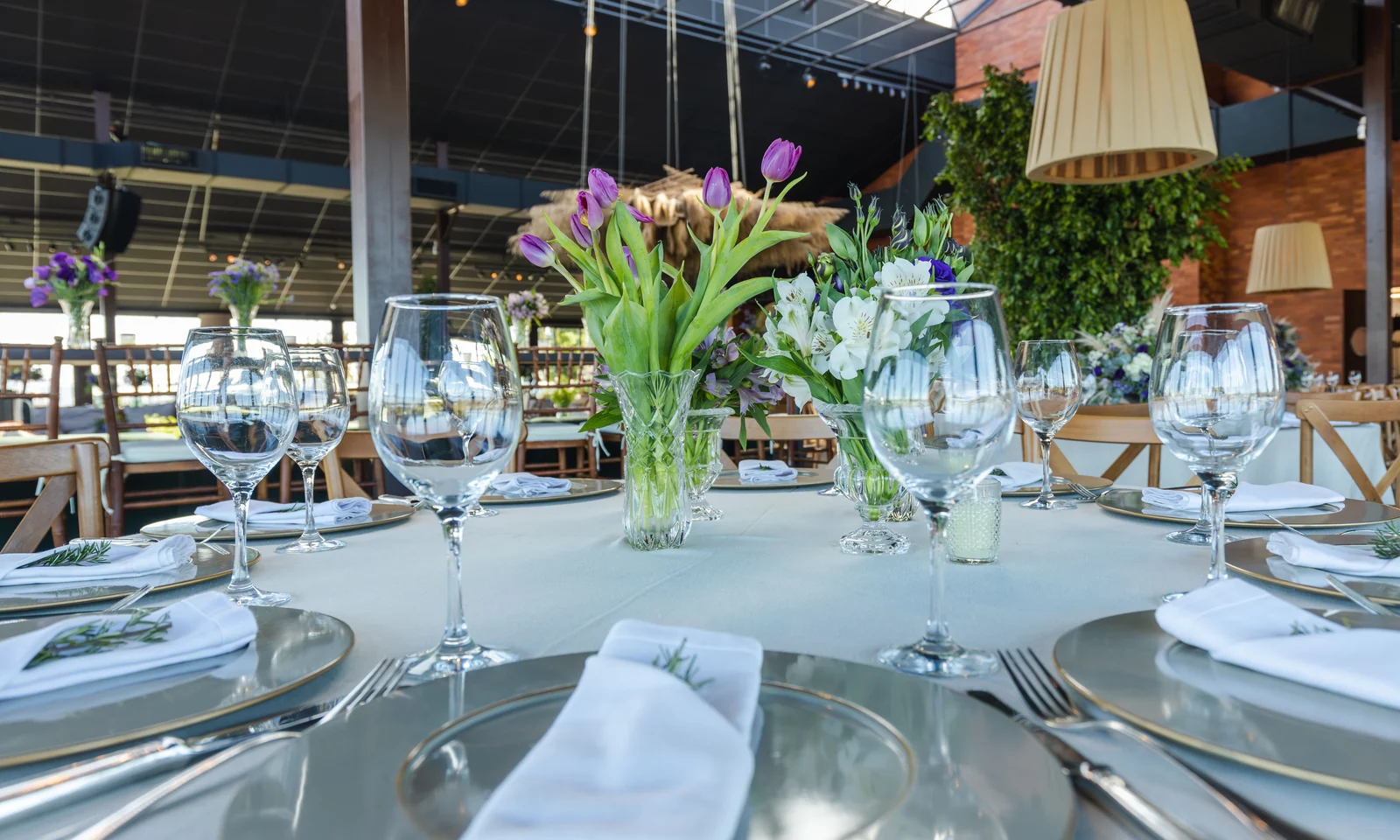
A centrepiece is a table system, not only a vase. Record table shape and dimensions, place-setting footprint, service style, sight lines, vessel footprint, total displayed height, mass, fill method, floral insert, water exposure, holder spacing and protective base. Check whether guests can see one another, servers can place dishes, linen remains protected, and components cannot be easily displaced. For candle holders, confirm candle or LED interface, cup dimensions, stability and cleaning method. For floral vessels, define whether water, foam, removable inserts or artificial stems are intended.
Build one production-equivalent table using the actual linen, tableware and candidate decor. View it seated, standing and from the event photographer’s main angles. Move chairs and service items as they will move during the event. Record accepted dimensions and a top-view placement map. A heavy vessel may still be unstable if its centre of gravity is high; a transparent vessel may reveal internal mechanics that a catalogue image hides. Review the tabletop decor collection by interface and role, not just finish. The release output should identify every component, its placement tolerance, allowed flower or candle load, cleaning limit, pack orientation and replacement code.

Define every arch, backdrop and hanging interface before quotation
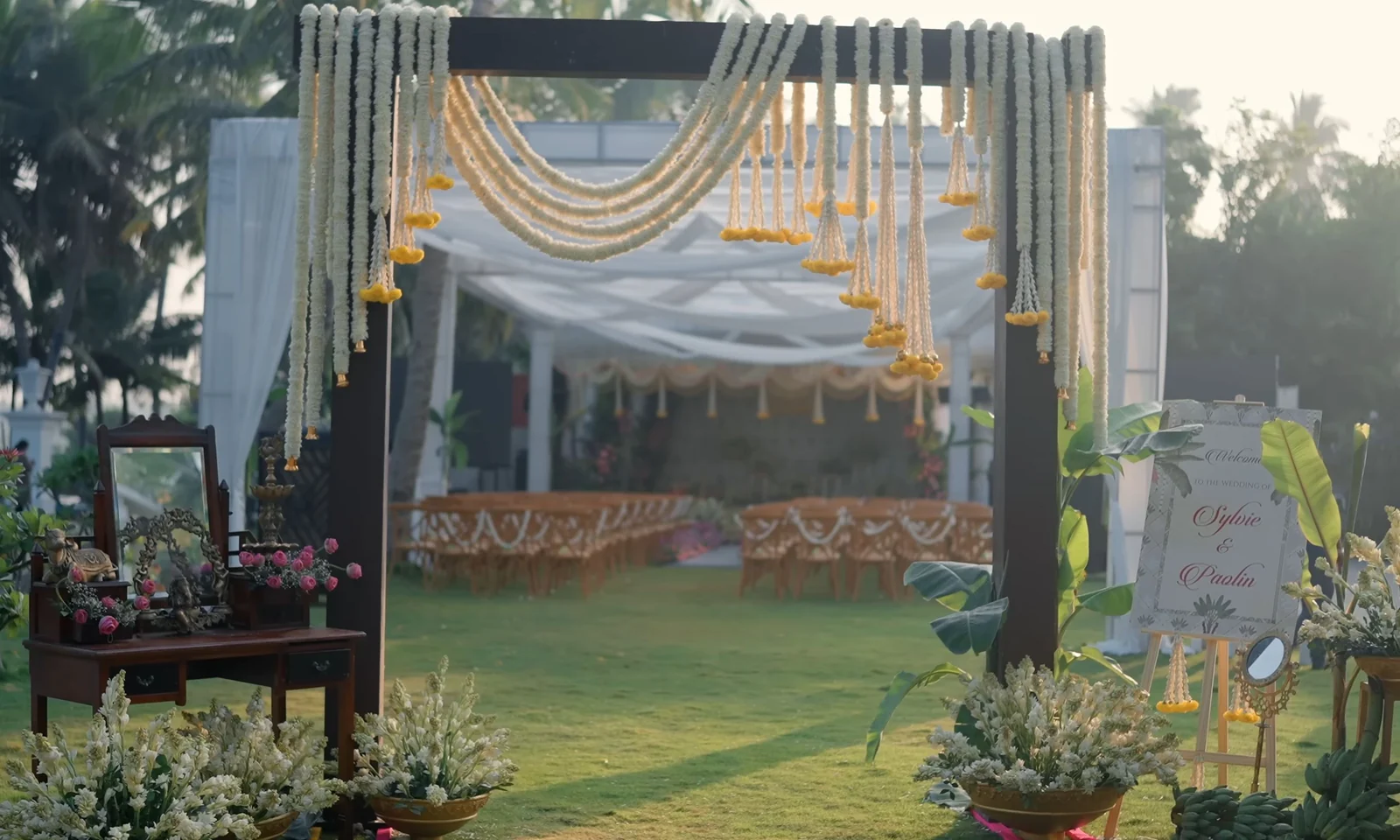
For an arch or backdrop, specify assembled width, height, depth, section length, component mass, base footprint, joint type, fasteners, finish, attachment points and permitted decorative load. Distinguish the product from venue-specific anchoring, ballast and installation engineering. A supplier can provide a frame and documented interfaces, but should not guess how it will be secured to an unknown floor or exposed to unknown wind. Hanging decor additionally needs a support-point plan, individual and combined loads, installation height, retrieval method and competent venue approval.
Request an exploded drawing, parts list, assembly sequence, tool list, connection photographs and packed dimensions. Trial-assemble the production-equivalent system, apply representative textiles and decorative elements, then time dismantling and inspect joints. Do not conceal structural connections under flowers before the responsible installer has checked them. The HSE’s event-safety planning guidance emphasizes clear responsibilities; apply that principle by naming designer, supplier, installer, verifier and venue approver. Stop the order if the visual concept depends on unsupported modifications, unapproved overhead points or improvised ballast. The product specification should show the boundary between supplied hardware and the method that a competent project team must design for the actual venue.
Route textiles, candles and powered decor through specific safety review
Textiles and films used near ignition sources or in public venues may require evidence and acceptance beyond a generic “flame-retardant” label. NFPA 701 describes fire-test methods for flame propagation of textiles and films, while the venue, destination and authority determine whether and how a standard applies. Record material identity, treatment, supplier, batch, test scope, cleaning history and installation arrangement. The UK government’s open-air events fire-safety guide and a local fire authority’s advice on flammable decor and flower walls reinforce the need for risk assessment, clear exits and separation from ignition.
Open flame, candles, powered lighting, batteries and cables each need their own product and venue review. The US CPSC summarizes voluntary work related to candles and candle accessories, but this does not approve a particular event arrangement. Record whether flame or LED is intended, the holder interface, heat and ventilation conditions, cable route, power source and responsible installer. Keep required evidence with the exact SKU and setup, including any operating limitation communicated to the event crew. If approval is uncertain, redesign the effect rather than treating decorative intent as permission.

| System | Controlled fields | Interface to verify | Evidence | Reapproval trigger |
|---|---|---|---|---|
| Table decor | Footprint, height, mass, finish, insert and holder | Table, linen, service, flower and candle/LED | Full table mock-up and placement map | Table, service or component changes |
| Structure | Geometry, parts, joints, base and permitted load | Venue support, ballast, attachment and crew | Drawing, trial build and competent review | Venue, load, joint or method changes |
| Textile/sign | Material, colour, dimensions, edge, print and attachment | Structure, lighting, viewing and fire route | Physical master and installed mock-up | Material, treatment, artwork or cleaning changes |
| Powered/light effect | Product identity, rating, power and control | Cable, supply, heat, weather and venue policy | Product file and qualified installation plan | Electrical, venue or operating changes |
5. Approve physical masters, artwork and a full installation mock-up
Use substrate-specific physical masters for colour and finish
A screen image cannot approve a wedding palette across glass, metal, textile, resin, artificial flowers and printed board. Create a physical master for every important material and process. Record base product, substrate, colour reference, coating or plating, sheen, texture, approved viewing light, date and revision. Where handmade or natural variation is expected, approve a signed central sample plus accepted boundary samples or photographs. Keep hardware colours, cable, clips and bases in the review; an exposed black clamp can defeat an otherwise controlled ivory-and-gold system.
Compare masters together in the intended composition, because simultaneous contrast changes perception. Warm metal beside a cool white fabric can make both appear different from isolated samples. Photograph the approved group under controlled conditions for orientation, while keeping the physical pieces as authority. State what the image can and cannot prove. If a finish is vulnerable to fingerprints, water, candle wax, floral chemicals or cleaning agents, run a use simulation and define the cleaning method. The custom collection development process should connect each master to the product, artwork, sample and purchase-order revision. Any substrate, supplier, treatment or process change must trigger review rather than inheriting approval from a similar-looking item.
Control signage, table numbers and personalization as production data
Signage introduces wording, names, dates, numbering, language, typography, colour and placement variables that can fail independently of the physical product. Create a data owner and a locked source for guest names, table numbers and event wording. Define finished dimensions, substrate, print method, colour mode, bleed, safe area, hole or stand interface, reading distance and orientation. For variable pieces, generate a complete proof set or a controlled sample plan that checks first, middle, last, longest and non-ASCII names where relevant.
Assign unique codes to every artwork-product-zone combination. The carton label should let the crew find “Reception / Table 12 / stand and card” without opening every box. Require production-ready artwork, a rendered proof and a physical sample on the actual substrate before release. Archive superseded files; changing a spreadsheet after proof approval must not silently change production. For reusable systems, separate permanent stands from replaceable printed inserts. Record spare blank cards and the approved local correction method, but do not rely on emergency handwriting for planned names. The action output is an artwork register containing filename, checksum or revision, product code, quantity, language, proof status, physical-sample status and authorized approver.
| Layer | Release evidence | Reject when |
|---|---|---|
| Master | Signed substrate and finish | Process is unknown |
| Artwork | Locked file and physical proof | Version is ambiguous |
| Mock-up | Installed record and open-point closure | Interfaces remain untested |
Run one full-scale installation mock-up and freeze the photographic record
Individual samples do not prove the composition. Build one complete representative table and one representative structure or backdrop with production-equivalent products, textiles, hardware, flowers, lighting and packaging. Use the expected tools and crew sequence. Check sight lines, colour relationships, stability, attachment, service clearance, cable visibility, folds, shadows and the camera view. Time unpacking, assembly, dressing, cleaning and dismantling. Record problems that only appear in the system, such as a vase insert sitting too high, a drape revealing a joint, or a table-number stand being hidden by flowers.
Create a photo record from fixed front, side, top and detail views, with a scale and zone code. Mark approved and open points on the mock-up sheet. A photograph supports installation consistency but does not replace dimensions, materials or venue approval. If the actual venue is unavailable, state what the representative setup cannot prove and schedule the remaining site check. The final record should contain the approved BOM, BOQ, physical-master references, assembly steps, tools, target setup time and authorized deviations. Freeze this as the production and crew baseline. A later substitute can be accepted only through a documented comparison of fit, appearance, evidence, pack and installation effect.
6. Expose MOQ and compare total installed usable cost
Separate minimums by base product, finish, print, assembly and zone pack
Wedding decor MOQ rarely exists as one number. Ask for the minimum on the stock base product, custom dimension or mould, each colour or coating batch, textile colour, printed artwork version, floral insert, assembly set, retail pack, zone label and shipping carton. State the unit for every minimum: pieces, metres, panels, sets, cases or total order value. A supplier may accept 100 mixed products while still requiring 300 pieces per exclusive metal finish or a full roll of one textile colour.
Map what can be shared. Common neutral vessels, one hardware finish and replaceable printed inserts can support many event themes. Exclusive sizes, five near-identical whites and separate packaging for every table can fragment the order. Ask for opening MOQ, economic run, pack multiple, expected process loss, overrun/underrun rule and reorder minimum. Tooling payment does not automatically make a tiny custom run economical. Likewise, a low base MOQ does not include personalized assembly labor unless stated. Require a line-by-line quotation showing product, customization, sample, tooling, assembly, packing, inspection and logistics. This allows the buyer to simplify a costly layer instead of deleting necessary quantities from the whole event.

Convert supplier quantities into complete event and carton multiples
Normalize each quotation against the same released BOQ and set hierarchy. Expand installed sets into component quantities, add named spares and samples, round each component to its process minimum, then rebuild complete event sets and zone kits. Show remaining excess by SKU. A supplier offering 120 holders per colour may create unusable imbalance if the event needs three holders for each of 44 tables and the chosen colours cannot be mixed. The correct comparison is not total pieces but complete approved installations plus controlled replacement stock.
Use consistent packaged-product measurements for freight and storage planning; the GS1 Package and Product Measurement Standard provides a common measurement approach, but it does not choose the buyer’s carton design. Record retail or install pack, inner and master quantities, dimensions, weights and stack assumptions. Reconcile production overrun with printed inserts and fixed sets so excess bases do not become falsely saleable stock. Before purchase order release, run a quantity proof: ordered components = assembled sets + coded spares + approved excess; assembled sets = zone kits + warehouse sets; cartons = all packed units at the declared count. Any unexplained remainder should be resolved rather than hidden in a total value.
Compare delivered, installed, recovered and reusable cost per event
Total wedding decor cost should include product, customization, tooling allocation, samples, inspection, packaging, freight, duty assumptions, delivery, receiving, storage, cleaning, installation labor, consumables, damage, strike, return and disposal or reuse preparation. State currency, payment timing, quote validity and the Incoterms rule with named place. The ICC Incoterms 2020 rules allocate delivery tasks, costs and risks between seller and buyer; they do not determine product compliance, title or the complete service scope.
Labelled hypothetical example 3: Option A provides 30 table sets at USD 42 each, USD 480 delivered logistics and USD 600 local installation, for USD 2,340 before recovery. If 27 sets are expected to remain reusable after the event, the first-event cost per recovered set is USD 86.67. Option B costs USD 48 per set, USD 520 logistics and USD 520 installation, or USD 2,480, but 29 sets are expected to remain reusable, giving USD 85.52 per recovered set. These are scenario assumptions, not supplier performance claims. The second quotation has a higher invoice and a lower modeled recovered-unit cost. Run expected and adverse cases for breakage, crew time, storage and number of future events. Separate one-time development from recurring cost, and do not claim a reuse benefit unless cleaning, storage and actual reuse are planned.
| Cost layer | Supplier statement | Buyer-normalized basis | Evidence | Decision question |
|---|---|---|---|---|
| Product and finish | Piece, metre or set price | Same approved specification and quantity hierarchy | Drawing, master and sample | Are all interfaces and components included? |
| Pack and logistics | Pack count and trade term | Delivered to the same receiving point | Dimensions, weights, route and named place | Who carries each cost and risk? |
| Installation | Often excluded or estimated | Same crew, access, tools, sequence and hours | Timed pilot and scope sheet | Can the venue window be met? |
| Recovery/reuse | Usually omitted | Usable returned stock after strike and cleaning | Return count, damage and storage record | What inventory remains deployable? |
7. Pack by venue zone and validate the complete installation route
Design zone kits that follow the crew’s load-in sequence
Pack the event in the order it will be received and installed. Each zone kit should identify event, venue, zone, sequence, responsible crew, contents, tools or consumables, installation photograph and return count. Separate fragile visible pieces from hardware while keeping them linked by code. Place the packing list where it can be read without removing every product. Large structure sections may travel separately, but their joints, fasteners and textile panels must share one assembly identity.
Plan the load-in sequence: structures and power routes typically precede textiles, vessels, flowers, signage and final detail, subject to the venue’s approved method. Avoid packing a critical base beneath decorative cartons needed later. Use color or numeric zone labels that remain legible in low light and can be removed from reusable products. Photograph each open kit before closure. During the mock-up, require a crew member who did not pack it to install from the instructions; this reveals missing tools, ambiguous labels and hidden assumptions. The result should be a zone-pack specification that mirrors the installation schedule and a master carton list that lets receiving staff count and stage the event without opening unrelated cases.

Validate packaging with the actual product, route and unpacking method
Packaging must control breakage, abrasion, tangling, deformation, missing components and wrong-zone mixing. Define individual contact points, wraps, bags, cavities, dividers, inner packs, cases and master cartons from the real product geometry and finish. Tall metal stands may scratch each other; glass vessels need separation; artificial flowers can deform; textiles can crease or transfer color; small fasteners can disappear. The approved pack should contain production-equivalent components, printed materials and quantity, not substitute weights or empty boxes.
Test handling and unpacking assumptions against the distribution route with a competent packaging specialist. Record conditioning, configuration, method, observations and acceptance criteria. ISTA’s guidance on when a packaged product should be retested is a useful change-control prompt: review the pack when product dimensions, mass, materials, finish, quantity, carton, route or process changes. Passing one vase pack does not approve a larger vessel or a mixed structure kit. After route simulation, perform an installation unpack: count, assemble, clean and display the items, then inspect concealed cracks, rub, missing hardware, distorted flowers and unreadable labels. The record should state what was tested and what remains outside the evidence.
| Check | Evidence | Stop when |
|---|---|---|
| Pack | Production-equivalent configuration | Substitutes hide contact risk |
| Unpack | Count and installed condition | Damage appears after display |
| Change | Retest review record | Scope is not comparable |
Control receiving, installation handover, strike, cleaning and storage
Receiving should compare shipment identity with the carton list before the setup clock begins. Record carton count, visible damage, zone labels, seal condition and exceptions. Open priority kits early enough to inspect critical structures, personalized signs and fragile products. Keep quarantine space and a decision path for replacement, repair or controlled substitution. During final handover, photograph each zone, confirm guest and service routes, remove packing debris, check intended lighting or candles under the approved method, and record open issues with an owner.
Strike is a second controlled process, not the disappearance of responsibility after the event. Define cooling or extinguishing steps where relevant, electrical isolation by qualified roles, removal sequence, count, cleaning limit, repair classification, rental return, disposal and storage. Wet flowers or soiled textiles must not be sealed against metal or paper products. Use the same zone codes to reconcile installed, recovered, damaged and missing pieces. Store reusable assets by product code and condition, with physical masters and hardware kept identifiable. A reuse claim should be supported by actual recovered condition and a next-use plan, consistent with the FTC’s caution that environmental claims need clear, non-deceptive qualification. The output is an event close-out record that updates replenishment quantities and future setup instructions.
8. Inspect the lot, verify responsibilities and freeze the reorder baseline
Create defect families around appearance, fit, structure, set and pack
Define defects against approved evidence and event consequence. Appearance defects include wrong colour, finish, print, stain, glass flaw, artificial-flower shape or visible repair outside an agreed boundary. Fit and dimension defects include wrong height, footprint, span, drop, insert size or attachment position. Structural concerns include damaged joints, missing fasteners, distorted bases or interfaces that do not match the approved competent method. Set defects include wrong table number, zone, component count or hardware. Pack defects include breakage, rub, tangling, crushed boxes and mixed kits.
Classify severity for the actual product, venue and use. A small cosmetic variation hidden inside a floral arrangement may be minor; the same mark on a welcome sign can be major. A missing decorative clip and a missing structural fastener are not equivalent. Create accepted and rejected photographs under a defined viewing rule, and state measurement tools and orientations. Keep safety and venue review separate from routine cosmetic sampling; a sampled visual pass does not authorize an unreviewed structure. The quality-control process should connect lot, specification, sample, defect, disposition and pack evidence. Release a concise defect library before production so factory, inspector, installer and buyer use the same language.

Define the lot, sample selection and evidence-rich inspection record
State what forms a lot: product, finish batch, artwork version, production period, assembly run or pack group. Record ordered and produced quantities, cartons presented and how samples are selected across time and carton positions. ISO 2859-1:2026 provides a framework for acceptance sampling by attributes, but it does not supply universal wedding decor defect definitions, inspection levels or AQL choices. Those decisions require competent, risk-based agreement for the actual product and destination.
Separate checks for identity, dimensions, appearance, component fit, set count, artwork, packaging and carton marks. Define method, tool, orientation and acceptance reference. Trace findings to lot and carton. For assembly or destructive checks, use a stated separate sample and frequency rather than suggesting every visual sample was structurally tested. The report should contain revision, lot size, sample size, defect counts by class, measurements, photographs, result, concessions and authorized disposition. If products are reworked, identify affected units and verify the reworked lot. Do not reduce the report to “passed.” An evidence-rich record lets the installer prepare replacements, the buyer release the right quantity and the next order preserve or improve the known baseline.
Assign product, venue, market and installation responsibilities explicitly
A wedding decor supplier cannot approve every destination, venue and installation from a product photograph. The responsible buyer or economic operator must identify intended use, users, destination, labeling, traceability and applicable product duties. For the EU, the General Product Safety Regulation addresses the safety of consumer products and considers product characteristics, packaging, instructions and foreseeable users. ECHA guidance on Candidate List substances in articles may be relevant under defined REACH conditions. These references orient a review; they do not certify generic wedding decor.
Create a responsibility matrix for product design, composition evidence, labeling, electrical work, structural method, fire assessment, venue access, installation, final walk-through and incident response. Record the competent person or organization, required document, deadline and approval revision. A venue email approving one drawing does not approve a later size or textile. A material declaration does not approve an installed candle arrangement. Stop release where an essential owner is blank or where two parties each assume the other is responsible. Keep supplier evidence linked to the exact SKU and keep venue approval linked to the exact method. The complete file should make every boundary visible before the event schedule removes time for correction.
| Boundary | Named record | Reject when |
|---|---|---|
| Product | SKU evidence owner | Scope is generic |
| Venue | Method and approval revision | Drawing has changed |
| Installation | Competent role and handover | Owner is blank |
Use a pilot installation, freeze the baseline and gate every later change
The final buying decision should follow a pilot that combines approved product, finish, artwork, set, packaging and installation method. The pilot can be one representative table and structure, or a limited event deployment where appropriate. Record receiving condition, setup time, tools, crew questions, appearance, fit, venue observations, photography, strike, damage, cleaning and recovered stock. Close each deviation with an owner and decision. Do not call a sample approved while an open issue still changes quantity, pack or installation.
Freeze the successful baseline: product codes, BOM, drawings, physical masters, artwork files, BOQ formulas, set hierarchy, zone pack, carton data, inspection criteria, venue method, photographs and approved deviations. Give each a revision. For a reorder or new venue, compare every proposed change with that baseline. Changes to product, substrate, finish, dimensions, artwork, structure, attachment, pack quantity, carton, route, venue or intended use should trigger the relevant reapproval and possibly retesting. The supplier should not substitute a near match without written comparison and authorization. The output is a release gate that distinguishes approved evidence from assumptions, protects the next event from undocumented drift and gives the buyer a reliable basis for replenishment.

Final wedding decor wholesale order checklist
- Choose rent, stock wholesale, decorated stock or custom manufacture for every item.
- Issue the venue plan, guest-journey zones, access window and approval responsibilities.
- Map anchor, repeat, connector, accent, utility and reusable product roles.
- Build the BOQ from use points; separate installed, spare, sample and recovered quantities.
- Calculate tulle from span, drop, fullness, overlap, cut plan and attachment method.
- Approve product dimensions, interfaces, physical masters, artwork and full mock-ups.
- Expose MOQ at base product, finish, print, assembly, pack and logistics layers.
- Compare delivered, installed and recovered usable cost under the same scope.
- Pack by zone, sequence and owner; validate route handling and real unpacking.
- Define lot, defect library, inspection plan, evidence owners and change gates.
To prepare a focused quotation, send LANBORUI the venue type and destination, event date, guest and table plan, reference images, zone schedule, required product systems, quantity range, finish direction, customization, installation responsibility, packaging route and delivery window. Start with the wholesale collections or contact the wholesale team with your brief.