

If you are asking where can I buy party supplies wholesale, choose the supplier only after defining the sellable set, intended users, product routes and usable arrival date. A stock wholesaler may suit fast replenishment; a program supplier may coordinate related families; a custom manufacturer may be necessary for proprietary artwork, colours, packs or assembled kits. The wrong route creates hidden component minimums, inconsistent set counts and artwork that cannot be repeated. This guide is for importers, distributors, party retailers, event buyers and private-label teams preparing a commercial order. It does not replace destination-market, venue, toy, food-contact, electrical or transport advice for a specific product.
The practical output is a buying-route decision, event-zone assortment, fixed kit hierarchy, product-classification matrix, banner and personalization record, quantity calculation, normalized RFQ, sample and inspection plan, and an 18-point pilot-release checklist. Four variables change almost every answer: what the item actually does, who will use it, how many pieces constitute the sellable unit, and when the complete program must be usable. Stop before quotation when any SKU is still described only by a theme name or by the word “set.”
The photograph shows why a buyer needs more than a category name. The table contains wearable items, disposable serving pieces, decorative elements and small handout products. Each may use a different quantity basis, material, pack format and compliance route. The sourcing task is to make those lines arrive as one coherent, countable and correctly classified program.
1. Define the wholesale buying route before searching for a supplier
Direct answer: use a stock source for speed, a program supplier for coordinated families and a custom manufacturer for controlled design or pack changes. Choose the route before names are shortlisted because it determines evidence, samples and inventory exposure.
Choose among stock wholesalers, program suppliers and custom manufacturers
A stock wholesaler or distributor is useful when the buyer needs existing products, smaller opening quantities and fast replenishment. The trade-off is limited control over exact color, artwork, packaging and long-term availability. A program supplier coordinates several related product families, assembles sets and manages a common visual or packaging direction. A custom manufacturer or manufacturing group becomes relevant when the order includes exclusive shapes, printed banners, buyer colors, private labels, engineered packs or repeated seasonal programs.
Ask what the quoted company actually controls. One supplier may print paper goods but purchase balloons, lights and favors elsewhere; another may only assemble retail kits. The arrangement becomes risky when component sources, inspection responsibilities, substitutions and delivery dates are hidden. Request a process map showing which site makes, prints, assembles, inspects and packs each family. Compare processes, not the words “factory direct.”
Record the decision in a route sheet with four fields: control required, irreversible process, inventory owner and recovery option. Ask for examples of current pack data and change records rather than a showroom of unrelated products. A supplier can be strong in printing yet weak in assembled-set control. The action output is one named route per SKU family and a list of responsibilities the buyer will not delegate.
| Route | Best fit | Control gained | Evidence to request |
|---|---|---|---|
| Stock wholesaler | Fast launch | Existing packs | SKU, stock validity, pack and substitution data |
| Program supplier | Coordinated range | Set assembly | Process map, owners and count record |
| Custom manufacturer | Exclusive design | Specification control | Process, sample, change and excess rules |
Define the unit of sale and the supplier’s scope
“One party set” is not a measurable unit until its contents are written. State the piece count for every component, the number of guests or tables the set is intended to cover, whether assembly is included, and whether the quoted unit is one piece, one consumer pack, one inner carton or one master carton. A 24-piece tableware set could mean 8 plates, 8 cups and 8 napkins, while another supplier may quote 24 of each. Both can honestly use the same short description.
Write a deliverable sentence for each program. For example: “Retail-ready birthday table kit for eight guests containing eight 9-inch paper plates, eight 250 ml paper cups and sixteen 2-ply napkins; coordinated approved color; contents card and barcode label; one kit per printed carton; twelve kits per master carton.” This sentence connects product, count, use and pack. Do not accept a set quotation that leaves piece counts or pack levels undefined.

Use Figure 2 to complete the brief before requesting a quote. It forces event, buyer, count, zones, product route, pack and date into one record. Add a component owner and inspection owner beside every line. If the same company does not control both, require a handover point and substitution rule. The approved deliverable sentence becomes the source for RFQ, sample label, purchase order and receiving check.
Work backward from the event date and destination
Party supplies can be more date-sensitive than ordinary home-decor inventory. Missing a retail launch reduces a selling window; missing a wedding or corporate event can make the order unusable. Record the required arrival date at the buyer’s warehouse or venue, then work backward through destination clearance, transport buffer, cargo handover, final inspection, packing, production, artwork lock and sample approval. Use calendar dates rather than “week 3” or “about 30 days.”
Separate production lead time from the complete timeline. Customs processing, battery routing, venue approval, consolidation and local delivery are not production days. Name every milestone owner and the response to a late approval. State whether partial shipment and stock alternatives are allowed and which items are event-critical. Boundary 1: a promised factory completion date is not an arrival guarantee.
For every milestone, enter an owner, calendar date, required evidence, stop condition and recovery option. “Artwork due” is not a gate; “approved PDF revision P03 signed by buyer before print-file release” is. Freeze the latest acceptable decision date for personalised data, not only the shipping date. If the schedule has no correction window after the production sample, the buyer should reduce custom complexity or choose stock alternatives.
2. Build the product range around event zones and guest moments
Build the range from guest-visible jobs, not colour alone. Map the welcome, backdrop, table, cake, activity and favour zones, then give every SKU one role, quantity basis and replenishment reason.
Give each zone a purpose, hero item and quantity basis
Organize the assortment around where a guest encounters it. The welcome zone may use a sign, entrance balloons and a directional marker. The backdrop needs one visual anchor plus supporting photo props. The table zone can include covers, serviceware, centerpieces and place details. Cake, activity and favor zones have different use and count logic. This method exposes gaps that a color-board approach misses: a kit may look coordinated but lack enough cups, a fixing method for the banner or a way to distribute favors.
Create a zone table with columns for occasion, location, intended user, hero item, supporting products, installation method, quantity basis, pack and responsible person. A retailer can adapt the same logic to a shelf: each product should still have a role in the customer’s complete party rather than existing only because it matches the color. The result is easier to explain, merchandise and replenish.

Figure 3 is the working map. Attach a SKU code and quantity unit to each zone card, then mark interfaces such as banner-to-frame, topper-to-cake, balloon-to-valve and favour-to-bag. The evidence is a scene mock-up plus a line-item list that reconciles to it. The action output is a range in which every visible promise has the product, fixing and pack needed to deliver it.
Separate core, theme and personalized items
Core items are reusable across several programs: plain-color tableware, neutral serving pieces, generic fixing accessories or unprinted favor bags. Theme items communicate the occasion through color, pattern, icons or wording. Personalized items contain a name, age, date, venue, logo or event-specific message. These three layers commit inventory at different times. Core stock can be shared; theme stock is narrower; personalized stock is usually tied to one order.
Delay irreversible decisions where possible. A neutral carton can receive a market label; one cup shape can support several approved prints; a generic banner can use a late-stage personalized panel. This reserves custom color, printing and tooling for visible customer value. Record what can be shared and what must remain unique.
Make the allocation at component level, not only at finished-kit level. A printed sleeve may be personalized while the cup, plate and master carton remain core. State which layer carries language, date or name data and when it becomes unusable for another order. This record determines postponement exposure, leftover ownership and whether a late market label can prevent a full packaging reprint.
Use a matrix-reduction review before requesting price cuts
Labelled hypothetical example 1. A launch brief contains three themes, four product families, two pack sizes and two language versions: 48 combinations before color variants. Sales teams confirm that the large pack is only needed for one theme, and that language can be handled with a late-applied contents label instead of separate printed cartons. The buyer reduces the opening matrix without removing the themes customers can see.
This is not a recommended SKU count. It demonstrates that assortment design controls cost and risk upstream. Ask which combinations share paper stock, balloon color, print plate, cutting die, label, insert or master carton. Then keep unique versions only where their expected demand and customer value justify separate minimums. A focused range that arrives complete is usually more useful than a broad opening order with weak stock depth and inconsistent pack counts.
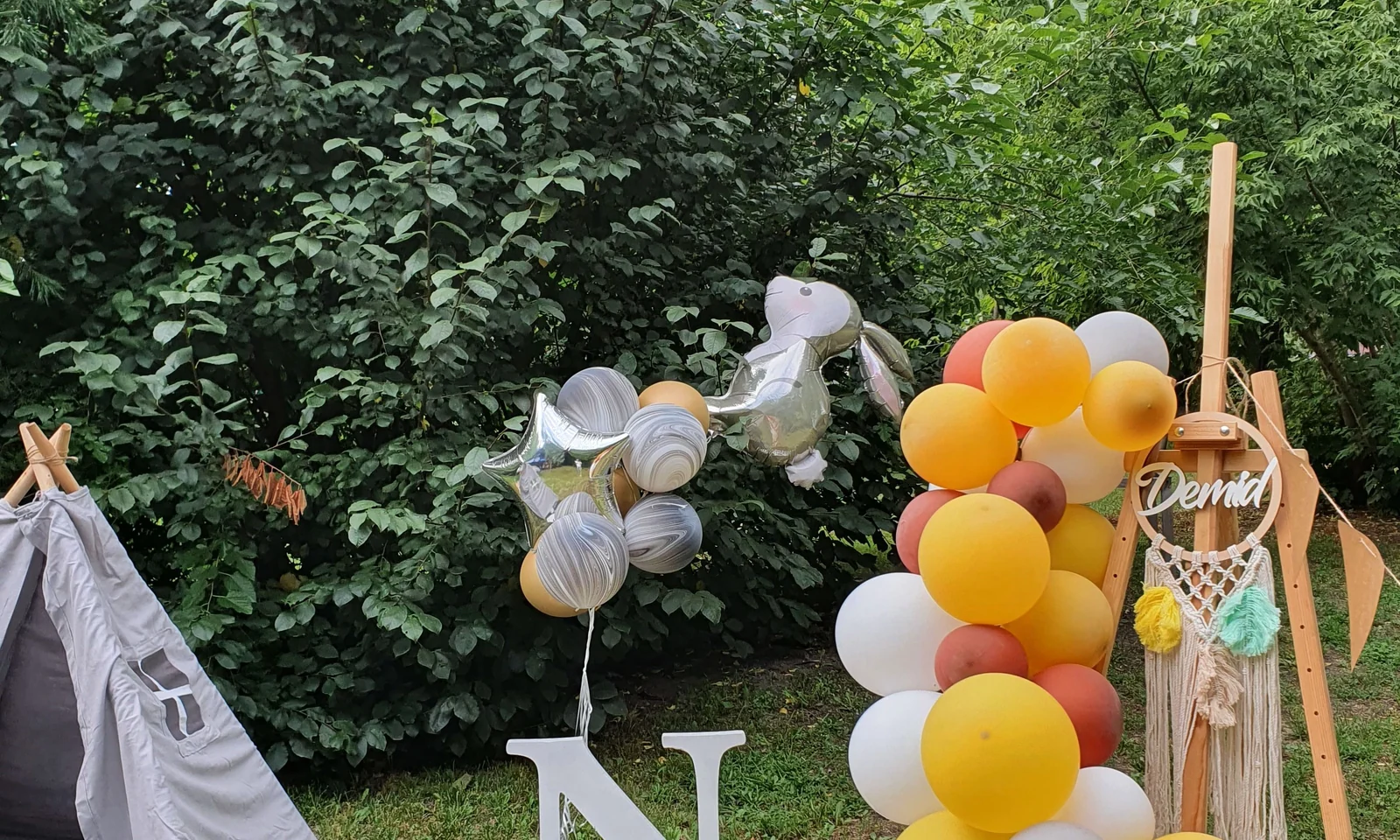
Figure 4 shows the commercial problem in a real themed scene: balloons, signage, props, cake presentation and small decorative elements may share a story but not a production process. List the visible variants buyers must distinguish, then remove invisible combinations that only duplicate purchasing work. The output is a reduced matrix with a reason and demand owner for every retained theme, size, language and pack.

3. Define the sellable kit, SKU and pack hierarchy before customisation
A wholesale party program becomes controllable when each component, consumer kit, inner pack and master carton has one identity and count. This hierarchy prevents a colour, language or component change from silently moving through quotation, artwork, receiving and replenishment under an old SKU.
| Level | Required identity | Count record | Change gate |
|---|---|---|---|
| Component | ID, construction, use | Pieces per kit | Material, function, warning or appearance |
| Consumer kit | SKU and fixed composition | Declared and component counts | Composition, language, artwork or count |
| Inner pack | Pack code and SKUs | Kits per inner | Mix or handling |
| Master carton | Carton mark and destination | Inners and kits | Dimensions, weight, route or receiving |
Create a fixed composition for every consumer kit
Start with the smallest component the buyer needs to identify: plate, cup, napkin, banner panel, balloon, ribbon, favour bag or light. Give it a component ID, material, dimensions, colour or print, piece count and intended use. Then define the consumer kit as a fixed composition of those IDs. “Twenty-four-piece kit” must show whether the count is eight each of three items or twenty-four each. Attach a contents image and a machine-readable contents table so artwork, assembly and receiving use the same record.
The decision is whether the assortment is fixed, buyer-selectable or deliberately dynamic. A fixed set can carry one stable retail identity; a buyer-selectable bundle requires order-line clarity; a dynamic assortment needs an agreed rule for what may vary. The evidence is a bill of materials, component samples, pack mock-up and barcode record. The stop condition is any substitution that changes intended use, warnings, declared count, language or customer-visible promise without a new approval. The action output is one set specification that can be reconstructed from component IDs.
Release the kit only when the photographed contents, declared count, bill of materials and assembled sample reconcile without interpretation.
Link retail pack, inner pack and master carton counts
The pack hierarchy controls ordering, scanning, storage and receiving. Record consumer units per inner, inners per master, total consumer units, total pieces, carton dimensions, gross weight, carton mark and mixed-SKU rule. If kits are assembled at a consolidation site, identify when component ownership transfers and which record proves the final count. Do not let “one carton” appear as both a shipping unit and a retail display without explicit dimensions and quantity.
GS1 describes a predefined assortment as a fixed combination sold as one physical trade item and states that a component change in such an assortment requires a new GTIN; its predefined-assortment rule also connects changes to packaging hierarchy. Local rules and the brand owner’s identification policy still apply. The practical output is a hierarchy sheet, a count reconciliation and a change gate, not a claim that every internal factory component needs a retail GTIN.
Receiving should verify the hierarchy from carton marks, pack labels, photographs and a controlled count sheet. The ordered, packed and received totals must reconcile before stock is released to inventory against its purchase-order line record.

Control changes at the level where the customer or supply chain sees them
Ask three questions before reusing an identity: will the customer distinguish the new version, does a regulated or liability disclosure change, and does shipping, storage or receiving change materially? GS1 uses these principles in its GTIN decision-support tool. In a party program, a new language, declared count, seasonal design, pack quantity or component composition may affect one or more of those tests.
Keep an effective-from date and old-stock decision with every approved change. State whether old and new versions may coexist, how cartons are distinguished and whether listings, product images or warnings must change. Evidence should include the previous and new bill of materials, artwork revision, pack dimensions and responsible approval. Do not overwrite an old file with a new revision under the same name. The action output is a signed change record linking reason, affected levels, identity decision, remaining stock, listing update and release date.
Require the same change reference on the purchase order, artwork approval, packing instruction and inspection checklist. Train receiving staff to separate coexisting versions instead of merging them under one generic description before the changed version ships.
4. Classify every party item by its actual use
Classify each line by actual use. Decoration, child-directed play, food contact, balloons, powered functions and venue installation may share a retail range while requiring different evidence and owners.
| Route | Trigger question | Minimum record | Stop condition |
|---|---|---|---|
| Decoration | Visual only? | Material, size, fixing, warning, destination | Use indicates play or another route |
| Child / toy | Marketed for play? | Age, construction, rule and evidence identity | Sample and evidence differ |
| Food contact | Touches food? | Construction, food type and use conditions | Generic claim lacks context |
| Powered / battery | Powered function? | Configuration, battery and transport records | Freight basis omits configuration |
| Venue installed | Site-dependent? | Material, fixing, installer and venue decision | No installer or approval path |
Separate visual decoration from children’s products and toys
A product does not follow one regulatory route simply because it appears in a party section. In the United States, the Consumer Product Safety Commission explains that a toy is a product designed or intended primarily for play by children under 14, while children’s-product testing and certification obligations relate to products designed or intended primarily for children 12 or younger. Applicable rules depend on the exact product and age. The CPSC’s Toy Safety business guidance and ASTM F963 requirements chart provide an official starting point for US-bound products.
A photo prop, party whistle, novelty wearable, game prize or small favor may have play value even when sold beside banners. Age grading, small parts, coatings, projectiles, sound or other hazards may become relevant. Classification should use design, marketing, foreseeable use and intended user. Do not rename a child-directed play item “decoration” to avoid applicable requirements. Boundary 2: a party theme does not determine product classification; the exact article and intended use do.

Figure 6 should be completed for every ambiguous novelty item. Ask for age grading, marketing copy, instructions, dimensions, detachable parts, foreseeable handling and final packaging before selecting the evidence route. A lab report is useful only when its product identity and applicable sections match the final construction. The buyer should stop release if the commercial listing, sample label and supplier classification describe different users or functions.
Identify food-contact articles by material and use condition
Plates, cups, straws, serving pieces and some cake toppers may contact food or drink. The US Food and Drug Administration describes food-contact substances as substances intended for use in materials that come into contact with food and explains that safety evaluation considers the substance, food type and conditions of use. Its food packaging overview and food types and conditions of use show why “food grade” without material and use context is not a complete statement.
Record the material, coating, printing location, intended food or beverage, temperature, contact time, repeated or single use and destination. A cold-drink paper cup, hot-food plate and decorative topper inserted into icing do not have identical exposure. Ask for evidence that identifies the tested or assessed construction, not a generic certificate from an unrelated material. Changes to ink, coating, adhesive, colorant or supplier can require review.
Figure 7 is a scene reference, not proof of compliance. It helps the buyer identify every surface that may touch food or drink, including inks, coatings, adhesives and straws. For EU plastic food-contact items, the European Commission explains the role of supporting documentation and a declaration of compliance in its food-contact legislation guidance. Record the exact construction and intended use beside each document.

Treat balloons, powered items and venue installations as separate routes
Latex balloons have specific US cautionary-labeling requirements, including for online direct-purchase advertising, as summarized in the CPSC’s common e-commerce safety violations guide. Do not assume that a warning printed on an old sample covers the final retail pack, language, placement and online listing. Confirm the exact balloon material, size, pack count, inflation method, included accessories, intended user and label version.
LED strings, light-up favors or electronic table pieces require the exact electrical and battery configuration to be identified. If lithium cells or batteries are shipped, transport responsibilities and documentation depend on the product and battery configuration. PHMSA provides a current lithium battery guide for shippers and explains the UN 38.3 test-summary requirement. “Battery included” is not enough information for a freight quotation.
Public venues may also control suspended decorations, fabrics, drapes, fixing methods and flame-resistance evidence. For example, Seattle Fire publishes local requirements for special-event tents and flameproofing. That page is an example of local authority, not a universal global rule. Boundary 3: the venue and authority having jurisdiction approve the installation context; a supplier claim does not create site permission.
Use separate columns for balloon warnings, powered-item configuration and transport records, and installed-decor fixing and venue decisions. Name the document owner, revision and release status for each SKU route.
5. Choose party banners and the visual system from the real setting
Banners and personalized details must work at full size, at the viewing distance and with the real fixing method. Approve the installed result and production file together; a screen proof cannot verify the scene.
Size the message for viewing distance, photographs and reading order
Buyers asking how to choose party banners for birthday parties should begin with where the banner will be seen. Record wall, arch, backdrop, window or table-front location; available width and height; camera distance; guest sight line; message length; language; and whether the banner must read in photographs. A long personalized message on small pennants may be technically correct but visually weak. Letter height, contrast and spacing should be judged at the expected distance, not only on a design screen.
Define the message hierarchy. The occasion may be primary, with name and age secondary. Confirm reading order before cutting separate letters or pennants. For photo backdrops, test whether balloons, people or furniture will cover the key text. Request a scaled layout with dimensions, then approve an installed sample or full-size section. This turns “make the banner larger” into measurable feedback.

Use Figure 8 before approving art. It links message, view, place, fixing, material and file. Print a full-size letter or crop, place it at the expected distance, and photograph it with a person or furniture in the intended sight line. Record the approved minimum letter height, overall banner size and no-obstruction zone. Stop if a personalization change causes the text to wrap or shrink outside that approved system.
Match material and fixing method to the location
Paper or card can suit dry indoor use and short events, but weight, curl, crease recovery and tear around holes should be reviewed. Fabric may fold for transport and create a softer appearance, while edge finish, print show-through and hanging tension matter. Film or plastic can resist moisture but may reflect light, stretch or require different disposal and material review. The correct choice depends on location, duration, handling, visual target and destination requirements.
Specify fixing as part of the product: hole position and reinforcement, ribbon length, clips, adhesive tabs, frame pockets, grommets or arch connection. Ask whether the venue permits adhesive or penetrations and who supplies the support structure. A beautiful banner without an approved fixing method is incomplete. For outdoor use, also define wind exposure, wet-weather plan and whether the product is temporary decor or part of a more controlled installation.
Figure 9 demonstrates why installation is part of the product: the banner competes with balloon volume, ceiling height and camera framing. Request photos of the approved fixing points and a packed fixing kit with counted components. For outdoor or public settings, obtain the venue decision before mass production. The buyer’s specification should separate supplier-provided hardware from installer-provided supports and state the maximum approved span and use context.

Lock artwork versions, color targets and personalization data
The artwork pack should contain dimensions, safe area, bleed, color mode, fonts or outlined text, approved logos, print side, hole or seam positions and a revision code. For personalization, use a data sheet with name, age, date, language, SKU, quantity and proof status. Approve a rendered proof, not an email sentence.
Set rules for spelling, character support, capitalization and late changes. Identify whether personalization is variable printing, separate applied labels or hand assembly. Mark the point at which data is locked and the cost or timing consequence of a revision. Keep approved PDFs or images with the purchase order. A sample of “Emma, age 8” does not approve an unreviewed production file for “Amelia, age 18.”
Use Figure 10 as the personalization register. Link the PO line, variable-data row, artwork revision, rendered proof, released print file and sampled production result. Include who approved each stage and when. A spelling check without file identity is not traceability. The stop condition is simple: if the proof, data row and production file do not display the same revision, the order cannot move to printing or assembly.

6. Convert guest counts and event zones into purchase quantities
Calculate from the unit that consumes each item: guest, table, backdrop, activity station, retail kit or store. Convert need through pack multiples and label every spare or buffer.
Choose the correct quantity unit for every product
Party quantities can be based on guests, tables, rooms, backdrops, activities, retail kits or store doors. Plates and favor bags may use guest count. Centerpieces use table count. Entry signs use location count. Balloons may use the installed design, expected loss and pack quantity. Retailers may buy by consumer kit and case rather than by event. Put the quantity basis beside every SKU so purchasing, packing and receiving teams use the same logic.
Also record the conversion between piece, set, inner and carton. If one consumer pack contains 20 balloons and one master carton contains 48 consumer packs, an order for 9,600 balloons is 480 consumer packs or 10 master cartons. Quote and receive in agreed units. Avoid manually converting totals from several supplier sheets after the order is placed.
Build a conversion chain for each line: use need → pieces per use → consumer packs → inner packs → master cartons. State the rounding rule and show the unrounded need. For variable attendance, separate confirmed base, contractual maximum and contingency stock. The action output is a quantity sheet that purchasing can order, the supplier can pack and the receiving team can reconcile without translating “for 100 guests” into pieces again.
Run a labelled calculation with pack rounding
Labelled hypothetical example 2. An event has 120 guests, 15 tables and two photo zones. The brief allows a 5% place-setting buffer, eight spare favor bags, one spare table kit and one spare backdrop set. A balloon design requires 360 balloons sold in packs of 50. The calculation below converts each use to its order unit and rounds indivisible packs upward.
The example is not a universal buffer policy. It shows why one percentage should not be applied to everything. A place-setting buffer addresses guest variation and handling loss. A spare backdrop set protects a critical visual zone. Balloon rounding is created by the consumer pack. Each reason should be visible so excess stock can be challenged instead of hidden in a blanket percentage.

Figure 11 makes every assumption visible. Keep the original input, calculation, pack multiple, rounded result and reason for extra quantity on separate lines. If a pack size changes after quotation, rerun the calculation rather than preserving the old carton total. The output should also show where leftover stock can be reused and where personalization makes it event-specific, because both facts change the commercial consequence of rounding.
Write separate rules for spares, defects and replenishment
Define setup spares for items likely to tear, inflate poorly or be damaged during installation. Define guest-variation stock for consumables and favors. Define production acceptance separately with the quality team; an event buffer is not permission to ship defects. For retail programs, decide whether reserve stock sits at the supplier, importer or distribution center and how repeat artwork and color are controlled.
Identify critical items with no functional substitute. A missing favor filler may be replaceable; a personalized welcome sign may not be. Give critical items earlier sample and production deadlines, higher visibility in inspection and a clear contingency. Where partial shipments are permitted, specify which SKUs must travel first. Quantity control is therefore also priority control.
Code every extra unit as setup spare, attendance reserve, critical-zone backup or retail replenishment. Do not call all of them “allowance.” Link production defects to the inspection acceptance plan rather than consuming good-event stock to conceal poor output. The record should identify who owns unused generic items, whether personalized extras are destroyed or returned, and what reorder evidence is preserved for repeat events or seasons.
7. Expose MOQ and normalize every supplier quotation
MOQ comes from a material, colour, print, die, component, assembly or carton process. Compare quotes only after the binding minimum, excess ownership, pack hierarchy, delivery basis and date risk share one sheet.
Separate stock, private-label and custom supply routes
A stock route uses existing products, existing colors and standard packs. A private-label route may keep the product but add a buyer label, print or retail carton. A custom route changes shape, die, component, color, artwork system or assembled set. Do not compare these routes as if the price difference were only supplier margin. They commit material and setup at different stages and produce different inventory risks.
Ask each supplier to mark every line as stock, modified stock or custom. Record the component that changes, the one-time charge, the repeating unit cost, the sample route and the cancellation point. If a supplier proposes a stock substitute, require a separate product code and approval. A substitution can change color, piece count, age grading, food-contact construction, battery configuration or pack dimensions.
Where one program mixes routes, split the purchase order into independently identifiable lines and name the consolidation owner. Stock products can change availability while a custom item is still in production, so reserve or reapprove them at a defined gate. The action output is a route-labelled quote in which stock validity, custom cancellation point, excess-component ownership and substitute approval are visible instead of buried in general terms.

Find the process that creates each minimum
Party-supply MOQ may be driven by paper or film purchase, custom color batch, balloon run, print plate, digital-print setup, cutting die, mould, ribbon or accessory purchase, label run, retail carton print, set-assembly labor, inner quantity or master-carton rule. Ask whether the minimum applies per design, color, size, language, personalized file, component or total order. Then ask which SKUs can share it.
“MOQ 1,000 sets” is incomplete if one set contains items produced at different sites. The banner may need 1,000 printed units, while cups require 5,000 pieces and custom balloons require a larger color-and-print run. The supplier may hold excess components, increase the set price or require the buyer to purchase leftovers. Put component balance and ownership in the quote. Do not accept “MOQ per design” until design, color, size, piece count and pack are defined.
Figure 12 converts vague MOQ language into five process questions. Request the minimum, setup cost, shared variants, leftover quantity and ownership for each binding process. If a printed carton minimum exceeds the component run, compare neutral cartons with late labels before accepting excess obsolete stock. Record the commercial choice and the exact versions that may share material, colour, print tooling or set assembly.
Compare landed, packed and date-risk assumptions
Normalize quotations to the same SKU description, piece count, material, printing, accessories, assembly, label, retail pack, inner and master carton, inspection scope, delivery term and destination. Request packed dimensions, gross weight, carton count and whether products are nested, flat-packed or assembled. Low-value party goods can become freight-sensitive when air-filled shapes, display packs or inefficient mixed cartons increase cube.
Separate unit price from development, tooling, plate, sample, test, inspection, consolidation and expedited-freight costs. Add the cost of unusable leftovers created by component minimums. Then compare timeline resilience: sample capacity, artwork cutoff, production buffer, consolidation plan and recovery options. The cheapest quote is not the lowest-risk program if its schedule leaves no time to correct a print or pack error before the event.
Labelled hypothetical example 3. Route A quotes 1,200 stock kits at $4.10 plus $1,700 freight and inspection: $6,620 total, or $5.52 per kit before duty and local costs. Route B quotes 2,000 custom kits at $3.35 plus $2,900 setup, freight and inspection: $9,600, or $4.80 per kit on the same basis. Route B saves $0.72 per unit but commits $2,980 more cash and 800 more kits. Record the demand and reuse assumptions that justify that exposure.
| Field | Supplier A | Supplier B | Buyer decision |
|---|---|---|---|
| Kit and count | Exact configuration | Exact configuration | Match or adjust |
| MOQ and excess | Process, quantity, owner | Process, quantity, owner | Compare cash exposure |
| Pack hierarchy | Counts, size, weight | Counts, size, weight | Recalculate freight |
| Verification scope | Included / excluded | Included / excluded | Price missing work |
| Arrival basis | Term, route, dates | Term, route, dates | Compare usable arrival |
8. Approve, inspect, pack and release one repeatable party program
Release depends on continuity: the approved scene, component list, artwork, production version, set count and pack must describe the same order. Attractive pieces still fail when the complete set arrives late or incomplete.
Approve an assembled sample in the way the buyer will use it
Review individual pieces and the complete scene. Build one table setting, hang the banner with the supplied fixings, inflate the approved balloon sample by the intended method, assemble the favor pack, test the light or moving item and place the retail kit in its shelf orientation. Check color under relevant light and photograph front, back, fixings, labels, contents and pack. A flat artwork proof cannot reveal weak ribbon, curling card, missing components or a banner hidden behind balloons.
Name the sample ID, date and revision. Record approved materials, dimensions, piece count, color target, print, personalization data, warnings, food-contact construction, electrical configuration, fixing accessories and pack. Separate a design change from defect correction. Boundary 4: approval of one kit does not authorize substitutions in its component materials, sources, warnings, batteries or set counts.
Issue one sample-release sheet that lists every approved component ID and photographs the complete set from the user’s perspective. Include destructive or use checks where relevant, but do not expand one sample observation into a universal performance claim. The action output is a signed reference that production and inspection can identify without relying on memory, chat screenshots or a loose collection of individually approved pieces.
Inspect set accuracy and validate packing for the route
Production checks should match the product families. Paper goods may require dimensions, material, print position, color, cut, fold, glue and count checks. Balloons may require material, size, print, pack and applicable warning review. Sets need component identity, quantity, orientation, accessories, personalized version, barcode and carton separation. Powered items require configuration and function checks. Define sampling and acceptance with the buyer’s quality professional; one generic tolerance table is not suitable for every party product.
Pack engineering should address moisture, crushing, abrasion, crease, puncture, tangled ribbons, loose batteries, mixed-SKU errors and carton handling. Use representative final products and final packs. The ISTA Guidelines emphasize choosing a procedure that represents the distribution environment, using representative samples, defining damage or degradation criteria and documenting results. One test result does not validate every parcel, pallet and consolidated route.
Define critical, major and minor observations around the actual customer promise, then agree the sampling approach with a qualified quality professional. Count accuracy, personalization, warnings, language and barcode identity may be release-critical even when cosmetic variation is acceptable. Preserve carton dimensions, gross weight, pack photographs and test configuration. A route or pack change should trigger review; ISTA notes that changes to product, package or process can require retesting.
Qualify technical control and schedule resilience separately
Technical control asks whether the supplier can identify components, intended use, material, artwork, warnings, set counts, approved samples, inspection characteristics, pack configuration and substitutions. Schedule resilience asks whether the same organization can reserve stock, coordinate multiple processes, control artwork cutoffs, consolidate components, protect a correction window and recover from a failed print or missing line. Score both dimensions; a strong product sample does not prove the program will arrive complete.
Use evidence from one comparable process, not a generic company deck. Request a recent anonymized change record, pack specification, component-count sheet and milestone plan. Ask who signs each release and who can stop shipment. Figure 13 shows why the route matters: an outdoor scene uses location-dependent fixings, balloon installation and weather contingencies that a tabletop sample cannot prove. The action output is a supplier scorecard with evidence owner, gap, due date and no-go condition.
Figure 14 converts the required usable-arrival date into a backward plan. Enter real durations only after product route and destination are confirmed; the sequence is not a promised lead time. Every stage needs an owner, date, evidence, stop condition and recovery option. If the print-file lock or final pack release consumes the correction window, reduce customization, split event-critical lines or choose an approved stock alternative before placing the order.

Release the pilot and preserve one reorder baseline
Run a pilot that exercises the complete commercial system: final artwork, real personalization data, fixed component composition, retail and master packs, destination information, inspection record and the planned route. The pilot is not successful merely because the pieces look attractive. Receiving must reconcile the carton and kit counts, users must be able to assemble or install the products, labels and warnings must match the listing, and any damage or setup difficulty must be translated into a controlled revision.
Figure 15 is the final release gate. Preserve the approved sample ID, component bill, artwork files, data template, material and colour references, pack hierarchy, carton record, inspection characteristics and corrective actions as the reorder baseline. A repeat order should start by comparing proposed changes against that package. Do not write “same as last order” when the evidence cannot reconstruct the last order or when a component, destination, pack count or listing has changed.
Close the pilot with a dated deviation log. Each issue needs a disposition, owner, due date and decision on whether the approved baseline changes. Preserve one sealed reference or an equivalent controlled record, and record which corrective actions must be verified on the first repeat order. The action output is a reusable baseline, not a collection of disconnected approval messages.

Final 18-point party-supplies release checklist
Before releasing the pilot purchase order, confirm all 18 controls:
- Each family has a named stock, program, private-label or custom route.
- Maker, printer, assembler, inspector and consolidation owner are identified.
- Each SKU has a zone, user, actual use and quantity basis.
- Core, theme and personalized components have stated leftover ownership.
- Each component has a controlled ID, construction and approved version.
- Each consumer kit has a fixed composition or approved variation rule.
- Consumer, inner and master-pack counts reconcile.
- Identity decisions reflect changed assortments, counts and languages.
- Toy, food-contact, balloon, powered and venue routes are reviewed.
- Environmental claims are qualified and supported for the destination.
- Banners have approved size, material, fixing and installed reference.
- Personalization data, proof and print file share one revision.
- Needs convert through pack multiples with labelled rounding.
- Each MOQ names its process, excess quantity and owner.
- Quotes share configuration, pack, verification, delivery and destination assumptions.
- The assembled sample identifies components, warnings, labels and accessories.
- Inspection, pack validation, carton marks and receiving records are approved.
- The backward schedule names usable arrival, owners, stops and recovery.
Review LANBORUI’s giftware collection, party solution, custom development, quality control and export capability. Send the event brief, kit count, product routes and usable-arrival date through the contact page.