

If you are deciding where to buy plant pots in bulk, choose the source by the risk it must control. A stock wholesaler can be right when speed, ready inventory and a low opening commitment matter most. A category manufacturer is stronger when actual dimensions, drainage, finish, nested-set relationships and export packing must repeat. A project-planter specialist is usually the better lead when liners, handling, site access, installed scale and sequenced delivery dominate.
This guide is for importers, garden-centre buyers, home-decor retailers, distributors, private-label teams and hospitality or commercial-project buyers. It shows how to turn a visual planter idea into a comparable RFQ, a fit-controlled product system and a release record. It is not a plant-care prescription, named-vendor directory, structural approval or legal opinion.
Figure 1 makes the commercial problem visible: planters are presented as a coordinated range but accepted, packed and reordered as physical SKUs. The buying record must connect use, actual measurements, insert or liner compatibility, material and finish, drainage, packed configuration and approval history. A supplier is suitable only when it can keep those records connected through production and reorder.
1. Choose the product role and sourcing route before requesting prices
A request for “stylish indoor planters” invites attractive catalogues but not comparable quotations. Start by deciding what each pot must hold, how water is managed, where it will be sold or installed and which part of the result the supplier must control.
Separate growing pots, cachepots and project planters
A growing pot holds growing media directly, so usable internal volume, drainage, handling and stability are central. A decorative cachepot hides a separate grow pot or liner; opening clearance, insertion, seating, removal and retained-water management determine whether the pair works. A project planter is selected for an installed retail, hotel, office or landscape setting, where external scale, liner, unit weight, access route and delivery order may be more important than unit retail packaging.
Decision 1: assign every SKU one primary role and one water-management method before comparing prices. A no-hole decorative pot is not automatically defective when deliberately approved as a cachepot. The University of Illinois Extension describes a liner inside an outer container as double potting, but the operating method must still prevent harmful retained water. Boundary 1: the buyer or horticultural adviser must supply the target plant, grow pot or planted-use requirement; this article does not select a container for every species.
Create a role line in the SKU tree: `direct planting`, `decorative cover`, `self-watering system` or `installed project planter`. Add indoor/outdoor setting, target insert or liner, water route and expected sales unit. The output is not prose; it is a one-line operating definition that follows the item into quotation, sampling, labels and receiving. If the team cannot state that line, the product is not ready for supplier comparison.
| Route | Best fit | Evidence to request | Key trade-off |
|---|---|---|---|
| Stock wholesaler | Fast launch, modest opening order | Live stock, actual dimensions, cartons, reorder status | Less exclusivity and weaker change control |
| Category manufacturer | Repeatable size, finish, set and pack | Process map, approved sample, production and packing records | Higher development commitment |
| Project specialist | Large or site-dependent planters | Mould, liner, weight, handling and delivery interface | Longer coordination and review cycle |
| Sourcing partner | Multi-material coordinated range | Named factories, transparent revisions and corrective owners | Coordination value depends on transparency |
Match the supplier route to the dominant risk
Use a stock wholesaler when assortment access, launch speed and low development effort matter most. Confirm live inventory, actual dimensions, carton data, reorder status and discontinuation policy. Use a category manufacturer when a mould, dimension, saucer, glaze, coating, set relationship or private-label pack must repeat. Ask which forming, firing, coating, assembly and packing processes are controlled in-house and which are subcontracted.
Use a project-planter specialist when large moulds, reinforcement, liners, lifting, floor interfaces, site protection or sequenced delivery are central. A sourcing partner can coordinate ceramic, resin, metal and woven products, but only when factory identity, specification ownership, approval responsibility and corrective-action ownership remain transparent. Decision 2: choose the route that owns the dominant failure mode, then compare suppliers inside that route. Stop condition 1: do not request final pricing from a catalogue-only source that cannot identify who controls the quoted material, revision and pack.
The correct route may differ within one collection. A ready-stock ceramic accessory range can sit beside a custom project planter without forcing both through one supplier model. Record route by SKU family, not by buyer preference. The deliverable is a route map naming source type, process owner, evidence expected and escalation owner. This prevents a wide catalogue from being mistaken for manufacturing control.
Qualify evidence before style breadth
Ask a candidate supplier for one reconstructable example, not fifty catalogue pages. The example should connect the product drawing, actual sample measurements, material and finish reference, component list, packed configuration, inspection record and corrective action. A factory tour, audit or video can establish capability context, but it does not prove that the quoted SKU, finish and carton are controlled today.
Score evidence in four layers: identity, process, approval and repeatability. Identity names the factory, SKU and revision. Process explains how the body, finish, liner and pack are made or coordinated. Approval records measured and visual results. Repeatability shows how changes, nonconformities and reorders are handled. Decision 3: shortlist suppliers on evidence tied to the quoted item before comparing assortment breadth. Boundary 2: a management-system certificate can support the capability review but does not approve the product.
Figure 2 turns the section into an operating tool. Use it at the first supplier meeting and require one owner for each output. The result should be a role-and-route decision, an evidence request and an unresolved-risk log. Suppliers that answer with only marketing names, styled images or generic certificates remain in discovery status, not commercial approval.

After using Figure 2, the buyer should be able to explain why the selected source owns the dominant risk. If that explanation depends only on price or catalogue size, repeat the route review.
2. Control actual geometry, insert fit and SKU identity
Planter sizes fail when a label such as “30 cm” is treated as a complete specification. The nominal size may refer to outside width, opening, class, height or a marketing family. Fit and pack decisions require named measurement points on an actual reference.
Measure seven points and define the reference surface
Record maximum outside width or diameter, opening, narrowest usable internal width, internal depth, overall height, base or foot footprint, and rim or wall section. Add net weight, drainage-hole geometry, saucer or component dimensions and packed length, width, height and gross weight. An oval or irregular planter needs axes and orientation; a tapered or shouldered cachepot needs the narrowest insertion path, not only its rim.
State where each measurement begins and ends, the tool used, unit, resolution and tolerance. AmericanHort’s ANSI Z60.2-2025 explains that container classes represent volume ranges and recommends obtaining exact container dimensions from manufacturers. Decision 4: use class or nominal size for navigation, but use measured physical geometry for fit, packaging and receiving. Stop condition 2: hold a quote when the supplier cannot state what its advertised size measures.
Labelled hypothetical example 1: a catalogue says “30 cm planter.” Sample A measures 30.2 cm outside, 25.8 cm opening and 22.9 cm at the shoulder. The buyer’s grow pot measures 24.6 cm at its widest removal path. The available shoulder clearance is `22.9 – 24.6 = -1.7 cm`, so the insert cannot pass even though the opening looks adequate. Every number is illustrative; replace it with production-equivalent samples. Figure 3 shows the record needed to prevent this error.

Approve insert, liner and saucer fit as a system
A target grow pot or liner must pass the narrowest opening, maintain defined side and top clearance, seat without hanging on the decorative rim, remain stable and be removable by the intended operator. A saucer must support the base, receive drainage in the intended position and stay associated with the correct SKU. A project liner must also align with access, planting and maintenance methods.
Approve the physical pair, not two nominal dimensions. Record the insert or liner manufacturer and item, actual outside geometry, planter revision, clearance at critical points, seating height, removal method and water route. Repeat the check at minimum and maximum allowed planter dimensions. Decision 5: treat fit as a tolerance stack, not a single pass/fail on one ideal sample. Boundary 3: clearance values must be established by the actual components and use; this article does not publish a universal allowance.
A useful output is a compatibility worksheet with photographs of insertion, final seating and removal plus measured gaps. Figure 4 provides the five gates. If the grow pot can enter only when tilted, document the real handling action and check that the planted unit can perform it. If operators must pull on foliage, force the rim or spill retained water, the system is not commercially approved even when the dimensions technically fit.
Build a SKU tree that survives labels, cartons and reorders
Separate every combination that changes physical identity, fit, selling proposition, package or destination record. A different size, drainage option, saucer, liner, finish, colour, foot, set composition or retail pack may require a separate buyer SKU. Keep parent style, child variant, supplier item, barcode or GTIN, carton mark and revision connected. Do not let one photograph stand for several uncontrolled objects.
GS1 guidance on products with different sizes and colours helps explain why trade-item identity needs disciplined variant treatment, but the actual GTIN assignment should follow the buyer’s market and GS1 rules. Decision 6: assign identity before artwork, carton marks and purchase-order release. Avoid condition 1: do not reuse one barcode across physically different retail units merely because they share a style name.
Figure 4 closes the geometry section: fit evidence, SKU identity and the operating water method should point to the same revision. The output is a compatibility record and SKU matrix that receiving staff can use without interpreting a supplier catalogue. Reopen the record whenever the body, liner, saucer, rim, foot or tolerance changes, and record the affected carton and label.

3. Select material by use, maintenance and evidence
Material names are starting points, not performance conclusions. The same ceramic, plastic, metal, fibre-cement or woven description can hide different bodies, wall sections, reinforcement, coatings, liners and use limitations.
Translate the selling environment into a material brief
Start with indoor or outdoor exposure, irrigation method, movement frequency, customer handling, display height, cleaning, expected service context and destination climate. Then state what the material must achieve: appearance, weight, porosity, corrosion control, impact response, dimensional stability, temperature exposure, repairability and pack efficiency. Use language such as “candidate requirement” until product-specific evidence closes it.
Illinois Extension’s container material overview notes practical differences such as porous clay water loss, freeze risk, weight and heat transfer. These observations help frame questions; they are not a certificate for a quoted SKU. Decision 7: compare materials against the operating brief and approval method, not a generic “best material” list. A premium ceramic cachepot and a rotationally moulded project planter solve different problems even when both appear in one collection.
The deliverable is a material-use matrix naming intended setting, construction, expected control, evidence and unresolved claim. For example, “powder-coated metal” is incomplete without substrate, preparation, coating system, coverage, drainage, edge treatment and approved use. “Fibre-cement” is incomplete without wall section, reinforcement, weight, liner, finish and handling. The matrix prevents a material label from becoming an unsupported performance promise.
Separate appearance, construction and claimed performance
Approve three lanes. Appearance covers colour, gloss, texture, pattern, intentional variation and visible defect boundaries. Construction covers body, wall, reinforcement, seams, feet, drainage, liner and components. Performance covers only claims needed by the sales channel or project, with the exact method, sample, result and limitation. A raw-material sheet can support composition but may not prove the finished planter’s outdoor, freeze, UV, impact or leakage behaviour.
Decision 8: keep each claim in a ledger with wording, market, product revision, evidence, owner and revalidation trigger. The U.S. FTC Green Guides summary warns against broad, unqualified environmental claims and explains that recycled-content or recyclability claims need appropriate qualification and substantiation. Avoid condition 2: remove “eco-friendly,” “frost-proof,” “UV-proof,” “rust-proof” or similar absolute wording when the evidence supports only a narrower condition.
Figure 5 is designed as a question map rather than a ranking. Use it to decide which material variables and evidence must enter the sample plan. The output should say what was verified, what remains a marketing preference and what requires specialist review. This protects both the buyer and supplier from turning a style description into a warranty neither party evaluated.

Control contact surfaces, natural components and supplier changes
Inspect where products touch: rims in a nested set, glazed feet on shelves, metal edges against liners, woven covers against moist inserts and separators against visible finishes. Record component identity and origin where natural fibres, bamboo, rattan, wood, cork or plant-derived fillers are used. Moisture separation, cleanliness and destination documentation can matter as much as visual appearance.
For U.S. imports, APHIS explains that plant and plant-product declarations may apply under the Lacey Act depending on material and tariff coverage. Qualified import review should determine the actual obligation. Decision 9: keep the component list, scientific-name or origin information where applicable, and approved supplier/process with the SKU before classification or claim review. Stop condition 3: hold an unexplained material, coating, liner or factory substitution until impact is reviewed.
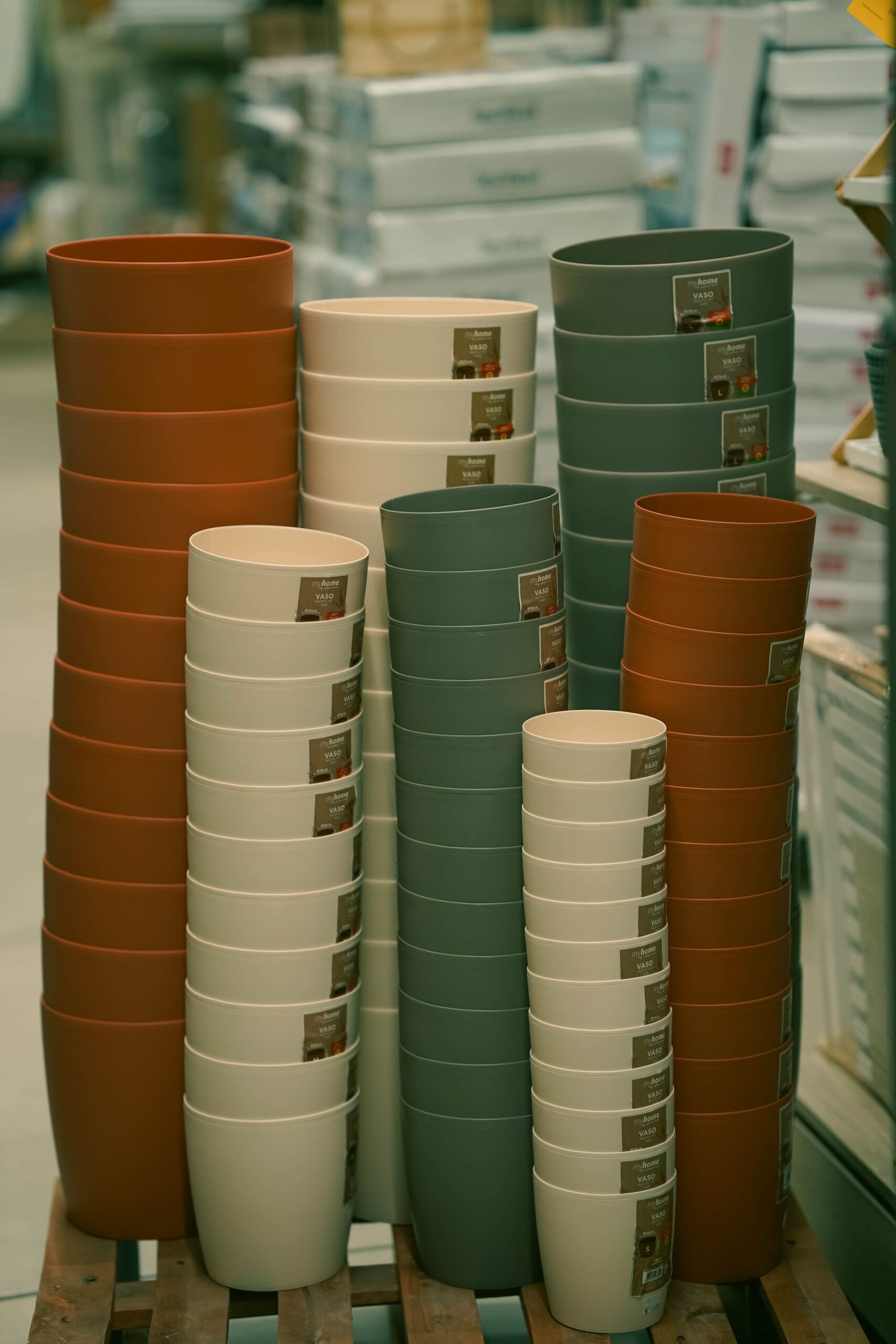
Figure 6 shows why contact and stacking matter even when the objects look simple. The real pots are only an editorial reference, but their touching rims and repeated surfaces make abrasion, wedging and colour transfer easy to understand. The commercial output is a change-control rule: any substitution that can alter fit, finish, weight, drainage, package interaction or destination record opens a new revision.

4. Control commercial and project planters as installed products
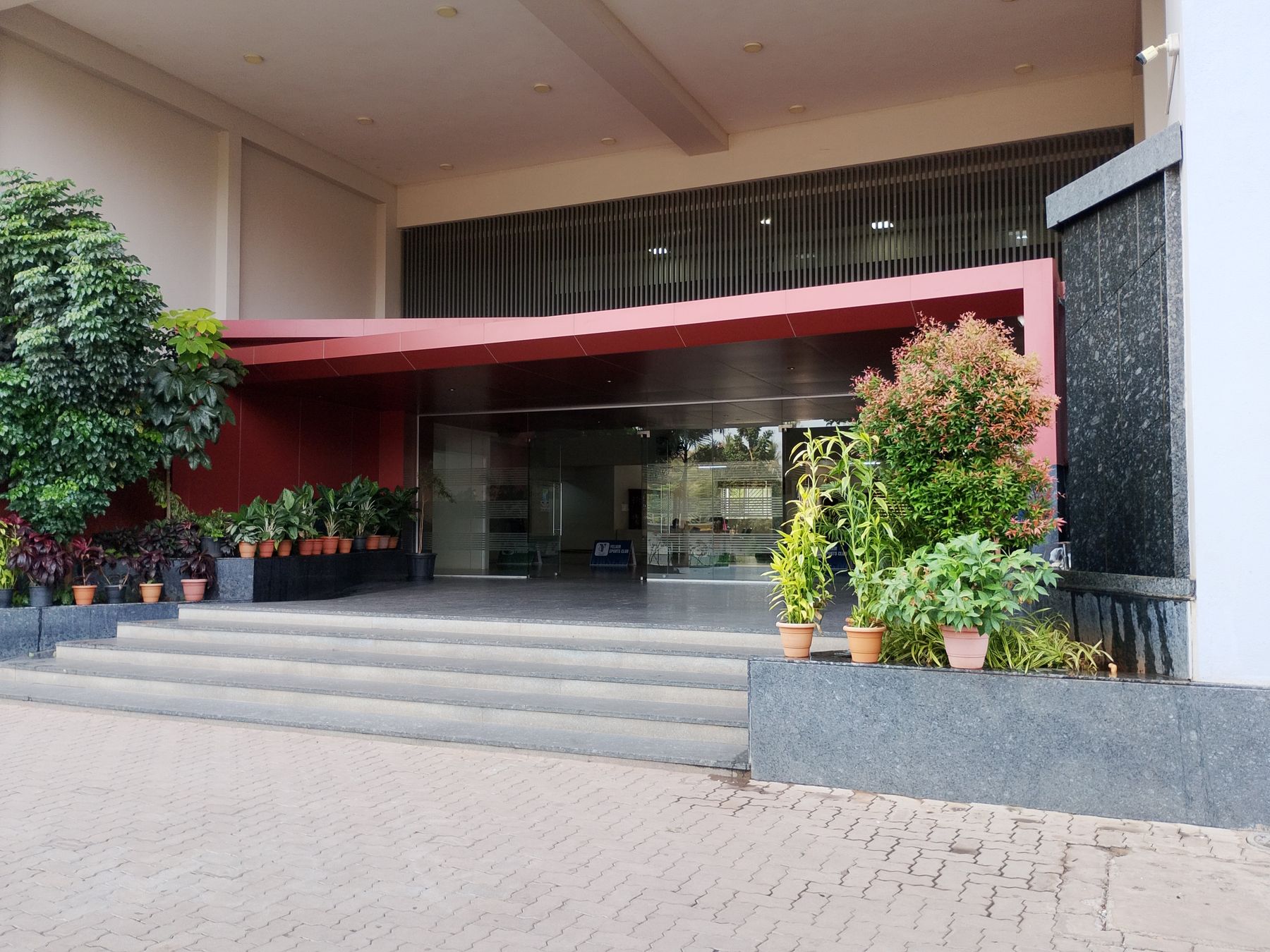
Large commercial planters are not simply retail pots enlarged. They become part of a site interface involving access, handling, liner and water management, visible zones, maintenance and delivery sequence. Figure 7 shows the kind of installed context the brief must describe.
Translate the installed setting into a physical planter brief
Record final location, viewing distance, pedestrian relationship, indoor/outdoor exposure, planted concept, liner, irrigation or drainage route, maintenance access and expected movement. Add maximum outside geometry, internal cavity, empty and estimated planted weight, base interface and visible finish zones. The planter cannot be selected independently from the insert, soil or alternative growing system and maintenance method.
For entrance, lobby, terrace or hospitality use, also record door and lift openings, turning space, steps, floor transitions, protective coverings and final placement. Decision 10: treat the access envelope as a product requirement. The purchased unit must pass through the real route with its packaging or handling protection. Boundary 4: estimated planted weight, floor capacity, anchoring, wind behaviour and public-safety decisions require the relevant project professionals; a product supplier’s catalogue statement is not a site approval.
Figure 8 converts the site into five connected gates. The output is a site-interface record signed by the buyer’s project owner and the appropriate reviewers. It should distinguish provided product facts from engineering or installation decisions. Stop condition 4: do not release a large planter when access, floor loading, anchoring, wind or public-safety requirements remain unresolved for the actual location.

Plan access, handling and replacement before production
Define who receives, moves, unwraps, positions, plants and maintains the unit. Record lift points or prohibited lift areas, orientation, centre-of-gravity concerns, equipment, people, protection and packaging-removal sequence. Large planters may need a removable liner, sectional route, pallet base or temporary handling fixture. These are product and logistics questions that must be solved before final finish approval.
Plan replacement as well as installation. Can a damaged liner be removed? Can one planter be replaced without closing the whole area? Will the replacement fit through the same route after the building is occupied? Decision 11: approve a handling and replacement method with the production-equivalent unit. Avoid condition 3: do not lift by rims, decorative feet, drainage fittings or liners unless the approved design and instructions explicitly allow it.
Labelled hypothetical example 2: a planter is 1,100 mm wide, while the narrowest protected access opening is 1,140 mm. If the route requires 25 mm protection on each side, the needed envelope is `1,100 + 25 + 25 = 1,150 mm`, which exceeds the opening by 10 mm. The unit may fit unprotected but the approved handling method does not. The figures are illustrative; measure the actual route, protection and product. Figure 9 reminds the team that planting and liner interaction continue after delivery.

Control custom mould, finish and project changes through handoff
A custom project planter needs a revision path from concept dimensions to tooling or forming method, first article, finish range, liner, handling protection and site sequence. Record who owns tooling, expected service or storage arrangements, permitted repairs, minimum production quantity and what happens when the project changes dimensions after development begins. A render is a design reference, not a manufacturing approval.
Define visible zones and viewing conditions. A surface facing a lobby may have a different appearance threshold from the concealed base, but cracks, instability or unsafe edges are not cosmetic zones. Approve colour and texture with a physical range board under named lighting. Decision 12: use a signed change notice for every alteration to dimensions, wall section, reinforcement, liner, finish, handling or pack. State cost, timing, evidence and reopened tests before acceptance.
The final handoff should combine product drawing, material/construction record, finish range, liner and water method, actual weight, access plan, handling method, delivery sequence and receiving owner. Boundary 5: the supplier may provide product information and project coordination, but the buyer must assign qualified responsibility for site design, structure, anchoring, wind and installation. The handoff is complete only when each boundary has an owner.
| Record | Product-side input | Project-side closure |
|---|---|---|
| Access | Actual geometry, weight, protection | Route, equipment and receiving owner |
| Site interface | Base, liner, water and handling facts | Floor, anchoring, wind and installation review |
| Handoff | Unit identity, finish and pack | Zone, sequence, protection and acceptance |
5. Specify drainage, finish and set architecture before sampling
Water behaviour, visual variation and nesting are separate approval systems. Closing one does not close the others, and a beautiful sample can still fail in daily use or transit.
Choose and test the water-management system
The common routes are direct drainage through the pot, a drainage pot with removable saucer, a decorative cachepot holding a separate liner or grow pot, and an engineered reservoir or self-watering system. State which route applies and record hole count, diameter and location; internal low point; saucer, plug or reservoir; clearance beneath the base; expected retained water; and instructions needed by the sales channel.
Illinois Extension states that a bottom hole permits drainage and warns that gravel beneath soil inside an individual pot does not improve drainage. Use that as a boundary against improvised claims, not as a universal design drawing. Decision 13: test the selected water system with the approved components and operating method. A cachepot should be checked for retained water and liner removal; a direct-planting pot should be checked for open holes, drainage path, leakage and saucer behaviour.
Document test water quantity, starting condition, time, surface, observations and acceptance rule. For a retail product, instructions and warnings must match the approved method. For a project planter, the relevant maintenance or design owner must close drainage and overflow. Stop condition 5: do not accept “has drainage” or “waterproof” without defining the configuration, method, result and limitation.
Convert colour and handmade variation into a range board
Create a physical master for target colour, gloss, texture and pattern placement, then a range board showing acceptable light/dark, speckle, glaze pooling, pinhole or hand-applied variation. Add reject photographs for chips, cracks, unstable feet, sharp edges, contamination, severe colour separation and exposed areas outside the intended design. Separate expected variation from structural and functional defects.
Record viewing lighting, distance and surface orientation. A mark inside a cachepot can have a different commercial impact from one on the front rim, but the defect catalogue must state the distinction. Decision 14: approve visual range by visible zone and physical reference. Avoid condition 4: do not impose a numerical colour tolerance unless the instrument, geometry, surface and acceptance method suit the finish; keep a physical appearance master even when readings are used.
The range board should be versioned, photographed and retained with the approved sample. Specify whether production is compared by batch, firing, coating lot or individual unit. If the range is intentionally broad, plan the assortment so one carton or store display does not accidentally concentrate extremes. The output is an appearance decision that production and receiving teams can interpret consistently.

Engineer nested sets without hiding damage
A nested set needs a size relationship, nesting depth, stop point, separator, removal method and set identity. Record which surfaces touch, whether weight transfers through a rim or base, how far each pot enters the next and whether a sleeve or pad can move. Check wedging after vibration or compression, abrasion after removal, rim loading, colour transfer, missing separators and whether every component returns to its intended selling condition.
Deeper nesting can reduce carton volume while increasing surface contact. Shallow nesting can reduce rubbing while wasting cube. Decision 15: approve display fit and packed nesting as separate results. If small, medium and large units sell individually, define how each is identified after unpacking; if they sell as one set, define the set map, replacement rule and receiving count.
Figure 10 combines the three approval systems. Use it to prevent a drainage change from bypassing fit review or a separator change from bypassing appearance and package review. The output is a versioned water/finish/set record with test condition, approved references and reopen triggers. A supplier’s statement that a configuration is “standard” is context, not the buyer’s approval.
6. Decode MOQ, quotation and packed-volume economics
There is rarely one meaningful planter MOQ. The binding minimum may come from body process, kiln or batch, mould, colour, finish, printed packaging, nesting efficiency or master-carton quantity. Separate these layers before negotiating.
Identify the process, finish, size, pack and carton minimums
Ask the supplier to state the minimum for each body or material system, mould or size, colour and finish, logo or label, retail pack and export carton. Then ask which layers may be shared. Two ceramic sizes may share a glaze batch but not a forming cycle; several resin colours may share a mould while pigment batches create separate minimums; a printed box may bind above the product minimum.
Decision 16: negotiate consolidation against a named constraint. A buyer can reduce colour count, share glaze or coating, use a stock carton with labels, standardize saucers or deepen the core SKU rather than request a vague lower MOQ. The trade-off must remain visible: consolidation may improve production efficiency while reducing assortment differentiation. Boundary 6: no MOQ in this article is a LANBORUI promise; the actual process, specification, supplier and order determine it.
Build an MOQ ladder showing minimum by process, finish, SKU, retail pack and carton, plus the order quantity and remaining exposure. Record whether excess printed packaging or components belong to the buyer, can be reused and have a shelf-life or storage limit. This converts MOQ from a bargaining number into a production and inventory decision.
| Field group | Minimum record | Reject or clarify when |
|---|---|---|
| Physical SKU | Revision, seven dimensions, weight, material, components | Only a photo or nominal size is supplied |
| Appearance/use | Finish reference, drainage route, liner/saucer, set relation | Claims or components are assumed |
| Packaging | Unit/set pack, separator, carton, quantity, dimensions, gross weight | Cube and protection cannot be reconstructed |
| Commercial | MOQ layers, charges, Incoterm, currency, validity, lead-time basis | Unit price hides tooling, pack or testing |
| Evidence | Sample, inspection, package and destination deliverables | Approvals are generic or unversioned |
Normalize quotation inclusions before comparing unit prices
Each quotation line should state buyer SKU and revision, product and packed dimensions, net and gross weight, material and construction, drainage parts, saucer or liner, finish reference, set relationship, unit or retail pack, separator, master carton, quantity per carton, marks, sample and tooling charges, test inclusions, lead-time basis, Incoterm, currency, validity, exclusions and approved alternatives.
A lower unit price may exclude saucers, sleeves, dividers, labels, testing or export marks. It may also use a different wall section or tolerance while preserving the same photograph. Decision 17: compare only versioned, equivalent specifications and keep an exception log beside the quote. Use LANBORUI’s custom collection development workflow when finish, branding, set or packaging changes are part of the brief.
Decision table 2 lists the minimum fields required before a quote becomes comparable. Do not score a blank as zero cost; mark it `not stated`, request clarification and identify the commercial impact. A normalized quotation should reconstruct what is included, which evidence will be delivered and what changes the price. That signed record becomes the commercial baseline for purchase-order, variance and reorder review.
Calculate packed volume and damage exposure together
Labelled hypothetical example 3: Option A uses one carton per pot at `0.45 × 0.45 × 0.40 m`, or `0.0810 m³` per sellable unit. Option B nests three pots in one `0.48 × 0.48 × 0.55 m` carton. Carton volume is `0.12672 m³`; divided by three, it is `0.04224 m³` per pot. The modelled cube reduction is `(0.0810 – 0.04224) ÷ 0.0810 = 47.9%`.
Every input is invented. Replace it with approved external carton dimensions and sellable-unit count. Then add separator cost, labour, gross weight, expected damage, warehouse handling and the distribution route. Carriers may apply dimensional weight; FedEx, for example, explains the concept and calculation, but the buyer must use the actual carrier, service and contract rules. Decision 18: choose the lower landed exposure, not the smallest carton in isolation.
Figure 11 keeps MOQ and packed volume in one model. Reject the 47.9% cube benefit if nesting wedges the pots, damages finish, overloads a rim or creates unacceptable receiving labour. The output is a scenario table with approved dimensions, rate basis, damage assumption, sample evidence and sensitivity. Recalculate whenever product, separator, carton, quantity per carton or route changes.

7. Build the RFQ, sample, QC and package record
Repeated shapes and colours look simple on a retail floor, but they expose receiving errors quickly: wrong size, mismatched label, mixed colour, missing saucer or a damaged nested stack. Figure 12 shows why SKU identity and packed relationships must survive unpacking.
Create one reconstructable physical-SKU specification
The RFQ should include buyer SKU and revision; role and environment; seven dimensions and tolerances; target grow pot, liner or saucer ID; material and construction; drainage and components; finish master and acceptable range; set and nesting relationship; net weight; unit, retail and export pack; order quantity; destination; Incoterm; barcode and label owner; and required approval or test records.
Attach a dimensioned drawing and reference images that identify inspiration rather than evidence. Include a field for every allowed alternative. If a supplier proposes another body, glaze, coating, liner or separator, require a new revision and impact review. Decision 19: make the SKU reconstructable without relying on a marketing name. The quotation document becomes the root of the sample, inspection, packaging and receiving records.
Use the site’s plant pots and garden accessories collection and broader garden decor range to define category context, then replace generic descriptions with the actual RFQ fields. The output is a controlled specification pack with owner, status, date and open-question log. A mood board can remain attached, but it cannot override measured requirements or approved physical evidence records.
| Gate | Illustrative result | Release decision |
|---|---|---|
| Insert fit | 30/30 units insert, seat and remove to approved method | Pass for recorded insert revision |
| Appearance | 2 units outside approved glaze range | Hold affected batch; corrective review |
| Pack route | No cracks; 1 sleeve movement without product damage | Conditional: secure sleeve and reverify |
| Receiving | All cartons and variants identified correctly | Pass identity gate |
Approve function, geometry and appearance separately
Close three approval lanes. Function covers insert fit, removal, drainage, saucer or reservoir, stability and components. Geometry covers actual dimensions, tolerances, weight, base contact, set relationship, nesting and packed configuration. Appearance covers colour, gloss, texture, pattern, intentional variation, reject examples and label placement. Each line needs requirement, method, measured or observed result, reference ID, owner, date and status.
A beautiful sample can fail liner fit or packability. A dimensionally correct sample can have an unstable foot or unapproved glaze range. Decision 20: do not release bulk production until all critical lanes are closed or a conditional approval has a named owner, limit and deadline. Retain the signed sample, range board, fit components and packed sample in controlled storage rather than relying on unlabelled showroom pieces.
Figure 13 provides the blueprint. Build a sample ladder only when each step answers a question: appearance chip or colour range, fit sample, functional sample, pre-production unit and production-equivalent packed sample. Combine steps when one object can answer several questions, but do not call a cosmetic prototype proof of final material, dimensions or pack. Record every difference and the question still open.

Define defects and sampling before production
Build material- and use-specific examples for critical, major and minor defects. Potential critical issues may include a hazardous sharp edge or unstable condition with a defined safety consequence; major issues may include cracks, blocked drainage, wrong size, wrong insert fit, severe finish mismatch, missing components or pack failure; minor issues may include limited cosmetic variation outside the preferred but usable range. The buyer and qualified reviewer must set actual classifications.
ISO 2859-1:2026 provides AQL-indexed acceptance-sampling schemes for lot-by-lot inspection by attributes. It does not define planter defects, make one AQL appropriate for every order or replace process control. Decision 21: agree the defect catalogue, lot definition, current sampling plan, inspection level and acceptance/rejection rule before production. LANBORUI’s quality-control workflow should compare the same revision and references.
Sampling answers a lot-acceptance question; it does not prove every unit or compensate for an unstable process. Add process checkpoints where variation develops, such as forming, drying, firing, coating, assembly or packing. The output is a defect photo library, sampling instruction, result sheet and escalation rule. Critical records must identify who can stop production or shipment and who can authorize reinspection.
Validate the packaged product for the distribution route
Specify the packed configuration first: sleeves and separators, unit or set pack, carton grade and construction, closure, quantity, gross weight, dimensions, orientation, pallet pattern and marks. Then choose the route objective. ISTA describes 1-Series as non-simulation integrity screening, 2-Series as partial simulation and 3-Series as general simulation. Parcel, LTL, pallet and container routes do not create identical hazards.
A result belongs to the tested product-package combination. Changing wall section, separator, carton, closure, pallet pattern or route can reopen the decision. Inspect the product after testing for cracks, chips, abrasion, wedging, finish transfer, component loss and dimensional change; do not record only carton condition. Decision 22: keep product revision, packed configuration and route objective in one report.
If solid-wood pallets, crates or dunnage enter the United States, applicable wood packaging must meet APHIS ISPM 15 treatment and marking requirements. Figure 14 joins defects, sampling, packaging and destination review. Use the factory and export capability process to identify owners rather than treating packaging as a final warehouse task. Record the approved pack photographs, closure method, orientation, unit count and signed revision record.

8. Clear destination records, run a pilot and preserve the reorder baseline
The final release joins commercial intent with product identity, shipment cleanliness, claims, labels, receiving evidence and corrective actions. A sample proves one object; a pilot tests whether the production and delivery system works at a useful scale.
Review material, soil, wood packaging and market roles
Record actual material and construction, country of origin, manufacturer, importer or responsible operator, label and warning requirements, shipment cleanliness and packaging materials. U.S. tariff classification can change with planter material and construction, so this guide does not publish one universal code. CBP’s Binding Ruling Program allows importers to request a pre-entry classification decision using a detailed merchandise description.
Empty, clean planters do not authorize soil, growing media or live planted products. APHIS states that imported soil is strictly controlled. Keep those commodities outside a decorative-planter shipment unless the applicable review is complete. For EU consumer routes, Regulation (EU) 2023/988 creates product-identification, responsible-economic-operator and traceability responsibilities that the importer should review for the actual product and role.
Decision 23: put destination fields in the RFQ, not a last-minute shipping email. The release dossier should identify responsible roles, evidence, language, marks, origin, components, cleanliness and wood packaging, with document status and expiry where relevant. Avoid condition 5: do not let a supplier’s experience with another destination substitute for the importer’s documented review of this material, construction, claim and sales route.
Pilot the production and receiving system
Set a pilot that can reveal receiving damage, insert fit, drainage or component errors, finish variation, size identity, carton accuracy and handling effort. Define quantity from process and risk rather than a universal percentage. Record damage by defect class, measured dimensions, mismatched components, pack condition, receiving time, sales-channel feedback and every corrective action. Reinspect corrected units when an issue affects a critical record.
Decision table 3 is explicitly hypothetical: it demonstrates how mixed pass, hold and conditional results should be recorded. A conditional pass must name the affected configuration, corrective action, owner and verification. Decision 24: release the broader order only when pilot success criteria and stop criteria are closed. Schedule pressure does not convert an evidence gap into approval.
Figure 15 is the final gate. It groups commercial, product and release records so the team can see what is still open. Use the checklist at purchase-order approval, pre-shipment review and receiving, and retain the signed decision. The same controlled file should be available to the person who decides a reorder; otherwise, a successful first order becomes an unrepeatable memory.

Release the reorder baseline, not only the first shipment
Archive the approved drawing, actual measurements, role and fit record, material and component list, finish range, drainage method, set map, packaging configuration, defect catalogue, inspection and package results, destination dossier, claim ledger, pilot data and corrective actions. Assign a retained sample or equivalent reference and state storage, identification and replacement rules. The reorder purchase order should cite the released revision.
At reorder, ask what changed in factory, mould, body, coating, glaze, component, liner, separator, carton, label, route or destination. Review supplier and buyer changes together. Decision 25: reopen only the approvals affected by a documented change, while preserving the rest of the baseline. An unexplained change reopens the whole relevant lane. Compare the new pre-production sample with retained measurements and appearance references, then record the result and owner. Contact the LANBORUI wholesale team with the product role, target insert, destination, quantity range and reference images to begin a controlled brief.
The final reorder output is a delta review: unchanged fields cite the released baseline, changed fields show new evidence, and every reopened gate has a dated disposition. Receiving then knows which result to compare.
Before releasing a broader order or reorder, confirm all 18 points:
- The role, channel, customer and target price or project budget are recorded.
- The water-management method and target insert, liner or saucer are identified.
- The sourcing route and factory or process owners are transparent.
- The buyer SKU tree, variant identity and barcode plan are approved.
- The seven physical dimensions, tolerances and net weight are recorded.
- Insert, liner, saucer and removal fit are approved against actual references.
- Material, construction, components and permitted alternatives are versioned.
- Appearance master, acceptable range and reject examples are retained.
- Drainage, reservoir or cachepot operation is verified and communicated.
- Project access, handling, site boundaries and delivery sequence are closed where applicable.
- Nested-set relation, separators and sellable-unit identity are approved.
- The quotation is normalized to equivalent inclusions and MOQ layers.
- The production-equivalent packed configuration and carton data are approved.
- The defect catalogue, lot definition and sampling plan are agreed.
- Package validation matches the product revision and distribution objective.
- Destination, claim, label, soil and wood-packaging records are reviewed.
- Pilot success, conditional actions and stop criteria are closed.
- The released baseline and change triggers are archived for receiving and reorder.
Source and review boundary
Official references in this article define narrow concepts or regulatory boundaries; they do not approve a LANBORUI product or the reader’s order. Editorial photographs are credited real-world references, not supplier evidence. Calculations and pilot records labelled hypothetical use invented inputs. Product suitability, plant use, claims, tariff classification, importer duties, structural loading, anchoring, wind, site safety and installation must be reviewed for the actual product, destination and project by the responsible qualified parties.