
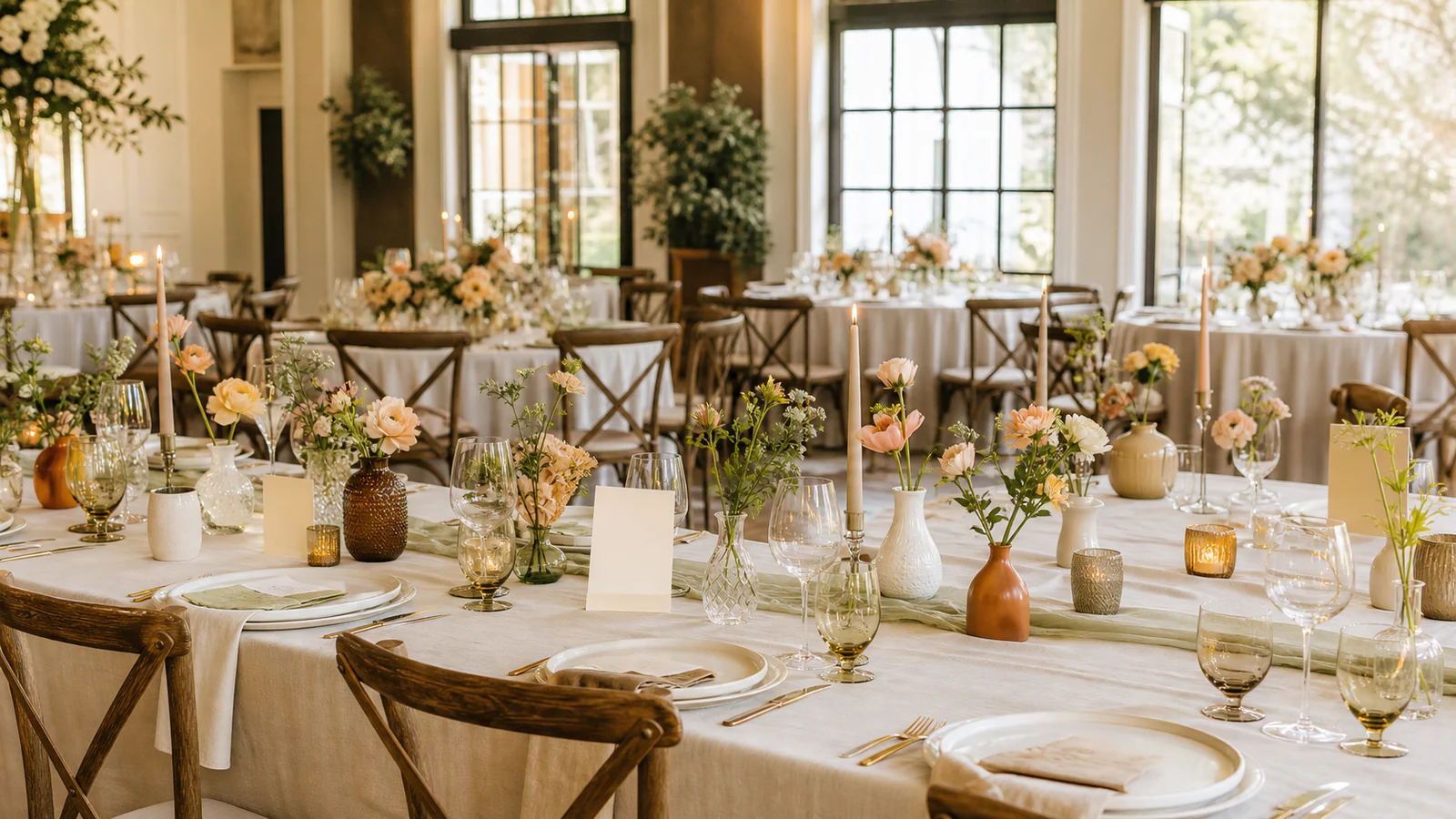
Choose wedding bud vase sets only after the venue, florist, and event team agree on the table plan, stem recipe, setup method, and handling responsibilities. The set must fit the usable table area and stay stable when filled. Add replacement stock only when the handling route or reuse plan justifies extra pieces.
Wedding bud vase styles may look similar but differ in opening, base footprint, material, finish, and packing needs. A reference photo cannot replace a complete buying brief.
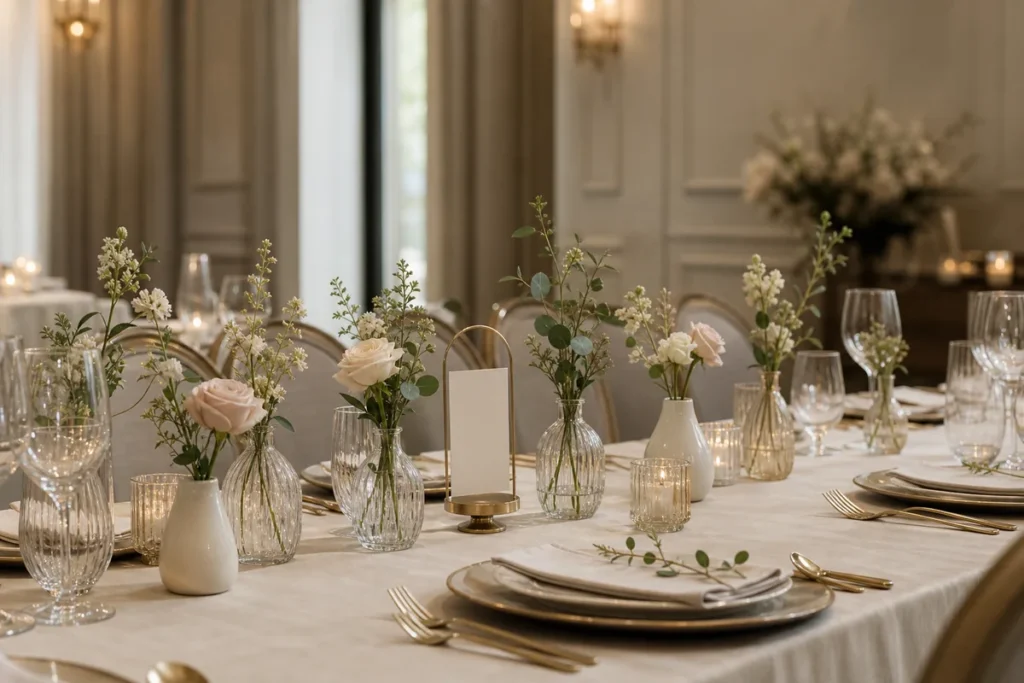
What Should Event Buyers Decide Before Selecting Wedding Bud Vase Sets?
Decide who supplies the vases, where each set will sit, and who handles setup and removal. Those decisions control dimensions, quantity, labor, and breakage exposure.
Buying, Renting, or Using Florist-Provided Vases
Compare the full event cost, including handling after the reception. The lowest vase price may create more work if the buyer must wash, sort, store, and replace the set.
| Supply route | Fits when | Confirm before committing |
|---|---|---|
| Buy | A venue, rental company, or planner expects repeat use | Receiving, washing, storage, inventory control, replacement, and disposal |
| Rent | The event needs temporary inventory without long-term storage | Exact set mix, pickup and return windows, cleaning rules, damage charges, and replacement terms |
| Florist-provided | The florist will control both the vessel and floral recipe | Vase ownership, collection timing, replacement responsibility, and whether the vase cost is included |
Review the venue contract before sampling or ordering vases. If the venue restricts outside decor or requires approved vendors, record the accepted supply route in writing.
Table Layout and Usable Space
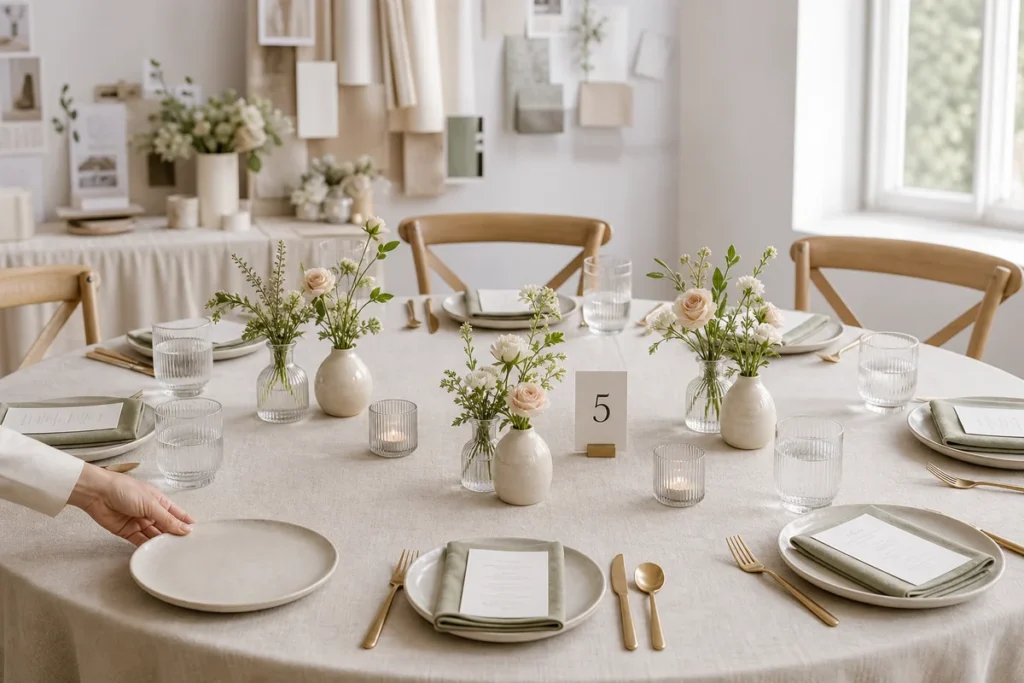
Measure the usable surface after place settings, table numbers, menus, candles, shared dishes, and service pieces are in position. The table’s listed dimensions do not show the space left for flowers. Build one full table mockup from a scaled layout. Use the actual linens and include the complete vase cluster with flowers. Count every setup location, including guest tables, bars, cake tables, welcome areas, lounges, and ceremony spaces.
Decor and Service Clearance
Reserve service space before placing each vase cluster. A centerpiece that fits an empty table can still block plates, glassware, shared dishes, or clearing once the table is set. Ask the caterer how food and drinks will reach guests because family-style service may require more open surface than plated service.
If the design includes candles, place the selected candle holder options in the mockup. Confirm the venue’s flame rules and keep flowers or loose decor away from the heat source. Staff should also place and remove a plate or glass without moving the vase set.
Guest Sightlines and Vase Stability
Test sightlines and stability with the actual stems, planned water level, and table linens. An empty sample does not show how flower weight or a soft tablecloth will affect the set. View the finished arrangement from seated positions on both sides of the table. Place and remove tableware beside the vase cluster, then give the table a light nudge. If a vase shifts or blocks a guest’s view, lower the stems, reduce the flower mass, widen the base, or change the grouping.
Which Bud Vase Dimensions and Functional Features Fit the Floral Plan?
Approve dimensions against the complete floral recipe. Record the vase height, internal opening, usable depth, base footprint, water fill, and stem count.
Vase Height and Arrangement Scale
Judge the total height and width of the flowers and vase at table scale. Long stems can turn a short bud vase into a visual barrier, while heavy flower heads can make a small base unstable.
A single vase uses less table space. A grouped arrangement spreads flowers across the table but takes longer to place and needs a controlled footprint. If the design adds a larger focal piece, test the wedding centerpiece vase in the same mockup. Record the flower type and stem count for every vessel so the florist can repeat the arrangement.
Matching Openings to Flowers and Stems
Use the actual stem bundle to choose the internal opening. A narrow neck can support a small bundle, while a wider opening may need more stems or a support method. Staff must be able to adjust the stems without bruising flowers or scraping the finish. Test irregular rims and narrow necks by hand because photos cannot show usable access.
Ask whether the florist will use tape, a grid, or another floral mechanic. The chosen method must fit the neck shape, rim finish, and venue cleanup rules.
Base Stability and Water Capacity
Choose a base that sits flat and supports the finished arrangement. During the mockup, compare the base footprint, filled weight, and how the flower mass sits over the base. Have the florist set the water level for the chosen flowers and event duration. Overfilling can cause spills during placement, while a low fill may leave short stems above the water.
Verify that each vessel is intended to hold water. Leak-test the approved ceramic sample and inspect glass rims, bases, and visible surfaces. If moisture or finish residue could mark the table, test a protective pad or tray with the finished setup.
Which Materials, Finishes, and Set Styles Suit the Event?
Compare materials and finishes within a decorative vase collection against the visual plan, handling route, reuse needs, and inspection criteria. Glass and ceramic create different cleaning, matching, and quality-control work.
Comparing Glass and Ceramic Bud Vases
Compare both materials under the event lighting with the planned flowers. Neither option suits every setup.
| Decision factor | Glass bud vases | Ceramic bud vases |
|---|---|---|
| Visual effect | Shows water and stems; clear, tinted, or textured surfaces can change the table look | Hides water and lower stems; shape, glaze, and surface color carry more of the design |
| Inspection focus | Rim condition, bubbles, marks, base flatness, color, and visible residue, all judged against the approved reference | Rim condition, glaze coverage, color, surface marks, base flatness, interior finish, and leak test |
| Handling | Fingerprints, water spots, and visible stem debris may require attention during setup | Opaque bodies can hide water and stems, but some finishes may need gentler cleaning |
| Matching | Transparency, tint, texture, and form should follow the approved sample | Glaze, color, texture, and form should follow the approved sample |
| Reuse planning | Confirm washing, drying, rack separation, and protection between events | Confirm washing method, drying time, surface protection, and storage separation |
Do not set defect limits from the material name alone. Record the accepted appearance, color range, dimensions, and workmanship in the order reference.
Choosing Matched or Mixed Vase Sets
Matched sets suit uniform table plans because the setup team can count and replace identical pieces quickly. Mixed sets support deliberate variation, but the buyer must define the mix. Record the allowed shapes, heights, colors, openings, and quantity of each style per table. Packing lists, carton labels, and setup sheets should show which SKUs form each table kit.
Color and Finish Consistency
Approve color and finish with the actual linens, flowers, candles, and event lighting. Record which features must match and which variation the buyer accepts. The approval record may cover transparency, glaze, coating, texture, sheen, and visible surface limits.
Confirm whether the color comes from the material or a surface treatment because the finish may change the cleaning method. Test the planned cleaner on an approved sample before washing the full set.
What Should Buyers Confirm Before Placing a Bulk Bud Vase Order?
Approve quantity, reuse, product reference, inspection, and packing before releasing a bulk order. The brief should map every vase to a table kit, carton, setup location, and handler.
For bulk programs, the LANBORUI wedding and event decor solution covers product references, sample approval, set grouping, and protective packing.
Order Quantity and Replacement Stock
Build the order from the final setup count. Separate guest-table kits, other event areas, mockup use, and sealed replacement stock. Set the replacement quantity after reviewing the number of transfers, vase fragility, venue distance, local replacement access, and repeat-use plans. Do not apply one spare percentage to every event. If color or finish matching matters, buy replacements with the main batch.
Cleaning and Reuse Requirements
Confirm the washing method before purchase. Do not put glass or ceramic vases in a dishwasher unless the selected SKU is documented as dishwasher safe. Test the method on a sample with the planned finish, label, and flower residue.
Narrow openings may require brushes, drying racks, and more labor. Dry each vase before closed storage because trapped moisture can leave odor or residue. For repeat use, define storage trays, dividers, shelf location, piece counts, and inspection responsibility. A low unit price loses value when washing, sorting, and repacking consume too much labor.
Sample Approval and Quality Checks
Approve a physical sample or representative set before the bulk order. The approval record should cover:
- Overall height, internal opening, usable depth, base footprint, and weight
- Material, color, finish, and the visible appearance limits the buyer accepts
- Water-holding or leak test, planned fill level, stem count, and completed arrangement photos
- Set composition, SKU identification, labels, and packaging
- Inner protection, dividers, carton arrangement, and handling marks
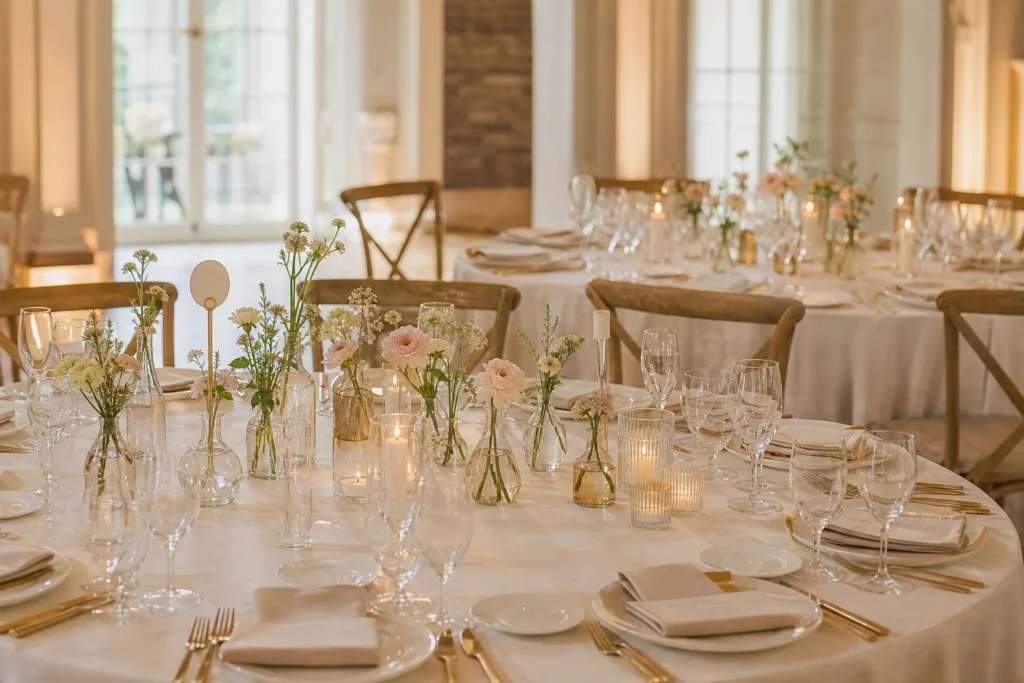
Use the approved sample as the production and inspection reference. For a wholesale glass bud vase, record the selected finish, set mix, quantity, and protective packing. Photos alone do not confirm scale, opening access, stability, or finish accuracy.
Packing and Receiving Requirements
Protect each vase from direct contact and movement, identify every SKU, and group complete table kits when the approved carton design allows. Check inner protection, dividers, carton quantity, labels, set grouping, and packing photos against the approved order.
Write the receiving procedure before shipment. Name the delivery address, access window, carton count, inspection deadline, damage-report method, and storage location. Receive the shipment early enough to inspect the order and respond to shortages before setup.
LANBORUI can discuss a bulk quotation after the buyer provides a defined product and packing brief. Include the vase reference, dimensions, set mix, quantity, sample needs, packing plan, destination, and required delivery date.
FAQs
What Should Buyers Do if the Venue or Florist Does Not Allow Outside Vases?
Do not place the vase order until the venue or florist confirms the restriction in writing. Ask whether the event must use venue inventory, florist-provided vessels, or an approved rental company. If no exception applies, move the floral recipe to an approved vase before buying unusable stock.
How Should Buyers Compare Bud Vase Quotes With Different Packing and Delivery Terms?
Put every quote on the same comparison sheet. Match the product, set count, spare pieces, sample charge, inner packing, carton quantity, currency, payment terms, and exclusions. For imported orders, record the Incoterms rule and named place, then identify who pays for freight, duties, local delivery, and each transport handoff. A low unit price does not show the total delivered and setup cost when the quote omits protection, inspection, delivery, or replacement stock.
How Should Filled Bud Vases Be Transported to the Venue?
Transport bud vases empty and fill them at the venue when water access and setup time allow. If filled vases must move, use a fitted upright rack or divided tray. Limit the water level, protect nearby cargo from spills, and prevent stacking. Test the route with a small finished group before event day.
Who Should Set Up and Remove Wedding Bud Vases at the Venue?
Assign each setup and removal task to a named party. The plan should cover delivery access, fill location, table placement, spare-vase storage, breakage response, flower disposal, washing, carton storage, and pickup. Clear ownership reduces duplicate handling and missed tasks.
Can Guests Take Wedding Bud Vases Home After the Event?
Guests may take the vases only when the owner, venue, florist, and rental provider approve the plan. Mark the favor pieces and separate rented or reusable inventory. If guests will carry glass or ceramic vessels, provide suitable packaging and decide whether flowers, water, labels, or table numbers stay with each vase.