

If you are learning how to buy wholesale home decor, the hardest part is not finding attractive products. It is preserving a clear commercial idea while dozens of small decisions change: the source route, SKU mix, finish, carton count, label file, shipping basis and approved sample. A catalogue can show what a vase looks like; it cannot tell a retail buyer whether the range has a useful price ladder, whether two finishes share one production minimum, or whether the next order will reproduce the version that arrived the first time.
This guide treats the category as a connected buying system. It is written for importers, retail buyers, wholesale distributors and brand teams preparing a mixed first order. It does not rank named suppliers or provide a universal compliance checklist. A decorative ceramic object, candle accessory, textile item and powered light can sit on the same store shelf while requiring different product records and evidence. The goal is to leave each chapter with something usable: a buying brief, route decision, range map, SKU record, comparable quotation, approval register, receiving plan and pilot-release decision.
Start by looking at the retail display in Figure 1. Do not ask which individual object is the most attractive. Ask how repetition, scale, focal pieces and smaller companions make the assortment understandable from the doorway, then identify the commercial information the photograph cannot reveal.

The display suggests product relationships, but a purchase order needs more. The buyer must add exact dimensions, material and finish, target price, stock depth, pack multiple, landed exposure and a repeat-order identity. That movement from visual idea to controlled order is the thread of the article.
1. Define the buying job before opening supplier catalogues
A supplier can answer accurately only when the buyer has defined what the order must do. The first document should describe the commercial job, route and responsibilities without pretending every SKU is already selected.
Turn the commercial goal into a one-page buying brief
Write one page with the destination market, buyer channel, intended customer, store or project format, launch window, target retail bands, product families and estimated order value or quantity range. Add the receiving model: parcel, pallet, mixed container, local warehouse or direct-to-store. State whether the assortment is a permanent core range, a seasonal launch, a private-label collection or a limited project. These fields determine whether the supplier needs ready stock, product development, mixed-SKU consolidation, printed retail packaging or product-specific export preparation.
Make the exclusions equally clear. A buyer may begin with non-powered decorative objects and postpone electrical items, burning candles or food-contact pieces until a separate evidence route is ready. “Home decor” is a merchandising category, not a single technical product class. Record the brief as `BRIEF-01`, date it, and name the owner of every assumption. When the destination, intended use, launch timing or product scope changes, issue a new revision instead of silently editing messages. Ask each shortlisted supplier to return assumptions and unanswered fields against this revision. The output is not a mood board; it is a stable question suppliers can answer against the same commercial boundary.
Choose the supply route by control, service and uncertainty
A stock wholesaler is useful when the buyer values existing inventory, modest opening quantities and fast replenishment. A local importer or distributor may add delivery, payment terms, consolidated ordering and lower receiving complexity. A factory or private-label route becomes relevant when the buyer needs controlled material, dimensions, finish, components, logo, packaging or repeat production against an approved reference. None is automatically better. Each route removes one kind of uncertainty while adding another.
Before comparing prices, use Figure 2 to identify what the buyer is actually purchasing besides the product. Read the three columns from left to right and mark which service is essential for launch, which can be handled internally and which would be expensive to lose.

Name one primary route and one fallback, then write the reason each is acceptable. This prevents a ready-stock supplier from being rejected for limited customization, or a factory program from being rejected because it cannot behave like a local replenishment warehouse. It also prevents unit prices from being compared as if all three routes carried the same inventory, development work and risk. Record the route again when timing, exclusivity or replenishment assumptions change.
Assign responsibility before selecting products
Create a simple responsibility matrix for product definition, destination review, artwork, barcode data, sample approval, inspection instruction, package testing, shipping documents, customs inputs and change approval. For each line, name the buyer owner, supplier owner, evidence expected and release authority. “Supplier handles compliance” is not a complete assignment: it does not identify the exact product, destination, rule, document scope or person who accepts the evidence.
The supplier should state which manufacturing and subcontracted steps control each product family. A multi-category collection may combine ceramic firing, metal forming, textile sewing, coating, printing and outsourced packaging. The buyer does not need confidential factory data from unrelated customers, but does need to know who controls the approved specification and who must notify a change. Ask for one redacted example of a quotation, SKU specification, approval record, pack hierarchy and inspection or release record. Record the result as `qualify`, `qualify with named conditions` or `stop`. Where responsibility is shared, define the handoff and final release authority. The output is a responsibility map and an evidence request, not a vague promise that problems will be handled later.
2. Build a retail range, not a random product list
A sellable range needs visual coherence and commercial difference. If every product is chosen in isolation, the first order often becomes too wide, too shallow and difficult to explain or replenish.
Assign entry, core, feature, add-on and seasonal roles
Entry items reduce the decision barrier through accessible size or price. Core items cover broad use cases and deserve the strongest stock depth. Feature items create the display anchor but may turn more slowly. Add-ons complete a vignette, gift or set and can increase basket value. Seasonal items create timed newness and require a launch, carry-over or exit plan. These are planning roles, not sales guarantees.
Use Figure 3 before asking for final quantities. Write one role beside every shortlisted SKU and add a one-sentence inclusion reason. If two products share the same role, silhouette, finish and retail band, they are likely duplicates unless they serve different stores, rooms or customers.

The completed role column becomes a release filter. A high-MOQ core item may be acceptable because it supports repeated use and replenishment. The same commitment may be unsuitable for an untested feature item. When a supplier proposes a substitute, compare whether it preserves the commercial role, not only whether the colour looks similar. Also record which roles must remain available for a credible reorder and which can rotate seasonally.
Build visual relationships through scale, form, material and finish
Review products at a consistent scale and record height, footprint, visual weight, silhouette, material, finish, colour family and intended display partner. A collection can repeat one or two cues without making every product identical: a matte neutral finish may connect several forms, while differences in height and function create useful choice. If the range relies on photography alone, screen colour and inconsistent cropping can hide both duplication and scale problems.
Figure 4 is deliberately sparse. Observe how one tall white form works because the shelf height, negative space and darker frame give it a focal role. Then ask what would happen if the actual vase were 30% shorter, glossier or wider at the base.

Convert the observation into fields: collection cue, height band, footprint, finish family, focal or companion role and target display partner. Photograph approved products beside a scale reference and state dimensions numerically. Check the proposed grouping against the actual fixture depth, shelf height and viewing distance used by the retailer. The output is a product-family map that survives different photography and lets a later substitute be judged against the range architecture.
Balance assortment width, stock depth and reorder exposure
Labelled hypothetical example 1: imagine an 18-SKU opening range with four core, four entry, three feature, four add-on and three seasonal items. Instead of ordering 100 units of every SKU, the buyer assigns deeper stock to the four core lines, moderate depth to entry and add-on pieces, and controlled quantities to feature and seasonal lines. The exact quantities are fictional; the useful method is to allocate cash and shelf space by role and uncertainty.
Add unit cost, carton multiple, cubic volume, display capacity, expected launch allocation and reorder lead time to the same sheet. A small add-on with a 48-piece carton can create more unwanted depth than a larger core vase packed six per carton. A feature item may consume disproportionate cube even when its unit MOQ is low. Test at least three actions for every constrained line: reduce variants, combine a finish across forms, delay the SKU, choose an existing version or remove it. Recalculate the role mix after every quantity change, because reducing one core SKU may leave the display dependent on slower feature pieces. The output is an opening quantity model with a reason, not an equal-order rule disguised as simplicity.
3. Map product families to material, process and use
Mixed home-decor orders fail when buyers control only the finished look. Product body, surface, components, production process and intended use create different variation and evidence questions.
Control brittle bodies and visible surfaces as separate entities
Ceramic, glass, resin and cast stone can all produce sculptural objects, but their control points differ. A ceramic body may change through clay preparation, forming, drying, firing and glaze. Glass can show bubbles, seeds, mould lines, colour movement and edge issues. Resin or cast-stone products can show trapped air, seam finishing, filler exposure, distortion or coating variation. In each case, the visible surface may be created by a process different from the body and should receive its own approval fields.
Use Figure 5 to split a product into five records before writing inspection language. For a planter, for example, the body may be ceramic, the surface a reactive glaze, the components a drainage plug and base pad, the process a fired body plus finishing, and the use an indoor decorative planter rather than an outdoor frost-resistant vessel.

Name visible zones and handling surfaces. Define what is inspected on the body, rim, base, interior, attachment and customer-facing face. The output is a body/surface/component map that prevents a visually acceptable coating from hiding an unstable base, sharp edge or incomplete assembly.
Now compare the planter family in Figure 6. The repeated vessel category contains different heights, openings, wall profiles and glaze behaviours, so one generic “ceramic pot” approval would erase useful differences.

Add family-level relationships to the entity map, but retain SKU-level dimensions, use and finish records. Shared appearance language should never make two different forms technically interchangeable.
Separate mixed-material component and assembly risks
Metal, wood, textile and mixed-material products introduce interfaces: a bracket meets a wall, a metal stem meets a ceramic base, a textile cover meets a zipper, or an adhesive joins a pad to a finished surface. Record each component, material, finish, attachment method and source-controlled characteristic. For assemblies, define orientation, fit, movement, fastener, tool, instruction and any count the receiver must verify.
The most important defect may occur between materials rather than within one material. A metal part can stain a light ceramic surface; an adhesive can mark a coating; a wood component can change dimension with moisture; hardware can loosen during vibration. Ask which process controls each interface and which sample demonstrates the complete relationship. When the supplier changes an adhesive, base pad, bracket or hardware source, the change record should reopen the affected fit, appearance, packaging or use question even if the primary body is unchanged.
Create a component-process table with four columns: component, critical interface, observable failure and required reference or check. The output is a bill-of-material-level control map appropriate to the buying decision, not an assumption that one overall product photo covers every part.
Route decorative, functional and regulated use separately
Intended use changes the evidence route. A vase sold only for dried stems presents different questions from a vessel claimed to hold water. A candle holder, burning candle and electric warmer belong to related merchandising stories but do not share one generic certificate. Decorative lights introduce electrical and market-specific questions; dinnerware or drinkware introduces contact-use questions; children’s decor may introduce age and accessibility issues.
The US Consumer Product Safety Commission’s Regulatory Robot begins from the exact product because requirements differ by product. In the EU, the General Product Safety Regulation provides general safety, traceability and distance-sale duties while product-specific rules may also apply. These are starting points, not a substitute for qualified review.
Create one row per SKU with intended use, user, material, energy or heat source, destination, evidence question, reviewer and decision date. Do not request a universal “home decor certificate” or reuse a report because two products look alike. Where the intended use is uncertain, hold the claim and listing language until the reviewer closes the boundary. The output is a product-destination evidence question that can be answered for the exact version being ordered.
| Merchandising label | Declared use | Question to close | Decision owner |
|---|---|---|---|
| Decorative vase | Dried stems | Are use, stability and marking aligned? | Buyer product owner |
| Candle accessory | Near flame or heat | Which material and clearance evidence applies? | Product reviewer |
| Decorative light | Powered indoor | Which destination electrical rules apply? | Market reviewer |
| Serving piece | Food contact | Does evidence cover the exact material and SKU? | Product reviewer |
4. Create reconstructable SKU and packaging identity
The approved product must be reconstructable without relying on memory or a supplier’s internal nickname. Identity connects the quotation, sample, inspection, shipment and reorder.
Record dimensions, weights, components and pack hierarchy
Assign one buyer-facing SKU code and revision to every sellable variant. Record product name, material, colour or finish, dimensions with measurement points, net weight, components, assembly, intended use and reference images. Then record the unit of sale, fixed set composition if any, retail pack, inner quantity, master-carton quantity, carton dimensions, gross weight and pallet or load assumptions. State tolerances only where the product and process justify them; do not copy one tolerance across unrelated materials.
Figure 7 shows the six groups that must travel together. Read it as a reconstruction test: could a new buyer, supplier engineer or inspector identify the same version without opening old chat threads?

Issue the SKU record as a controlled file and cite the same revision on the quotation, approved sample, inspection instruction and reorder. If a controlled field changes, create a new revision and impact review. Include a field owner and source for every measured or declared value so discrepancies can be resolved without guessing. The output is not a decorative product description; it is the minimum record needed to distinguish one commercial version from another.
Define appearance and acceptable variation without hiding the boundary
Appearance approval should name colour target, gloss or sheen, texture, pattern placement, edge treatment, visible seams, surface zones, viewing distance and lighting condition. Handmade, reactive-glaze, natural-material and hand-finished products may require several approved examples that show the acceptable range. One “perfect” reference can create an impossible expectation when the intended process naturally produces controlled variation.
Study Figure 8 as an inspection exercise. The deep red glaze changes with curvature and reflected light, while the raised elements create edges, shadow and possible collection points. A single front photograph would not define the whole surface.

Attach approved images to the SKU revision and mark the relevant zones: customer-facing face, secondary face, rim, interior, base and attachment. State observable rejection conditions instead of “good quality.” Include several accepted and rejected examples when words such as “light variation” could be interpreted differently. Record whether the decision uses a physical sample, colour standard, measured gloss, image or a combination, and identify which reference controls when they conflict. The output is an appearance board with sample IDs, viewing conditions, accepted range and named technical questions that remain outside visual approval.
Control sets, barcodes, labels and online identity by hierarchy
Define the individual SKU, any fixed assortment or set, retail pack, inner pack, master carton and pallet or load. The GS1 GTIN Management Standard provides rules for consistent trade-item identification, while GS1’s predefined-assortment rule explains why changing a fixed composition can affect its identity. The buyer should make GTIN decisions with its GS1 organization and trading partners rather than treating an internal SKU code as the only data need.
Use Figure 9 to trace what must remain visible at every handoff. Mark the level at which the retailer scans, the warehouse receives and the customer buys.

Assign an owner and revision for barcode data, artwork, claims, warnings, origin information, pack quantity and carton marks. A US country-of-origin review should be made for the exact article and container; CBP ruling H338116 restates the general marking rule and its statutory basis. For EU distance offers, GPSR Article 19 includes product and economic-operator information and relevant warnings. Require a final data proof and a physical pack check before print release. The output is an identity-and-artwork release sheet, not an unversioned PDF attached to an email.
5. Normalize MOQ, quotation and landed exposure
A low quoted unit price can still create a poor first order. MOQ, pack multiples, cube, payment timing and included services determine how much cash and uncertainty the buyer accepts.
Identify the binding MOQ layer instead of asking for one number
Ask the supplier to separate minimums by material purchase, production run, colour or finish process, individual SKU, printed packaging, inner pack and master carton. A factory may be able to form 200 units of one shape but require 500 units per glaze, 2,000 units across a material batch or a separate minimum for printed boxes. The carton multiple may then round the commercial quantity above all of those values. One headline MOQ hides which constraint is actually binding.
Build an MOQ ledger with `constraint`, `minimum`, `applies to`, `can share across`, `rounding multiple`, `reason`, `alternative` and `decision`. Ask whether several forms can share a finish run, whether a stock colour or existing pack changes the requirement, and what remaining material or printed components would belong to the buyer. A lower MOQ that creates leftover branded packaging or an unstable repeat process may not reduce exposure. Record the consequence of failing each minimum, not only the supplier’s preferred number. The output is a stack of constraints tied to the exact quote revision, so assortment width can be changed deliberately instead of negotiating a number with no process context.
Normalize the quotation before comparing suppliers
Every comparable line needs product revision, quantity, unit of measure, currency, unit price, included packaging, tooling or development charges, sample charges, payment terms, quotation validity, production assumption, Incoterm and named place. Also list what is excluded: inspection, package testing, origin charges, freight, insurance, duty, brokerage, destination handling, delivery, storage and receiving. A blank field is not zero; it is an unresolved input.
ICC Incoterms 2020 helps allocate selected costs, risks and obligations between seller and buyer. It does not calculate total landed cost or replace the sales contract. Compare offers only after moving them to one buyer-owned basis. If Supplier A quotes a custom product FOB a named port and Supplier B quotes ready stock delivered to a local warehouse, keep both commercial models visible rather than forcing the unit prices into a misleading ranking.
| Field | Supplier return | Buyer review | Release condition |
|---|---|---|---|
| Product and pack | SKU revisions | Match scope | No unidentified substitute |
| Commercial basis | Quantity, unit, currency | Normalize units | One comparison basis |
| Handover | Incoterm and named place | Add route costs | No blank equals zero |
| Timing | Validity and exclusions | Assign open inputs | Material assumptions closed |
The output is a quotation ledger with one column for returned supplier data, one for buyer-added route costs and one for unresolved assumptions. Add the source and date of each route cost, and prevent formulas from treating blanks as zero. Lock its revision before the shortlist decision.
Calculate landed cost with buyer-owned inputs
Labelled hypothetical example 2: a fictional order contains $4,800 of goods, $1,150 of origin transport, ocean freight and insurance, $620 of duty, brokerage and fees, and $430 of destination handling and receiving. The total is $7,000. If 1,000 units are confirmed saleable, the landed unit cost is $7.00. These values are not an industry benchmark; they exist only to show where buyer-owned inputs enter the formula.
Use Figure 10 from left to right. First identify the binding MOQ and carton multiple, then normalize the quotation basis, then calculate landed exposure. Do not divide by ordered units if damage, samples, pack-only units or non-saleable assortments are already known; use a supported saleable-unit assumption and label it.

Keep gross margin and markup separate. Gross margin is `(selling price – landed cost) / selling price`; markup uses landed cost as the denominator. Run the calculation at SKU and order level so a low-cube add-on does not hide a bulky feature item’s freight exposure. The output is a landed-cost sheet with source, currency, date, owner and confidence status for every input.
Convert cost and carton data into a range decision
Return the normalized figures to the assortment roles. For each SKU, show landed unit cost, target retail band, carton quantity, carton cube, opening cartons, cash commitment, display capacity and expected replenishment path. Then choose one action: keep, reduce, combine, delay or remove. A feature item may remain despite a higher landed cost because it creates the display anchor; a duplicate core item may leave even when its unit price is lower.
Stress-test the order against changes the buyer can understand: freight increase, weaker currency, one extra carton caused by rounding, lower saleable units, or a delayed seasonal launch. The goal is not a perfect forecast. It is to find the assumption that changes the decision. Record a threshold for review, such as a landed-cost ceiling, maximum cartons for an untested feature SKU or latest acceptable warehouse date. Require the buyer to sign the decision whenever an unresolved assumption remains material, and state when the calculation must be refreshed. The output is an approved range with known exposure and named triggers, not a spreadsheet that hides commercial judgement inside one average margin.
6. Approve samples and controlled changes in layers
One attractive sample cannot answer every question. Product direction, material, complete SKU, retail presentation and transport protection need named approval scopes.
Use a sample ladder with a question and output at every stage
A selection sample confirms whether the form, scale and commercial direction deserve further work. A material or finish sample controls colour, texture, coating, glaze or print. A complete product sample checks the SKU’s dimensions, components, assembly and appearance. A retail-pack sample checks artwork, labels, barcode, insert and customer presentation. A transport-pack sample checks the product, protection and carton configuration against a stated distribution objective.
Read Figure 11 horizontally. Notice that a later stage does not automatically repair a missing earlier decision. A printed pack can be approved around the wrong product revision, and a visually approved product can still lack a transport-pack result.

For every stage, record sample ID, SKU revision, photographs, measurements, deviations, decision, approver, date and retained-reference location. Note whether the sample was handmade, drawn from production or packed from the final line because those origins affect what it can demonstrate. Preserve the supplier’s own sample identifier beside the buyer record. Use `reject`, `revise and resubmit`, `conditionally approve for named scope` or `approve for named scope`, never a bare “OK.” The output is a sample register that shows what is closed and what remains open.
Approve appearance, function, retail pack and transport pack separately
Create four approval blocks even when one physical sample is used. Appearance covers colour, finish, texture, workmanship zones and accepted variation. Function covers only the intended functions and interfaces actually reviewed. Retail pack covers artwork, claims, label data, barcode, insert, set count and customer presentation. Transport pack covers product orientation, protection, inner quantity, carton, closure and the distribution assumptions being tested.
This separation prevents evidence from expanding beyond its scope. A visual sample does not establish chemical, mechanical, electrical, fire, food-contact or other product-specific performance. A successful parcel test does not establish performance for a changed carton count or pallet route. A barcode scan on a proof does not prove the final printed file reached the correct SKU. For environmental claims in US marketing, the FTC Green Guides summary emphasizes specific, substantiated claims rather than broad unqualified claims such as “eco-friendly.”
The output is four named decisions with their remaining boundaries. Show any conditional approval on the purchase order and production handover, not only in the sample email. Release occurs only when every block required for that order is closed or has an accepted condition.
Trigger reapproval when a controlled input changes
List change triggers before production: material or source, formulation, dimensions, mould, component, assembly, finish, colour process, coating, adhesive, production site, label, barcode, artwork, retail-pack structure, inner protection and carton count. When a trigger occurs, the supplier issues a notice that identifies affected SKU revisions, open purchase orders, existing stock or printed components, reason, proposed evidence and interim hold point.
Figure 12 shows the physical step that change control protects. Focus on the relationship between the product, label file and pack rather than the styling of the scene.
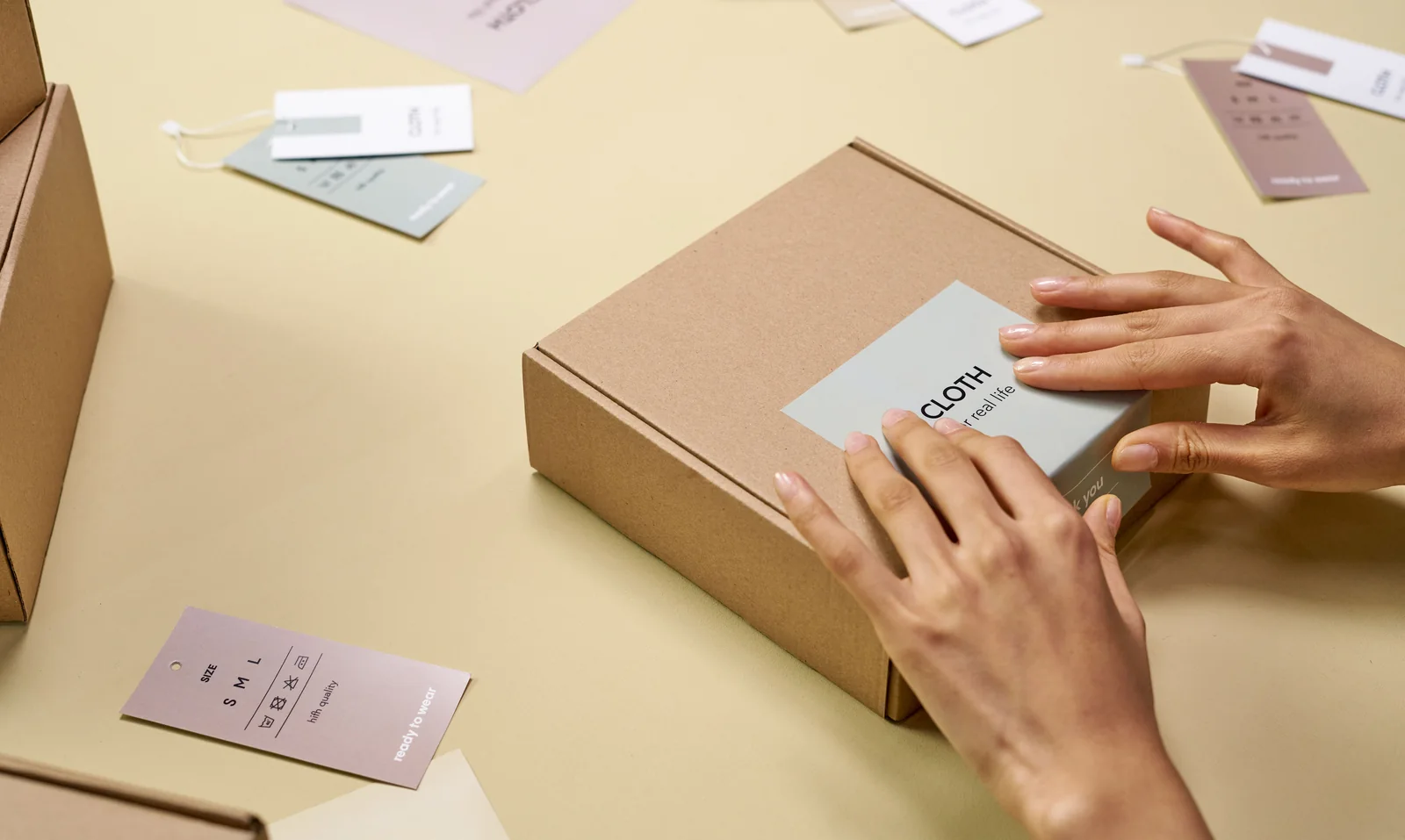
Classify the change as editorial, minor with documented review, or material requiring a new sample, check or test. The buyer’s authorized approver decides the evidence scope. Where GS1 rules apply, identity may also need review; for example, GS1’s dimensional or gross-weight rule uses a greater-than-20% threshold for a new GTIN under that rule. This is an identification rule, not a quality tolerance. Link the decision to affected stock, printed components and open orders, and prevent production release while a material decision is open. The output is a change-impact record and explicit hold, approve or resubmit decision.
7. Design QC, packaging and receiving around the real route
Inspection and packaging work only when they refer to the same product revision, pack configuration and distribution environment. A generic AQL request or “ISTA-tested” claim does not close those definitions.
Define observable defects before choosing a sampling plan
Write a defect catalogue by product zone and intended use. Each line should include an observable condition, severity rationale, measurement or comparison method, acceptance limit, reference image or sample and record field. Examples might include an unstable base on the specified reference surface, an unapproved chip in a named customer-facing zone, missing hardware, incorrect set count, unreadable barcode or wrong artwork revision. Avoid “poor workmanship” unless it is converted into observable conditions.
ISO 2859-1:2026 provides AQL-indexed attribute sampling schemes for lot-by-lot inspection. It does not define the buyer’s defects and does not prove that an accepted lot contains no nonconforming units. Record lot definition, inspection level, AQL index, sample size or code, decision rule, sampling method and treatment of critical conditions. If the buyer uses another plan, identify it rather than writing “standard AQL.”
The output is an inspection instruction that another qualified inspector can repeat against the approved product and pack. Include the equipment, calibration or comparison reference needed for measurements and images, plus the escalation owner for an ambiguous finding. A result without the instruction and lot definition is not a complete release record.
Select package checks by distribution hazard and objective
Begin with the route and product-package risks: parcel drop, pallet handling, vibration, compression, abrasion, moisture, component movement, label loss or carton collapse. Define the objective, product revision, retail and transport pack revision, sample configuration, procedure, preconditioning if applicable, damage tolerance and package-degradation allowance. The result applies to that stated configuration and objective.
Use Figure 13 to connect four records that are often separated. The defect catalogue describes the product and pack conditions; the sampling instruction describes how the lot is assessed; the package objective describes hazards; the receiving trial checks whether the information and protection work in practice.

ISTA distinguishes screening, partial simulation, general simulation and other procedure families. Its test-selection guidance emphasizes the actual distribution environment and representative samples. Record whether the test is for development comparison, minimum screening or a route simulation, then preserve pre-test and post-test product and pack evidence. If the product, pack count, protective material or route changes, review whether the previous result still applies. The output is a package-check request with a justified procedure and explicit limit, not a logo or pass statement detached from the tested pack.
Preserve identity through cartons, pallets and receiving
At unit level, preserve SKU and revision. At retail-pack level, preserve presentation and scannable data. At inner level, preserve count, orientation and separation. At master-carton level, show SKU, quantity, dimensions, gross weight, carton number and marks. At pallet or load level, preserve carton count, stability and receiving reference. GS1’s Global Traceability Standard describes how product and lot or batch identifiers can support traceability; implementation still depends on the parties and systems involved.
Study Figure 14 as a receiving-scale reference. The cartons are orderly, but the receiver still needs machine- or human-readable identity, counts and an accessible inspection plan.

Run a receiving trial with a person who did not pack the goods. Scan, identify, count, inspect, unpack and record discrepancies by carton. Measure the time and tools needed, because a pack can protect the product yet create costly receiving or shelf-preparation work. If regulated solid-wood pallets or crates enter or transit the US, review USDA APHIS wood-packaging requirements, including relevant ISPM 15 treatment and marking. The output is a pack hierarchy, receiving record and corrective action tied to the next revision.
8. Select the supplier and release a controlled pilot
The final decision should measure returned control evidence, not catalogue polish or response speed alone. A pilot then tests whether the commercial system works from approved revision to receiving.
Score returned evidence and enforce hard stops
Score the returned buying brief, comparable quotation, SKU and pack identity, sample and change control, product-specific evidence route, QC and packaging plan, and reorder continuity. Use `0 = missing`, `1 = partial or unclear`, and `2 = controlled and returned against the requested format`. Attach the document ID and reviewer beside every score so another person can challenge the rating.
Labelled hypothetical example 3: Figure 15 shows a fictional supplier scoring 11 out of 14. Sample/change control and QC/pack route remain partial, so the result is `approve pilot after two named conditions close`, not an unconditional release.

Do not let the total hide a critical zero. Missing product identity, an unresolved product-destination boundary or an unauthorized controlled change should stop release under this editorial model. Weighting can change by project, but the reason and approver must be visible before suppliers are scored. Re-score returned evidence rather than awarding points for promises or response speed, and retain the rejected version for comparison. The output is `approve for pilot`, `approve after named conditions` or `stop`, with owners, due dates and evidence needed to close each condition.
Use the pilot to test the commercial system, not only appearance
Choose a pilot size that is meaningful for the route and business but does not pretend to prove unlimited future performance. Before release, define allowed open issues, required records, discrepancy owner, recheck method and stop conditions. The pilot should test whether approved revisions reach production, exceptions are reported, pack and carton data are accurate, shipment documents arrive on time and the receiver can identify and count the goods without reconstructing the order from messages.
At receiving, record saleable units, product defects by type, transport damage, mixed or missing SKU counts, barcode or label issues, set completeness, unpack time and corrective actions. Separate manufacturing defects from transport damage and receiving errors because each requires a different response. Add early sell-through or customer feedback only when enough time and volume exist to interpret them. The output is a pilot acceptance record with facts, not a general statement that the order was “good.”
A pilot releases learning, not automatic scale. Compare results with the pre-agreed acceptance conditions and document any waived deviation with an owner and expiry. Close corrective actions and verify the updated record before increasing quantity or adding variants.
Turn the first order into a controlled reorder
Before reordering, confirm the approved SKU revision, material and component sources, production site, dimensions, finish process, artwork, barcode data, retail pack, inner quantity, carton count, Incoterm basis and open corrective actions. Ask the supplier to declare controlled changes rather than answering only “same as last order.” Reference the approved sample and change history, not just the previous purchase-order number.
Compare the first order’s actual landed cost, saleable quantity, receiving effort, damage, defects, pack performance and sales role with the assumptions used for release. Decide which SKUs gain depth, lose depth, combine finishes, change pack, remain on hold or leave the range. Preserve evidence by lot or batch where the product and system require it. A reorder is an opportunity to improve the commercial system, but improvements must still pass change control.
The output is a continuity review and new release revision. Archive the superseded record while keeping its change history traceable, then send one clean release package to purchasing, supplier, inspection and receiving teams. Confirm that all four teams acknowledge the same revision before work starts. This is what turns a one-time catalogue purchase into a replenishable wholesale range.
| Pilot evidence | Decision | Record updated | Reorder gate |
|---|---|---|---|
| Product and finish | Accept, correct or hold | SKU approval | Version named |
| Pack and arrival | Keep or revise | Pack and route plan | Revision checked |
| Receiving discrepancy | Correct data or process | Receiving record | Action verified |
| Range performance | Increase, reduce or exit | Quantity model | Role still valid |
Final 18-point wholesale home decor order checklist
This supporting checklist does not replace the decision records above. Use it before requesting the final quotation and again before releasing the pilot:
- Name the destination market, buyer channel, customer, launch date and receiving route.
- Issue a dated one-page buying brief with product scope and exclusions.
- Select the primary supply route and fallback by service and control.
- Assign owners for product, evidence, artwork, QC, logistics and changes.
- Give every SKU a commercial role, retail band and display relationship.
- Balance width and depth by carton multiple, cube, cash and reorder value.
- Map body, surface, components, process and intended use for each family.
- Route product and destination evidence by exact SKU, not category label.
- Issue one reconstructable SKU and packaging revision.
- Define appearance zones, viewing conditions and acceptable variation.
- Control set composition, barcode data, artwork, origin information and claims.
- Separate material, finish, SKU, printed-pack and carton MOQ layers.
- Normalize quantity, currency, Incoterm, named place, pack and exclusions.
- Calculate landed cost with sourced, dated and buyer-owned inputs.
- Approve selection, finish, product, retail pack and transport pack by scope.
- Define reapproval triggers and issue a change-impact decision.
- Connect defect language, sampling, package objective and receiving trial.
- Release the pilot and reorder only after hard stops and conditions close.
Use LANBORUI’s wholesale collections to begin product discovery, or review the decorative homeware range for category direction. When a controlled version is needed, define the work through customization and packaging development, the factory and export capability and the quality-control process. Once the brief contains the range, quantity, destination and pack requirements, send it to the wholesale team for clarification before quotation.