
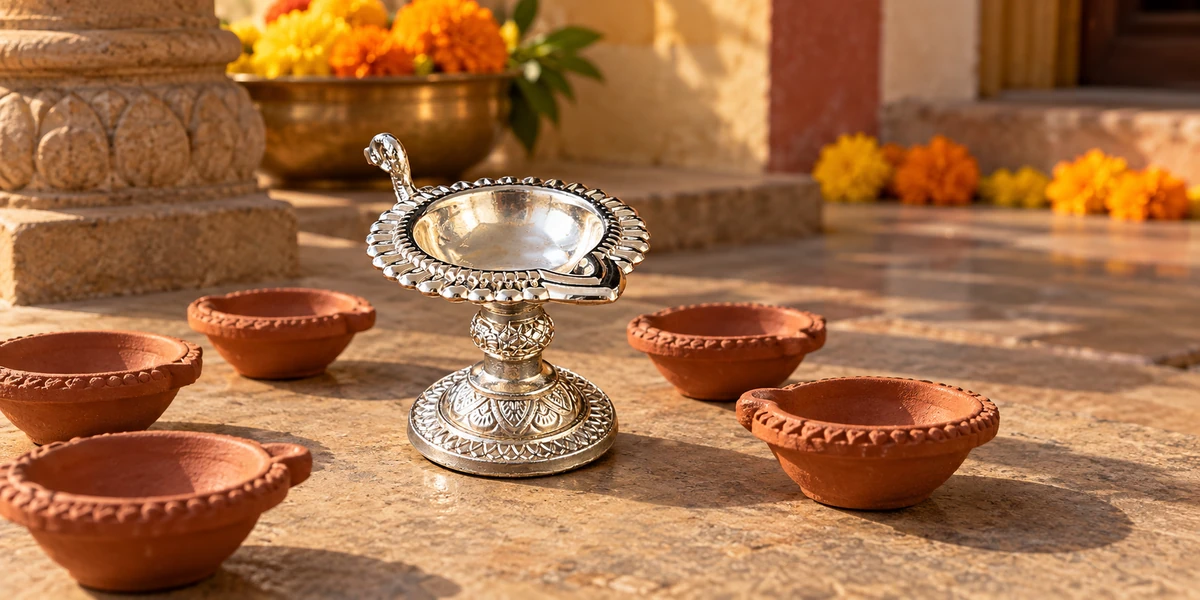
No single rule dictates the exact number of diyas every household must light during Diwali. Some families traditionally light 11 or 21 lamps, while others observe unique inherited customs. The ideal number ultimately depends on your heritage and the safe spaces available in your home.
Retailers rely on these traditions to determine optimal pack sizes and seasonal inventory. This guide explores diya counts, offers lighting tips, and provides actionable insights for retail buyers curating seasonal sets.
How Many Diyas Should You Light on Diwali?
Sticking to your family’s customary count works best for the main night of Diwali. Numbers like 11 and 21 serve as common examples rather than universal minimums.
Families establishing new traditions can simply count the safe, practical spots around the home and light a manageable number of lamps. Filling every corner with an open flame is unnecessary. Note the specific festival day. Rituals for Dhanteras or Choti Diwali often require different counts than the main Diwali night.
Why Do Diwali Diya Counts Differ?
Diya counts vary widely across different guides referring to specific festival days, regional practices, and household traditions. The term Diwali can describe the entire five-day festival or specifically highlight the main night of Lakshmi Puja.
| Festival Day | Counts Mentioned in Guides | How to Interpret Them |
| Dhanteras | 13 diyas | A practice described in some traditions rather than a compulsory count |
| Choti Diwali | 14 diyas | A count associated with this specific observance |
| Diwali / Lakshmi Puja | 11, 21, or a flexible number | Driven by household practices and the planned lighting arrangement |
These figures represent traditional guidelines rather than a strict shopping list.
How to Choose a Diya Count for Your Home
Translating family traditions into a practical lighting plan ensures a beautiful and manageable arrangement.
Follow Your Family Tradition
Consulting elders helps determine your specific household count and whether that number includes the main worship lamp. Clarify the target day, such as Dhanteras or the main evening.
Plan Your Count Around Your Lighting Areas
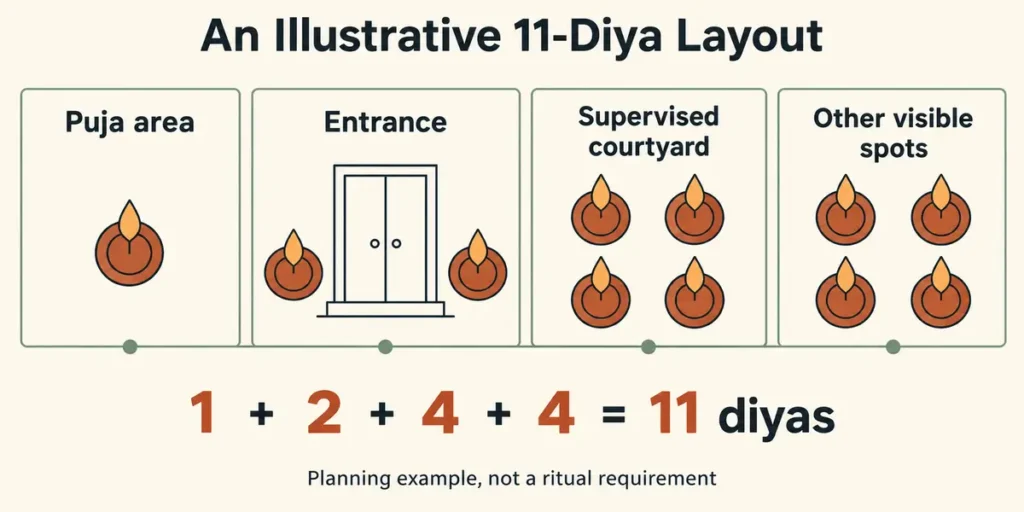
Mapping out the areas you want to illuminate allows you to assign a specific number of lamps to each space. A simple 11-diya layout might include:
- One lamp in the central puja area.
- Two flanking the main entrance.
- Four arranged in a supervised courtyard.
- Four placed in other highly visible spots.
Choose a Count You Can Safely Manage
Placing open-flame diyas only in easily monitored areas is crucial for safety. Avoid crowding lamps together or positioning them in hard-to-reach spots. Battery-operated lights offer an excellent alternative for maintaining a festive glow in spaces unsuited for open flames.
Where to Place Your Diwali Diyas
Safety and stability remain paramount. Selecting secure locations keeps flames well away from combustible materials.
The Puja Area
The main lamp belongs on a heat-resistant surface within your worship space. Ensure ample clearance exists between the flame and any fabrics or flower garlands. The setup must be easy to reach. Assuming standard decorative trays can withstand direct heat is dangerous.
Entrances
Lining your walkways with diyas works beautifully when doorways and exits remain clear. Position them safely away from shoes and busy areas where pets might accidentally knock them over.
Balconies and Outdoor Spaces
Opt for sheltered spots protected from wind drafts. Swapping oil lamps for outdoor-rated decorative lights is a smart choice for exposed ledges.
How Retailers Can Plan Diwali Diya Sets
Clarity is essential for retail buyers curating seasonal inventory. Standard lamp packs satisfy basic quantity requirements. In contrast, curated sets featuring complementary tabletop accessories like ceremonial handbells provide a complete worship solution. These distinct product offerings require clear separation in the catalog.
Diyas per Set
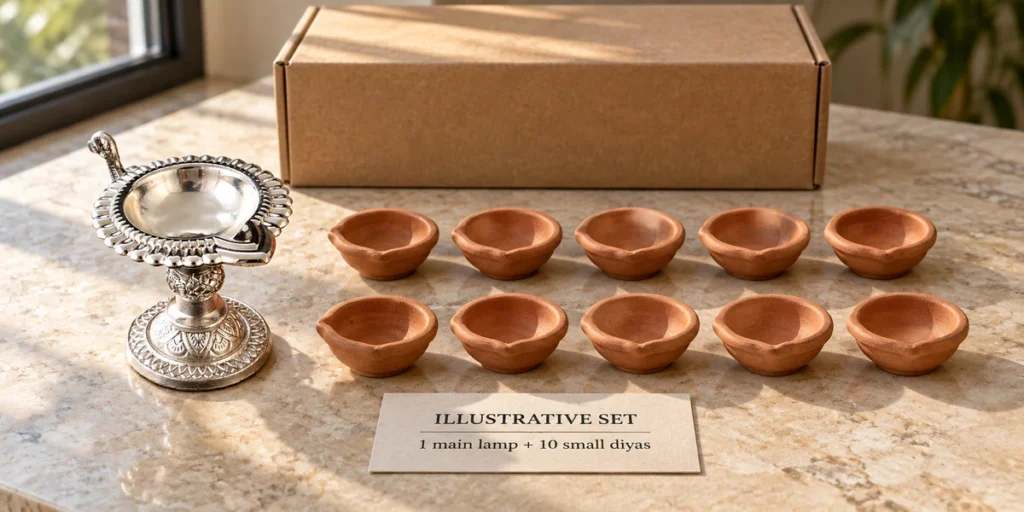
Clearly defining the exact contents of the package builds customer trust. A pack including one large lamp and ten smaller ones should explicitly state its contents as 11 diyas consisting of one large and ten small pieces. Basing pack sizes on actual customer demand is far more effective than presenting a commercial bundle as a religious necessity.
Securing bulk production that perfectly matches these retail expectations requires a structured sample approval process to lock in the agreed sizes, finishes, and packaging before manufacturing begins.
Extra Diyas
Offering individual diyas or smaller supplement packs allows customers to expand their displays. These extras must match the main sets to ensure visual harmony. Tracking this supplementary stock separately prevents original retail boxes from becoming unsellable.
Product Mix
Building each offering around a clear use case streamlines the buying experience. Product descriptions must clearly state whether wicks, fuel, trays, or other accessories come included. Before sourcing items intended for open flames, always verify the manufacturer’s intended-use guidelines. A beautiful surface finish does not automatically guarantee heat resistance.
How to Calculate Diya Quantities for Bulk Orders
Wholesale buyers calculating base quantities should start with the complete retail sets and then add replacement stock separately. Aligning component counts directly with your consolidation specifications ensures the final shipping quantities match your intended retail arrangement.
Units per Set
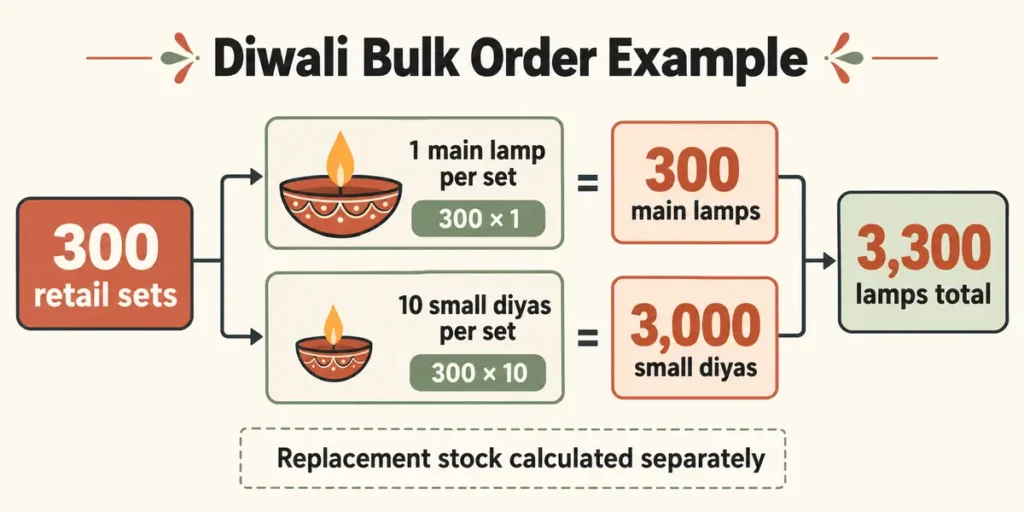
Multiplying the number of retail sets by the quantity of each component within a set provides the baseline requirement. An illustrative order of 300 sets containing one main lamp and ten small lamps each requires 300 main lamps and 3,000 small lamps.
Replacement Stock
Specifying spare lamps separately prevents inventory confusion. Base this allowance on product fragility, shipment handling, and your replacement policy. Keeping spares identifiable by model and finish ensures replacements perfectly match the original sets.
Packing Quantities
Documenting the packaging hierarchy clearly is a vital step. This includes detailing the lamps per retail set, the retail sets per inner box, and the inner boxes per master carton. Always approve the final packing layout prior to shipment.
Retailers ready to develop a tailored seasonal assortment can submit project requirements directly to LANBORUI sales. Providing clear details regarding product references, packaging needs, and target delivery dates streamlines the quotation process.
FAQs
Should Multiple Wick Diyas Be Labelled by Piece Count or Wick Count?
Using the physical piece count as the primary retail quantity works best, provided the wick capacity is stated separately. Describing an item as one diya featuring five wick positions clearly distinguishes the product from five separate lamps.
Should the Main Puja Diya Be Sold Separately?
Selling the main puja diya separately is advisable if the target demographic likely owns one already. Including it is better if the set is designed to provide a complete arrangement for a new household. This choice must be explicitly clear on the packaging.
Can One Diya Set Be Marketed for Several Days of Diwali?
Reusable lamps can be marketed for multiple days of the festival, provided the product description accurately explains their care. Distinguishing the reusable lamp bodies from consumable items like wicks or fuel is crucial.