
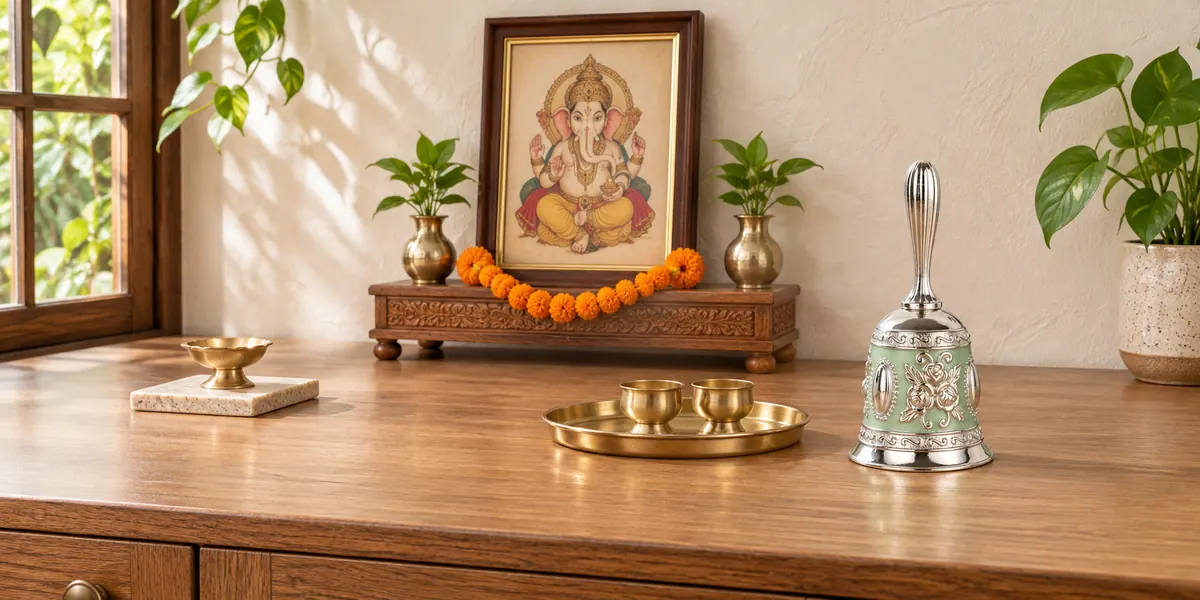
A home mandir works best when the setup supports daily prayer rather than crowding it. Clear surfaces, an understated backdrop, and enough room for daily rituals, offerings, and cleanup are the real essentials.
Every family follows its own traditions for deities, sacred symbols, and daily rituals. Treat these layouts as functional design guidelines rather than fixed rules.
Designing a Functional Home Mandir
Building a practical altar starts with how you move through prayer each morning. Settle the core layout first, then bring in decorative touches.
Preparing the Surface
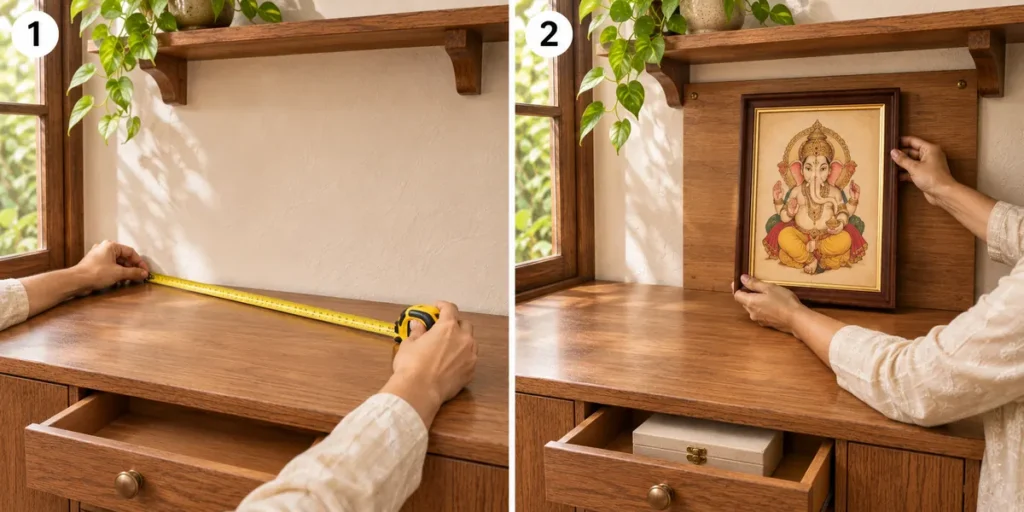
Start with a completely bare surface. Measure usable width, depth, and overhead clearance, leaving ample room for opening cabinet doors, pulling drawers, and hanging bells or torans. Position the primary deity or sacred image according to your household customs. Keep the space immediately in front clear to place prasad, ring the bell, and handle water cups without reaching over other items. Spare wicks, matchboxes, and oil bottles belong in a separate drawer or box, out of sight.
Framing with an Understated Backdrop
A good backdrop frames the altar without drawing attention away from the deities. A simple accent wall, a solid fabric panel, or a modest laser-cut jali panel creates clean visual boundaries. Keep proportions in mind: a compact wall shelf feels crowded under busy patterns that work well on a full-height wooden unit. Fasten hanging textiles and panels securely to prevent them from shifting or falling forward. For rented homes, select removable wall anchors suited to drywall or masonry.
Arranging Daily Pooja Ware
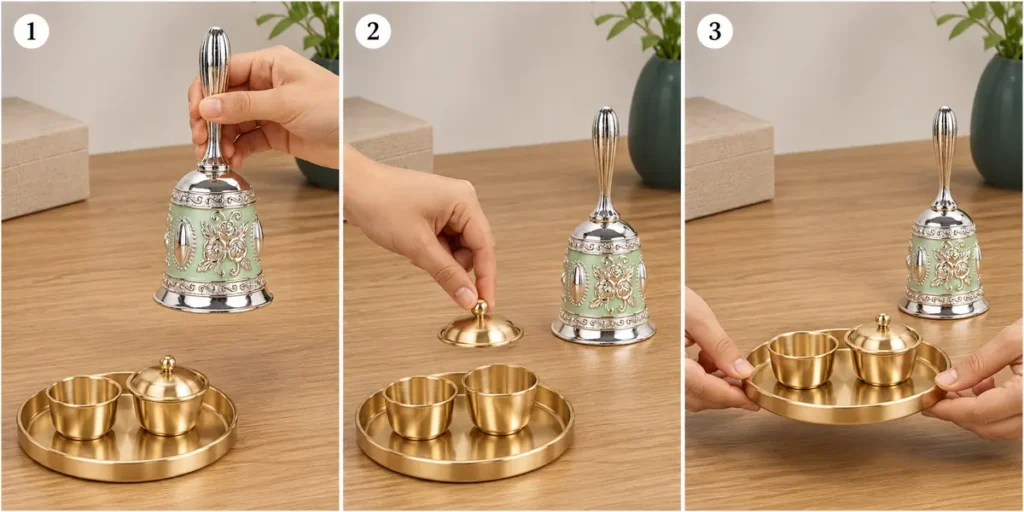
Keep everyday items right at hand, placing taller brassware behind shorter bowls. A pooja thali, or ritual tray, organizes smaller pieces such as the bell, chandan cup, and kumkum holder, allowing you to lift everything off the altar at once during cleaning. Test the layout with everyday motions: lift the bell, uncover an offering cup, and pick up the tray. If your knuckles brush against an adjacent container or diya, remove a piece or space items farther apart. Always leave a dedicated, uncluttered area for the lamp.
Lighting and Floral Accents
Use flowers to frame the deities rather than blanketing the working surface. A short garland draped over a frame or a small brass urli with floating petals adds color without obstructing offerings. Keep water vessels stable and separated from electrical plugs. For background ambiance, low-heat LED backlights or small spotlights work well. If your family lights ghee or oil diyas, place them on a heat-resistant stone tile or solid brass plate, well clear of fabrics, garlands, and woodwork. Never leave an open flame burning in an unattended room.

Layouts for Compact Spaces
When square footage is tight, every object on the altar needs a clear purpose.
Wall-Mounted Shelves
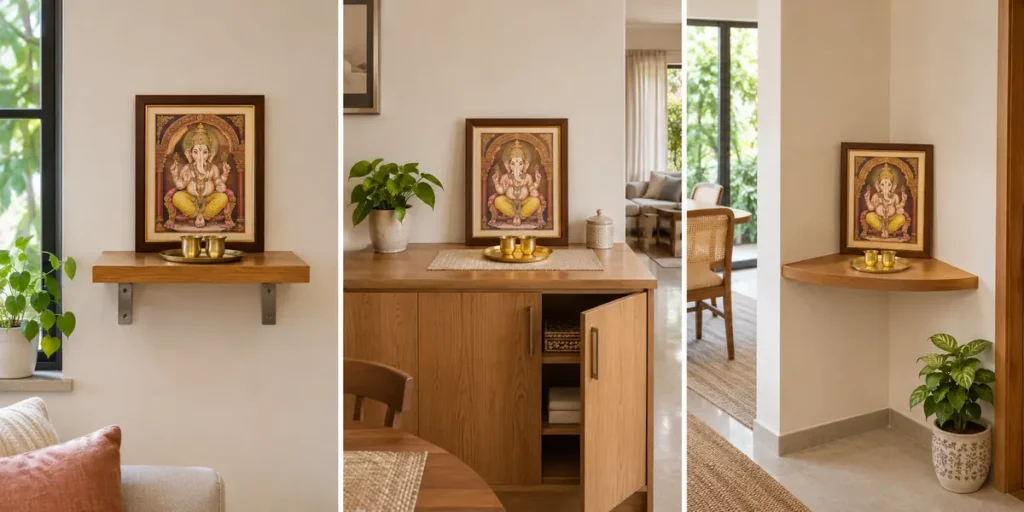
Draw the eye upward by focusing decorative details on the wall behind the shelf, leaving the platform open for worship. A carved wooden panel or framed print adds character without occupying tabletop space. Always verify shelf brackets against the actual wall construction. Factor in the weight of the shelf, brass murtis, filled water vessels, and accessories. Keep every item seated firmly within the shelf border so that nothing overhangs the edge. Enclosed cabinet shelves with doors lack the airflow needed for burning lamps or incense; reserve open flames for open surfaces.
Cabinet Tops
A sideboard, credenza, or low dresser provides a sturdy mandir base when it offers enough depth for a tray and an open front margin. Grouping ritual ware on a single tray lets you clear the surface in seconds for routine dusting. Protect wood finishes from spills and heat by placing an unobtrusive runner or stone mat beneath urlis and lamps. Ensure cabinet doors and drawers open freely without disturbing the altar above.
Corner Shrines
A corner altar tucks neatly into underused space without interrupting foot traffic through the room. Position deities facing directly toward the seated or standing prayer area. The deepest point of a corner can be awkward to reach. Set the tray across the accessible front opening where hands naturally rest, and avoid pushing bells or matchboxes deep into the rear wedge.
Refreshing the Altar for Festivals
Seasonal celebrations like Diwali, Navratri, or Janmashtami do not require rebuilding a mandir from scratch. Keep the foundational layout intact and layer festive accents over top.
Choosing a Focused Color Palette
Select colors and motifs that reflect the specific festival and your family’s observances. Building around the primary deity keeps the shrine cohesive. In a small space, a fresh marigold garland and a vibrant silk altar cloth are often enough to mark the occasion.
Updating Textiles, Flowers, and Lights
Swap the everyday runner for brocade, hang fresh mango leaves along the upper trim, or wind warm fairy lights around the exterior frame. Step back and view the altar from both standing and seated positions to confirm hanging garlands do not obscure the deities. Ensure hanging ribbons, loose silks, and fresh leaves stay well outside the reach of burning diyas.

Returning to the Everyday Setup
Once celebrations conclude, remove temporary decorations promptly to restore daily working space. Dispose of dried flowers according to personal traditions, wipe down surfaces, and empty water bowls. Let brassware, copper lotas, and reusable fabric pieces dry completely before packing them away. Wrap ornate metal items in soft cloth to prevent embossed details from rubbing together, and label storage bins by festival for easy access next year.

Merchandising Mandir Hardware: A Retail Guide
The spatial limits homeowners face in living rooms offer a practical blueprint for retail collections: design products around specific altar footprints and daily routines.
Aligning Collections with Common Room Layouts
Develop distinct lines for compact wall shelves, deep credenzas, and larger festive displays. Clear sizing and use cases help customers immediately understand what will fit in their homes. Carrying modular pieces like handbells and pooja thali sets allows shoppers to buy individual replacements or invest in matching sets. Keeping add-on pieces optional lets customers expand their altar over time without acquiring duplicate containers.
Balancing Dimensions and Metal Finishes
Evaluate product collections as an assembled set on a real tabletop before approving production. Check tray clearance, verify container rims do not collide with bell handles, and ensure lids lift off smoothly. The floral pooja thali set demonstrates balanced scaling across the tray base, bell, and smaller katoris. Review metal finishes under matching color temperatures, and explicitly specify whether a product is solid brass, brass-plated iron, or coated aluminum.
Establishing Fixed Set Specifications
Assign every retail package a locked bill of materials, unit count, and SKU. State clearly whether display items like tealights or fabric mats are included in the box.
| Home Setup | Core Accessories | Size Considerations | Retail Format |
| Wall-mounted shelf | Compact tray and select small vessels | Usable shelf depth and total load limit | Entry-level set or individual pieces |
| Cabinet top | Full tray, handbell, and offering cups | Tray footprint and overhead reach | Complete coordinated set |
| Corner arrangement | Curated accessories and flower urli | Reachable front depth vs. corner angle | Modular open-stock collection |
| Festival display | Standard accessories plus decorative accents | Added height and surface crowding | Seasonal add-on bundle |
Publish individual component dimensions alongside the outer tray diameter so customers can confirm whether an incense holder or bell fits their existing altar before ordering.
Sourcing and Quality Checks for Bulk Buyers
Turning a decorative concept into a dependable production line requires clear written specifications covering materials, safety, and packaging.
Validating Functional Safety and Materials
Group products by actual intended use. An ornamental pot, an incense burner, and an oil diya involve entirely different heat tolerances and material requirements. Obtain manufacturer documentation detailing fuel compatibility, heat ratings, and surface safety for any item intended to hold fire. If an incense holder lacks heat testing, package and market it purely as storage. For vessels holding edible offerings or charnamrit, require food-contact certification verifying that alloys and lacquers are lead-free and stable across standard contact times.
Managing the Sample Approval Sequence
Inspect physical production samples built with production tooling, specified metal thickness, and final surface plating. Test tray balance, lid seating, bell chime clarity, and edge deburring.
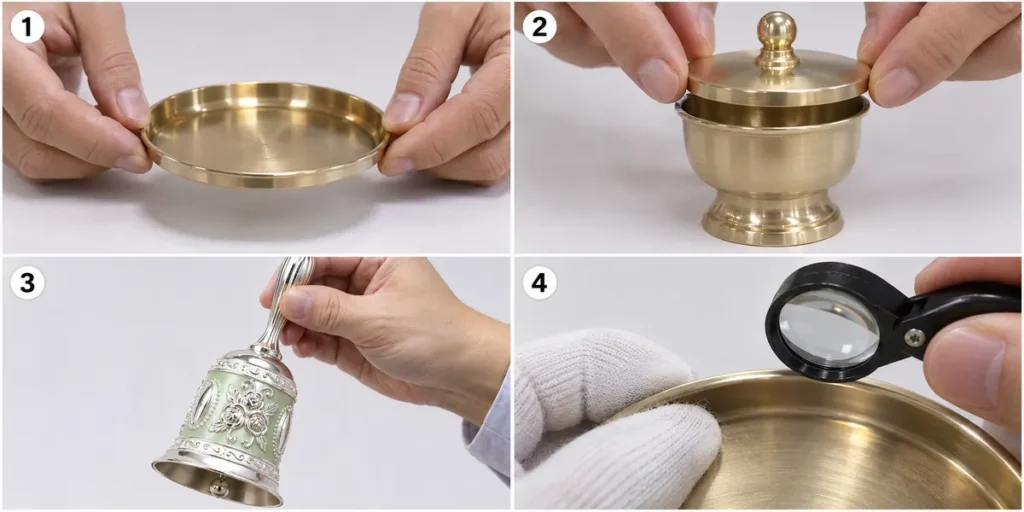
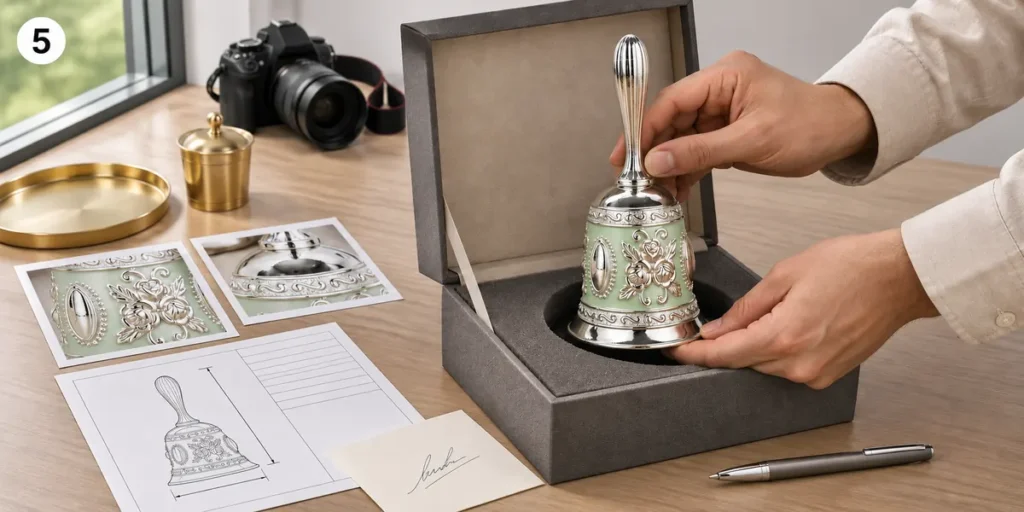
Archive signed boundary samples accompanied by high-resolution photographs and dimension sheets. Using a documented sample approval process prevents gradual quality drift between pre-production runs and container shipments. Visual approval never substitutes for accredited lab testing on heat resistance or food contact.
Engineering Protective Packaging
Test export cartons with products resting in production inserts. Separate metal parts using custom die-cut EVA foam or molded pulp to prevent engraved patterns from scratching during transit. Run standard drop tests to reveal weak points like bent tray lips or snapped bell finials. The private-label packaging guide breaks down how to balance retail shelf appeal with shipping protection.
Managing Customizations and Reorders
Maintain separate technical drawings for logos, special patinas, and box artwork. Wherever possible, explore customization without new product tooling to keep sample fees and production minimums manageable. For repeat orders, lock in master alloy codes, plating specifications, and carton layouts. Require formal sign-off before a factory substitutes raw materials or alters manufacturing methods.
Planning Your Next Collection
To develop a retail or commercial pooja line, discuss your mandir decor brief with LANBORUI. Share target markets, target price tiers, piece assortments, and packaging requirements to evaluate production configurations and quotation schedules.